Leave Your Message
0%

Hey there! So, by 2026, buyers from all over the globe are going to find themselves in a pretty competitive and pretty picky market for Miniature Circuit Breakers (MCBs). Even though many of these tiny devices look alike on the outside, their actual protection performance can vary a lot — sometimes quite unexpectedly. Just because a breaker is rated at 6 kA doesn’t mean it’s automatically the right fit for every distribution board out there. Things like voltage, fault current, ambient temperature, how you install it, and whether it’s certified all come into play.

I remember David Chapman, an electrical safety pro linked with BEAMA, once said, 'You’ve got to pick the right protective device to match the installation — not just go by what the catalog says.' That advice still holds true today. When shopping around, it's smart to compare things like IEC 60898-1 compliance, rated current, tripping characteristics, pole setup, and tested breaking capacity. For more industrial setups, IEC 60947-2 might be the better reference point. Little details really matter — for instance, squeezing too many breakers onto a crowded DIN rail can heat things up, and a loose terminal might generate heat before a fault even happens.

This guide is here to help you understand which types of MCBs are most relevant for the 2026 market, especially if you’re part of an international purchasing team. We’ll look at AC models suitable for homes, offices, and light industry, plus the DC breakers designed for solar panels, battery storage, and control systems. Big brands like Schneider Electric, ABB, Siemens, Eaton, and CHINT have got a lot to offer, but don’t just rely on brand name alone — double-check their specs and certifications. Honestly, that might seem obvious, but it’s still easily overlooked.

Also, be sure to dive into datasheets, test reports, terminal capacities, mechanical durability, and after-sales support. Regional standards can really influence what you should buy; a breaker that works perfectly in Europe might need different approvals if you’re installing it in North America. Sure, specifications guide your decision, but real-world experience often reveals the weak spots in your assumptions. The goal with this overview is to shed light on those assumptions — even if the perfect answer isn’t always straightforward.
2026 Top Miniature Circuit Breaker Types for Global Buyers?

Miniature Circuit Breaker Fundamentals for Global Buyers

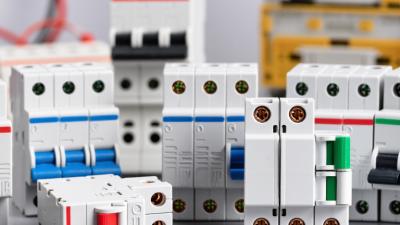
A Mcb Miniature Circuit Breaker protects low-voltage circuits from overloads and short circuits. Its mechanism opens the circuit before excessive heat damages conductors. Small device. Big responsibility.

Global buyers should check rated current, voltage, pole arrangement, and breaking capacity together. A 10 A unit may suit lighting, but not every motor circuit. B, C, and D trip curves respond differently to starting current. Curve C often handles moderate inrush, while Curve D needs careful engineering. Do not select by amperage alone. Verify whether the device is designed for AC, DC, or both. DC interruption can require different internal spacing and testing. This detail is easy to miss.

Standards and certificates provide useful evidence, but documents need close review. Confirm the applicable requirements, test reports, marking, and production traceability for the destination market. IEC 60898-1 commonly covers household and similar MCB applications, while industrial installations may require other specifications. Always compare the product data with local electrical rules. Terminal torque matters too. Loose connections create heat, even with a correctly rated breaker. In field inspections, I check wire size, enclosure temperature, and actual load behavior. Catalog tables cannot reveal every installation problem. I once underestimated startup current during a small pump test; the breaker tripped repeatedly. That mistake showed why measured conditions should guide final selection.

Key MCB Types by Pole Configuration and Circuit Design

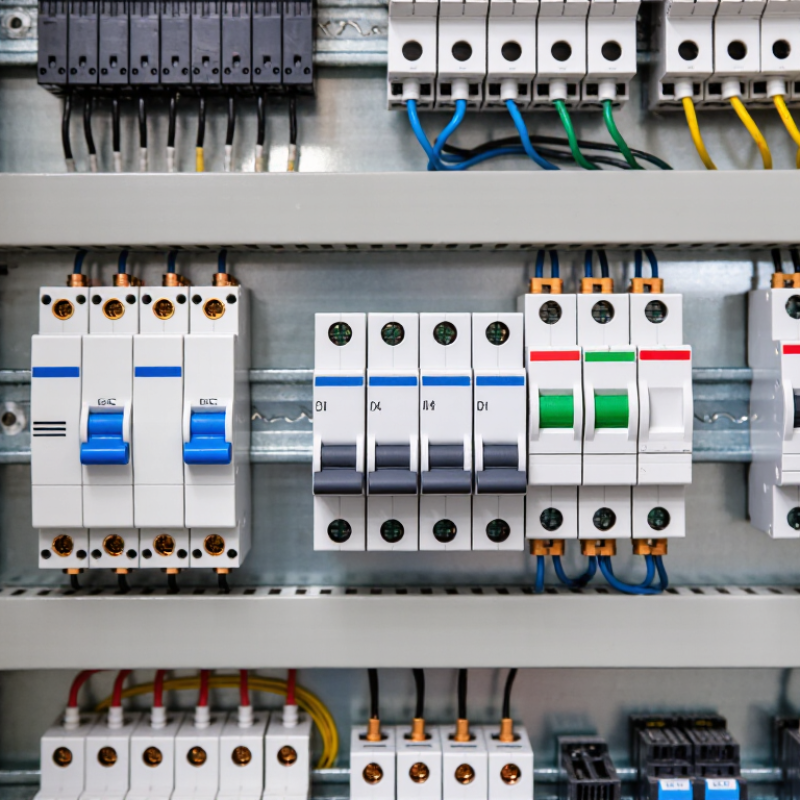
Miniature Circuit Breaker Types vary by pole configuration and circuit design. A 1P MCB protects one live conductor, while a 1P+N model also switches the neutral. Two-pole devices suit single-phase circuits requiring full isolation. Three-pole and four-pole units serve balanced three-phase systems, including commercial distribution boards. The fourth pole disconnects neutral conductors when local installation rules require it.

Circuit behavior matters as much as pole count. B-curve MCBs usually protect lighting and resistive loads, with magnetic operation around three to five times rated current. C-curve models suit sockets, small motors, and transformers, typically tolerating five to ten times rated current. D-curve devices handle heavy inrush, but they need careful fault-current verification. IEC 60898-1 remains a key reference for household and similar applications. IEC 60947-2 is more suitable for industrial switching equipment.

A 2024 Grand View Research analysis estimates the global circuit-breaker market will exceed USD 10 billion by 2030, with low-voltage protection driving substantial demand. That growth does not make selection simpler. I still recheck neutral switching, breaking capacity, and cable temperature before approving a panel schedule. Catalog descriptions can mislead. DC circuits, solar strings, and motor loads require different arc-control and tripping considerations. One overlooked detail is ambient heat: an MCB rated at 40°C may carry less current inside a crowded enclosure. Trade data shows scale; site measurements decide safety.

Understanding Trip Curves: Types B, C, D, K, and Z

For global buyers, selecting a Miniature Circuit Breaker requires more than checking current rating. Trip curves determine how quickly the breaker responds to overloads and short circuits. Thermal protection handles sustained overloads, while magnetic protection reacts almost instantly to high fault current.

Type B trips magnetically at about 3–5 times rated current. It suits lighting, sockets, and residential circuits with low starting surges.

Type C usually trips at 5–10 times rated current, making it practical for small motors, pumps, and office equipment.

Type D responds around 10–20 times rated current. It is intended for equipment with heavy inrush current, such as transformers or large motors. These ranges can vary by product design and test conditions.

Type K commonly trips near 8–12 times rated current and balances motor starting performance with circuit protection.

Type Z is more sensitive, often operating around 2–3 times rated current. It can protect delicate electronic circuits, but unwanted tripping may occur during normal startup.

I have seen installations fail because engineers chose curves from habit rather than measured inrush current. That mistake is easy to repeat. Check cable capacity, prospective fault current, ambient temperature, and local requirements together. Always confirm the manufacturer’s technical data before final selection, especially when replacing an existing breaker.

Breaking Capacity, Current Ratings, and Voltage Requirements

For global buyers, the best miniature circuit breaker depends on three checks: breaking capacity, current rating, and system voltage.

IEC 60898-1 covers household and similar AC breakers up to 440 V, 125 A, and 25 kA short-circuit capacity. Common options include 4.5 kA, 6 kA, and 10 kA models.

A 6 kA breaker may suit many commercial panels, but it is not automatically safe near a powerful transformer. Measure the prospective short-circuit current at the installation point.

Trip curves also matter.

Type B trips magnetically at roughly 3–5 times rated current, making it suitable for lighting and low-inrush loads.

Type C, at about 5–10 times rated current, fits sockets, small motors, and mixed commercial circuits.

Type D tolerates around 10–20 times rated current, but requires careful fault-current verification. It is not a universal upgrade.

Current ratings must match cable capacity, not appliance labels alone. Typical selections range from 6 A lighting circuits to 32 A socket circuits, while larger ratings need stronger conductors and thermal checks.

For industrial equipment, IEC 60947-2 supports higher-duty applications, including systems up to 1,000 V AC or 1,500 V DC. The IEA Electricity 2024 report forecasts global electricity demand growth averaging about 4% annually through 2026, increasing pressure on dependable protection.

Voltage details still get overlooked. A 230 V single-phase breaker cannot simply replace equipment designed for 400 V three-phase service. DC applications need dedicated DC-rated devices. Small mistakes remain expensive.

AC, DC, RCBO, and Specialized MCB Protection Options

Miniature Circuit Breaker Types for Global Buyers in 2026

AC MCBs

AC MCBs remain common in residential and commercial distribution boards. They protect alternating-current circuits from overloads and short circuits. IEC 60898-1 covers many household and similar applications. Choose the curve only after checking inrush current, cable size, and available fault current. A compact device is not automatically suitable.

DC MCBs

DC MCBs require different arc-extinguishing designs because direct current does not naturally cross zero. Confirm the rated voltage, polarity, and number of poles. Photovoltaic strings, battery cabinets, and control circuits may need specialized DC protection.

The IEA Electricity 2024 report expects global electricity demand to rise by over 6% between 2024 and 2026. That growth increases demand for distributed energy equipment, but installation quality still matters. Small errors can create large risks.

RCBOs

RCBOs combine overcurrent protection with residual-current protection. They can reduce nuisance trips across multiple branch circuits. Check the trip sensitivity, interruption rating, and neutral arrangement. Type A residual-current detection often suits modern electronic loads better than basic AC detection.

Specialized options may include surge coordination, remote operation, auxiliary contacts, or harsh-environment construction. IEC 61009-1 provides a key reference for household RCBOs, while IEC 60947-2 supports broader low-voltage applications.

A useful specification sheet should show test conditions, not only headline ratings. That detail is easy to miss. Market forecasts can also vary widely, so buyers should compare independent reports with local grid data and verified test records.

Global Standards, Certifications, and Regional Compatibility

2026 Top Miniature Circuit Breaker Types for Global Buyers?

For global buyers, miniature circuit breaker selection begins with standards, not appearance. IEC 60898-1 commonly covers household and similar installations. IEC 60947-2 suits industrial applications with higher operational demands. North American projects may require UL 489 compliance. Regional marks, such as CE, UKCA, or CCC, also need verification. A marking alone is not enough. Request certificates, test reports, and the exact product reference.

Choose the trip curve according to the load. B-curve breakers often suit lighting and resistive circuits. C-curve models handle moderate motor starting currents. D-curve types require careful coordination with high-inrush equipment. Check voltage, frequency, poles, breaking capacity, and neutral switching rules for each market. A 6 kA rating may be inadequate where the prospective fault current is higher.

Compatibility is easily underestimated. Rail dimensions, terminal design, busbar spacing, and enclosure depth can differ between regions. Miniature Circuit Breaker Accessories, including auxiliary contacts, shunt trips, and alarm contacts, must match the breaker series precisely. Do not assume similar shapes guarantee safe fitting. That assumption fails.

Procurement teams should also review temperature derating and altitude limits. Test samples under local conditions when possible. Standards evolve, and older documentation can mislead. A practical compliance matrix helps, although it may need revision before shipment. That is inconvenient. It is also safer.

How to Select the Right MCB for Different Applications

Selecting an MCB starts with the load, not the catalogue title.
In field commissioning, I check operating current, inrush current, cable size, fault level, and ambient temperature. A 6A lighting circuit may suit a B-curve MCB, while motors and transformers often need a C-curve device. D-curve protection is reserved for higher inrush equipment, but it can delay fault disconnection if chosen carelessly.

The installation environment matters just as much. Single-pole MCBs suit many final circuits, while two-pole or four-pole versions can isolate additional conductors.

For photovoltaic systems, battery storage, and other direct-current circuits, buyers must verify DC voltage, polarity, and the approved interruption direction. AC ratings cannot simply be transferred to DC applications.

IEC 60898-1 covers many household and similar MCB applications, while IEC 60947-2 is more suitable for industrial switching conditions.

System growth also changes selection pressure. The International Energy Agency’s Electricity 2024 report forecasts global electricity demand to grow by an average of 3.4% annually from 2024 to 2026. More distributed loads may increase thermal stress and prospective short-circuit current. Therefore, compare the MCB’s breaking capacity with the measured fault level, not only its current rating.

A 10kA device is not automatically safer. Coordination with upstream protection remains essential. Real projects are rarely perfect; cable lengths, heat, and uncertain load data can undermine a neat selection chart. Independent verification is worth the extra time.

Automatic Welding Assembly Lines for Miniature Circuit Breakers: Insights from Grand View Research and IMARC Reports

The global circuit breaker market is expanding at a mid-single-digit compound annual growth rate, according to market assessments from Grand View Research and IMARC Group, driven by infrastructure investment, industrial automation, and rising demand for dependable low-voltage protection. Within this environment, miniature circuit breaker manufacturers are under increasing pressure to achieve higher throughput, tighter quality control, and traceable production. A fully automated welding and assembly line addresses these requirements by connecting component feeding, precision welding, inspection, and final assembly in one modular system.

During welding, dedicated mechanisms automatically deliver enameled wires, bimetal strips, flexible conductors, terminals, and fixed contacts. A rotary multi-station fixture coordinates flux application, coil placement, terminal positioning, and welding, creating stable and repeatable joints. Conveyors then transfer welded units to the assembly section, where vibratory feeders organize components and a six-axis robot accurately installs internal parts into the housing. CCD vision systems inspect critical operations in real time and separate nonconforming products. Integrated MES/ERP functions support recipe control, production traceability, energy analysis, remote maintenance, and data integration, while connection with downstream testing equipment enables a continuous intelligent manufacturing workflow.

FAQS

What does an AC MCB protect?

An AC MCB protects alternating-current circuits from overloads and short circuits. It suits many residential and commercial distribution boards. Check cable size and fault current first.

Why are DC MCBs different from AC MCBs?

Direct current does not naturally cross zero, so arc extinguishing requires different designs. Confirm rated voltage, polarity, and pole count. AC ratings cannot simply transfer to DC systems.

Where might specialized DC protection be needed?

Photovoltaic strings, battery cabinets, and control circuits may require specialized DC protection. Verify the approved interruption direction. Small errors create large risks.

What is an RCBO used for?

An RCBO combines overcurrent protection with residual-current protection. It can reduce nuisance trips across several branch circuits. Check sensitivity, interruption rating, and neutral arrangement.

Which residual-current detection type may suit electronic loads?

Type A detection often suits modern electronic loads better than basic AC detection. Actual compatibility still depends on the equipment. Do not assume.

How should the correct MCB curve be selected?

Select the curve after checking operating current and inrush current. A 6A lighting circuit may suit a B-curve device. Motors and transformers often need a C-curve device. D-curve protection may suit higher inrush equipment, but it can delay fault disconnection.

How do cable size and temperature affect MCB selection?

Cable size, ambient temperature, and installation conditions affect safe operation. A compact device is not automatically suitable. Heat matters.

What should buyers check for photovoltaic or battery circuits?

Confirm DC voltage, polarity, pole count, and interruption capability. Check whether the device matches the measured fault level. Installation quality remains important as systems expand.

Is a higher breaking-capacity rating always safer?

No. A 10kA device is not automatically safer. Its breaking capacity must exceed the available fault current. Coordination with upstream protection also matters. I may still miss uncertain field data. Independent verification helps.

Conclusion

This guide explains how to choose the right Miniature Circuit Breaker for global electrical projects in 2026. It introduces MCB fundamentals, including pole configurations, circuit designs, current ratings, voltage requirements, and breaking capacity. It also compares trip curves B, C, D, K, and Z, helping buyers match protection characteristics with residential, commercial, industrial, and equipment-specific load demands.

The article further reviews AC, DC, RCBO, and other specialized protection options, while highlighting the importance of international standards, certifications, and regional compatibility. By considering circuit type, expected fault levels, operating environment, switching needs, and installation requirements, buyers can select dependable protection for each application. The goal is to provide a practical framework for evaluating Miniature Circuit Breaker options safely, efficiently, and consistently across different markets.
Lucas

Lucas

Lucas is a dedicated marketing professional with over two decades of experience in the circuit breaker industry. Since the inception of his company in 2002, he has been a vital part of a team that has positioned itself among the top three exporters of low-voltage circuit breakers in the nation.......
Previous 7 Tips for Choosing an Industrial Circuit Breaker?