Leave Your Message
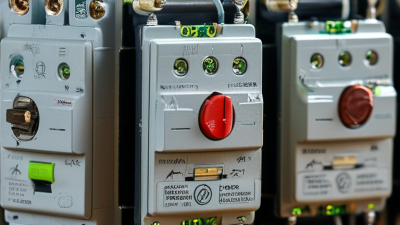
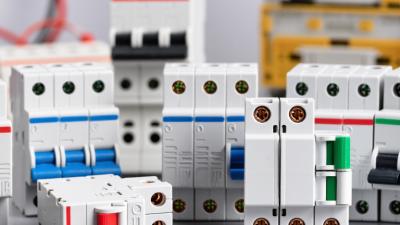
Honestly, picking the right MCB circuit breaker types isn't just about flipping through a catalog – it's a real safety call. The needs of a tiny workshop panel aren't the same as a hotel room, a solar inverter, or a factory motor circuit. Get the trip curve wrong and you'll be dealing with annoying nuisance trips. Skimp on breaking capacity and you might leave your gear exposed when a fault hits. Honestly, from what I've seen out in the field, labels only get you so far—they never really tell the full story, you know?
So the IEA's latest Electricity 2024 report is projecting global electricity demand to climb around 3.4% each year between 2024 and 2026. That might not sound huge, but with more connected loads, you’ve got to be a lot more careful when choosing protection. That’s where IEC 60898-1 comes in—it covers circuit breakers for homes and similar setups, up to 440 V AC and 125 A. These numbers are a handy reference, sure, but they’re not a substitute for local codes or doing your own verified calculations. And whatever you do, always check the actual installation environment before deciding.
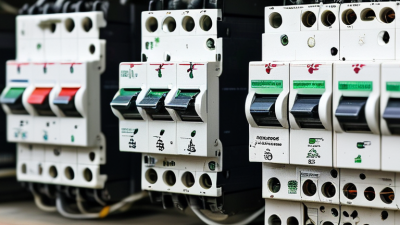
Let’s be honest—comparing MCB circuit breaker types can feel a bit overwhelming at first. But this guide breaks it down into seven practical tips that actually help. We’ll go through B, C, and D tripping curves, rated current, pole configuration, short-circuit capacity, and whether the breaker works with AC or DC. That’s not everything though. You also have to factor in temperature, cable size, load characteristics, and how it coordinates with upstream devices. A clear label is definitely useful, but on its own? Yeah, it’s not enough. Look, product datasheets from big names like Schneider Electric, ABB, and Siemens — those are great references, but you can't just take them at face value. You've got to check them against what's actually going on in your circuit. No guide is perfect, and there's always something that can throw you off. In fact, when you get out there and measure things on-site, you might run into surprises: maybe the inrush current is way higher than you expected, the enclosure is packed tighter than a sardine can, or it's getting hotter than you thought. So yeah, careful verification is still a must.
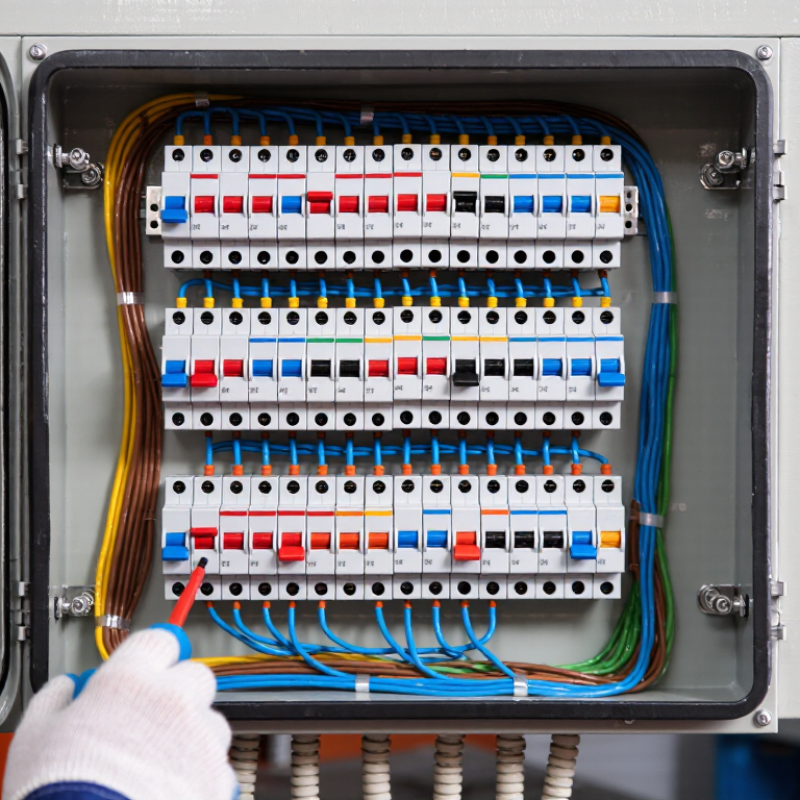
An MCB, or miniature circuit breaker, protects a low-voltage circuit from overloads and short circuits. Its role is simple: interrupt dangerous current before cables overheat or insulation fails. The NFPA reported 46,700 home structure fires involving electrical distribution and lighting equipment annually from 2015 to 2019. That figure makes correct protection more than a specification exercise.
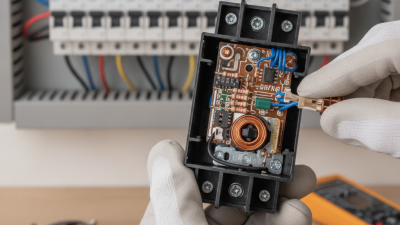
Inside an MCB, a bimetal strip responds to sustained overload current. It heats, bends, and releases the trip mechanism. A magnetic coil reacts almost instantly to a short circuit. Its plunger opens the contacts, while an arc chamber cools and divides the electrical arc. This two-stage action explains why an MCB can tolerate normal starting current yet disconnect a fault quickly. IEC 60898-1 defines key requirements for household and similar MCB applications, including rated current and short-circuit performance.
Selection still requires judgment. Match the rated current to the cable’s permitted capacity, not merely the appliance label. Check the prospective fault current at the installation point. Choose B, C, or D tripping characteristics according to inrush behavior and circuit design. A C-curve device may suit motors, but it is not automatically safer. I have seen oversized breakers remain closed while small conductors quietly overheated. No breaker is magic. Installation temperature, terminal torque, enclosure conditions, and periodic testing can change real performance. A report can guide the choice, but measured site conditions should challenge it.
| Tip | Selection Dimension | What to Check Before Selection | Relevant Technical Data | MCB Role and Working Principle |
|---|---|---|---|---|
| 1 | Match the Rated Current | Select an MCB whose rated current is suitable for the continuous design current of the circuit and does not exceed the allowable current-carrying capacity of the conductors. | Rated current In is commonly specified in amperes, such as 6 A, 10 A, 16 A, 20 A, 25 A, 32 A, 40 A, 50 A, and 63 A. The selection must also consider conductor size, installation method, ambient temperature, grouping, and voltage drop. | The MCB permits normal load current but opens the circuit when current remains above its thermal trip threshold for a sufficient time. |
| 2 | Choose the Correct Tripping Curve | Choose the curve according to the expected inrush current and the type of load. Avoid selecting a higher curve only to prevent nuisance tripping. |
Type B: instantaneous magnetic operation at approximately 3–5 × In, generally suitable for resistive and domestic loads. Type C: approximately 5–10 × In, commonly used for moderate motor, transformer, and inductive loads. Type D: approximately 10–20 × In, intended for high-inrush loads when the installation can provide adequate fault current. |
The magnetic trip responds rapidly to short-circuit current. The selected curve determines the approximate instantaneous operating-current range. |
| 3 | Verify the Number of Poles | Select the pole arrangement based on the circuit configuration and local wiring requirements. Confirm whether the neutral must be switched or only isolated. | Common arrangements include 1P for a single live conductor, 1P+N for live switching with neutral isolation, 2P for two-pole circuits, and 3P or 4P for three-phase systems. Pole functions and neutral protection vary by device design. | Each protected pole contains switching and tripping elements. Opening the required poles isolates the relevant conductors during a fault or manual operation. |
| 4 | Check the Rated Voltage and System Frequency | Confirm that the MCB is rated for the system voltage, number of phases, frequency, and the intended AC or DC application. Never assume an AC-rated device is suitable for DC. | Typical low-voltage MCB ratings include 230/400 V AC at 50 or 60 Hz. DC applications require a device specifically marked for DC, with the correct polarity, voltage per pole, and series-pole connection requirements where applicable. | The contacts must safely interrupt the system voltage. DC arcs do not naturally pass through a current zero, so DC-rated arc-control construction is required. |
| 5 | Select Adequate Short-Circuit Capacity | The MCB breaking capacity must be equal to or greater than the prospective short-circuit current at its installation point. | Breaking capacity is expressed in kA, commonly 4.5 kA, 6 kA, or 10 kA for low-voltage installations. The actual requirement depends on the transformer size, supply impedance, cable length, and available fault current. | During a short circuit, the magnetic trip operates quickly and the arc is divided, cooled, and extinguished in the arc chute before the contacts can safely interrupt the fault. |
| 6 | Consider Load Type and Coordination | Evaluate lighting, socket outlets, heating equipment, motors, transformers, power supplies, and other loads. Check selectivity and backup protection with upstream and downstream devices. | Resistive loads usually have low inrush. Motors and transformers can have high starting or magnetizing currents. Electronic loads may produce harmonic or leakage currents. Coordination should be verified using manufacturer time-current curves and the installation design. | Thermal protection responds to sustained overloads, while magnetic protection responds to high fault or inrush currents. Proper coordination helps the nearest protective device operate first. |
| 7 | Confirm Standards, Installation, and Environment | Use an MCB complying with the applicable installation and product requirements. Check terminal capacity, mounting method, ambient temperature, enclosure conditions, and periodic inspection needs. | IEC/EN 60898-1 commonly applies to circuit-breakers for household and similar installations. IEC/EN 60947-2 may apply to certain industrial circuit-breakers. Derating can be required at elevated temperatures or when several devices are installed closely together. | Correct installation ensures reliable heat dissipation, secure connections, mechanical operation, and safe interruption of overload and short-circuit currents. |
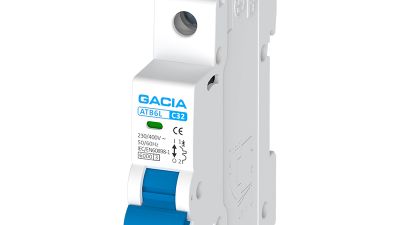
Automated manufacturing systems depend on stable power distribution, where a single electrical fault can interrupt production and damage sensitive equipment. The International Federation of Robotics reported that more than 541,000 industrial robots were installed worldwide in 2023, highlighting the growing demand for dependable protection in highly automated facilities. In this environment, the ATB6 6kA miniature circuit breaker (MCB) provides a practical solution for AC distribution networks, disconnecting overloaded or short-circuited circuits quickly to help protect personnel, machinery, and control systems.
Designed for automated production, the ATB6 combines a 6kA breaking capacity with a compact form factor and consistent trip characteristics. Its structural design is optimized for smart-factory manufacturing, supporting stable quality, efficient production, and shorter delivery cycles. These features are particularly valuable in control cabinets and machine panels where installation space is limited but reliable circuit protection is essential.
The International Energy Agency has identified industrial efficiency and digitalization as key factors in reducing energy waste and improving operational resilience. By maintaining dependable protection at the circuit level, the ATB6 helps reduce avoidable downtime and supports continuous operation across conveyors, robotic cells, motor controls, and other automated equipment. Its cost-performance balance also makes it suitable for system integrators and manufacturers seeking scalable protection without unnecessary cabinet complexity.
Match the trip curve to the load’s starting current. Type B suits lighting, heaters, and low-inrush circuits. Type C suits small motors, pumps, and office equipment. Type D suits transformers and compressors with heavy starting currents. A larger curve is not automatically safer.
Type B trips magnetically at 3–5 times its rated current. Type C trips at 5–10 times. Type D trips at 10–20 times. These values help compare inrush behavior.
Motors and compressors can draw sharp current spikes during startup. The wrong MCB may trip unnecessarily. Measure real behavior, not only the nameplate. Short surges matter.
Use the relationship Ib ≤ In ≤ Iz. The load current must stay below the MCB rating. The MCB rating must stay below cable capacity. A 20 A breaker cannot safely protect an 18 A cable.
Ambient heat, grouped cables, installation method, and continuous loads can reduce capacity. A crowded panel may run hot. Recheck derating values before approval.
Measure or calculate the prospective short-circuit current. The MCB’s breaking capacity must exceed that value. High Type D thresholds may delay disconnection when loop impedance is excessive. Check measured values again.
A single-pole device protects one live conductor. Two-pole devices disconnect two conductors together. Three- and four-pole devices suit three-phase systems and may isolate neutral conductors. Match the distribution system, not empty panel space.
The rated operational voltage must meet or exceed the circuit voltage. Check rail compatibility, terminal size, conductor material, enclosure clearance, and ambient temperature. Follow the specified terminal torque. Test before energizing.
No. It may indicate correct operation, light loading, or poor protection. Record peak load with a calibrated meter. Inspect warm terminals and verify conductor size. I have seen future loads missed. That mistake deserves another review.
Choosing the right MCB Circuit Breaker Types is essential for creating a safe, reliable, and efficient electrical protection system. Begin by understanding how an MCB detects overloads and short circuits, then match its operating characteristics to the connected load, whether it involves lighting, sockets, motors, or other equipment. Select a rated current that supports normal continuous operation without allowing excessive heating, and choose a suitable tripping curve to handle startup surges while responding quickly to fault conditions.
It is also important to verify that the breaker’s breaking capacity is sufficient for the prospective fault current at the installation point. Check the number of poles, system voltage, terminal arrangement, and available installation space before making a selection. Finally, consider applicable safety standards, environmental conditions such as temperature and moisture, ease of inspection, and long-term maintenance requirements. A complete evaluation of these factors helps ensure dependable protection and supports safe electrical system performance.