Leave Your Message
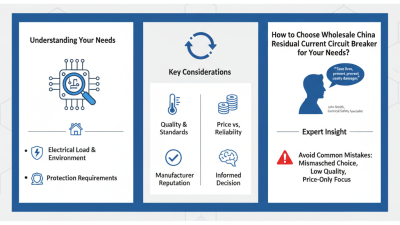
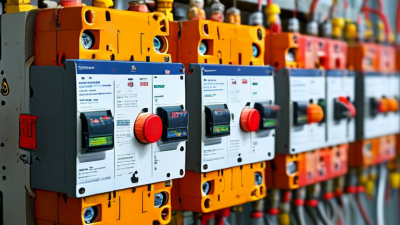
Picking the right RCCB circuit breaker isn’t just about comparing products—it's more of a practical safety decision. Basically, this device keeps an eye on current imbalances and will shut off the circuit if it detects a leakage that could lead to a dangerous path to ground. In a house, that might mean a path passing through a damp bathroom floor, damaged wiring insulation, or even metal appliance casings. The best choice really depends on your electrical setup, what devices are plugged in, where you're installing it, and what kinds of faults you expect.
Getting it right starts with looking at the rated current, sensitivity levels, number of poles, and how it trips. The rated current should match your circuit design, the capacity of your cables, and the upstream protection. Sensitivity is a bit trickier—going for a 30 mA RCCB is pretty common if you want that extra layer of protection against shocks. But, sometimes, higher sensitivities might be needed for specific systems. Plus, different RCCB types—like AC or A—respond to various residual current waveforms. Modern appliances can generate direct current components, so device compatibility becomes pretty important.
Don’t forget—little details can make a big difference.
Always check the manufacturer’s detailed technical info—not just what's on the front label. Look into terminal capacity, how it handles short circuits, operating temperature ranges, and testing procedures. Before turning on the power, it’s a smart move to have a qualified electrician review the installation and make sure everything lines up with local electrical codes.
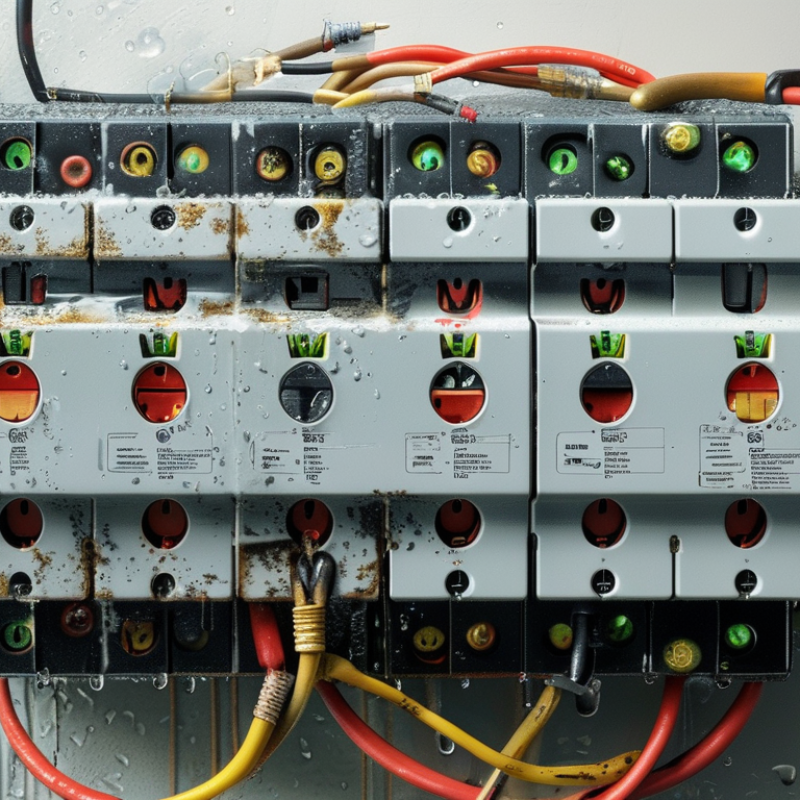
From real-world experience, we’ve often seen nuisance trips caused by shared neutral wires, moisture, or leakage from multiple appliances. Sometimes, swapping out the breaker alone won’t fix these issues, so keep that in mind. Making a good decision means balancing safety, reliability, maintenance needs, and cost. No single RCCB is perfect for every setup, and even a well-chosen one might need adjustment after some measurements are taken. And of course, proper testing is absolutely key to peace of mind.
How to Choose the Right RCCB Circuit Breaker?
An RCCB circuit breaker protects people by detecting leakage current flowing to earth. When this imbalance reaches its trip level, the RCCB disconnects the circuit quickly. It can prevent severe electric shock and reduce fire risk caused by insulation failure. However, an RCCB does not normally protect against overloads or short circuits. A suitable fuse or circuit breaker must provide that protection.
Choosing the right RCCB requires more than checking its appearance. Consider the rated current, number of poles, trip sensitivity, and RCCB type. A 30 mA device is commonly used for additional personal protection, while higher sensitivities may suit specific fire-protection or installation requirements. Type A can detect alternating and pulsating direct residual currents, which may occur with modern electronic equipment. Local electrical rules should guide the final choice. In practice, selection is not always neat. Load conditions can change, and a device that worked well in one home may be unsuitable elsewhere. A qualified electrician should verify compatibility and installation safety.
Tips: Press the test button regularly, following the instructions. The RCCB should trip immediately. If it does not, stop using the circuit and arrange professional inspection. Do not confuse the test result with complete protection. Wiring faults, poor earthing, or an incorrectly rated device can still create danger. Check labels carefully, keep the enclosure dry, and record any unexplained trips. A frequent trip is a warning, not an inconvenience.
| Selection Dimension | Common Options | Recommended Use | Purpose and Function | Important Selection Notes |
|---|---|---|---|---|
| Primary protection function | Residual-current protection | Protection against electric shock caused by current leakage to earth and reduction of fire risk from insulation faults. | An RCCB disconnects the circuit when the current flowing in the live conductors differs from the returning current by more than its residual-current setting. | An RCCB does not normally provide overload or short-circuit protection. Install suitable overcurrent protection, or use an RCBO that combines both functions. |
| RCCB type by waveform | ACAFB | Choose according to the type of residual current that connected equipment may produce. | Different RCCB types are designed to detect different residual-current waveforms. | Type AC is intended for sinusoidal AC residual currents where permitted by local regulations. Type A also detects pulsating DC residual currents and is commonly considered for electronic household equipment. Types F and B may be required for certain variable-speed drives, inverters, electric-vehicle equipment, or other specialized loads. Verify compatibility with the equipment and local standards. |
| Rated residual operating current (IΔn) | 10 mA30 mA100 mA300 mA | 30 mA is widely used for additional protection of people in final circuits. Higher ratings are often used for upstream or fire-protection applications. | Specifies the residual current at which the RCCB is designed to trip under defined test conditions. | A lower setting can improve sensitivity but may increase unwanted tripping. A 30 mA device is not a substitute for earthing, bonding, insulation, safe design, or proper installation. |
| Rated current (In) | 25 A40 A63 A80 A100 A | Select a rating that is suitable for the continuous load current and coordinated with the upstream overcurrent protective device. | Indicates the current the RCCB can carry continuously under its specified operating conditions. | The RCCB rated current is not a tripping setting for overload protection. Its rating should not be lower than the expected continuous load current and must comply with the installation design. |
| Number of poles | 2-pole4-pole | 2-pole devices are commonly used in single-phase circuits. 4-pole devices are commonly used in three-phase circuits with a neutral conductor. | All live conductors that require residual-current monitoring must pass through the sensing mechanism. | Do not route a protected circuit's neutral outside the corresponding RCCB. Follow the wiring diagram and local requirements for neutral switching and pole configuration. |
| System voltage and frequency | AC systems50/60 Hz | Match the RCCB to the nominal voltage, frequency, earthing arrangement, and supply configuration of the installation. | Ensures the device operates within its tested electrical conditions. | Check the product's marked voltage, frequency, insulation characteristics, terminal capacity, and suitability for the local distribution system before installation. |
| Trip-time characteristic | InstantaneousSelective / time-delayed | Instantaneous devices are commonly used for final circuits. Selective devices may be used upstream to improve discrimination between levels of protection. | Controls how quickly the RCCB disconnects when residual current reaches the applicable operating range. | Time-delayed or selective devices must not be used where they would compromise the required personal-protection function. Coordination should be designed and verified by a qualified professional. |
| Surge and nuisance-trip considerations | StandardHigh-immunity design | Consider high-immunity equipment where the installation has long cables, switching transients, lightning exposure, or multiple electronic loads. | Helps reduce unnecessary tripping caused by transient or cumulative leakage currents while maintaining the required residual-current protection. | Do not solve repeated tripping by simply increasing the residual-current rating. Investigate insulation faults, cumulative leakage, wiring errors, moisture, and equipment condition. |
| Testing and maintenance | Test buttonPeriodic verification | Use the built-in test button at the interval required by local rules or the installation's maintenance plan. | The test circuit checks the basic operating and tripping mechanism of the RCCB. | The test button does not replace professional electrical testing. If the device fails to trip, isolate the circuit safely and have the installation inspected by a qualified electrician. |
| Applicable standards and certification | IEC 61008-1Local regulations | Choose a device tested and certified for the intended application and installation environment. | Standards define requirements for construction, performance, testing, marking, and safe operation. | IEC 61008-1 covers residual current operated circuit-breakers without integral overcurrent protection for household and similar uses. Always follow the standards and regulations applicable to the country and installation. |
| When an RCCB is not the best standalone choice | RCBOSpecialized protection | Use an RCBO when each final circuit needs both residual-current and overcurrent protection, or when circuit-level selectivity is important. | An RCBO combines residual-current protection with overload and short-circuit protection in one device. | For equipment that can generate smooth DC residual current or complex waveforms, select the appropriate RCCB or RCBO type based on the equipment manufacturer's instructions and system design. |
Safety reminder: RCCB selection, installation, testing, and coordination should be carried out according to the applicable electrical code and by a qualified electrical professional.
: It detects leakage current flowing to earth. When leakage reaches its trip level, it disconnects the circuit quickly. This can reduce electric shock and fire risks. It does not normally protect against overloads or short circuits.
No. A separate fuse or overcurrent breaker is still required. The two devices provide different protections. Using only an RCCB leaves overload risks unresolved.
Check the system voltage, phase, frequency, rated current, poles, and residual sensitivity. The rated voltage must match the installation. Its poles must switch the required conductors. Do not guess.
A 30 mA device commonly provides additional personal protection. It may suit sockets, bathrooms, kitchens, and outdoor equipment. It does not replace safe wiring or proper earthing. The final choice depends on local rules and installation conditions.
Devices rated at 100 mA or 300 mA may support upstream protection. They can help reduce fire risks from insulation leakage. They are not usually the only protection against electric shock. Coordination with downstream devices matters.
Long cables, filters, damp outlets, or aging appliances can create leakage. Incorrect neutral connections may also cause unwanted tripping. A frequent trip is a warning. Check the circuit before resetting it repeatedly.
Press the test button according to the instructions. The device should trip immediately. If it does not, stop using that circuit. Arrange a professional inspection. The button checks the mechanism, not every wiring fault.
Verify the neutral path, earthing arrangement, conductor size, and expected load current. Include motor starting current in the assessment. Recheck the calculation when appliances change. Real systems rarely stay exactly as planned.
Choosing the right Rccb Circuit Breaker begins with understanding its main purpose: protecting people and electrical systems from dangerous residual current caused by insulation faults or leakage. Before making a selection, identify the system’s voltage, frequency, and expected load current. These details help determine the suitable rated current and the number of poles required for single-phase or three-phase installations.
The residual current sensitivity should match the level of protection needed, while the RCCB type must be compatible with the electrical loads, including standard, electronic, or variable-speed equipment. It is also important to verify that the device meets applicable installation standards and is compatible with the distribution board, wiring, and connected equipment. Finally, consider safety features such as clear status indication, reliable test functions, secure terminals, and appropriate environmental protection. Proper sizing, installation, and regular testing are essential for dependable performance.