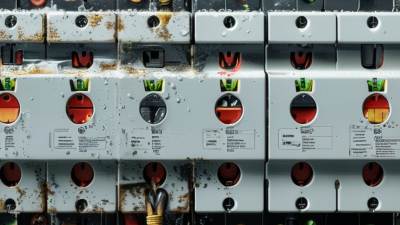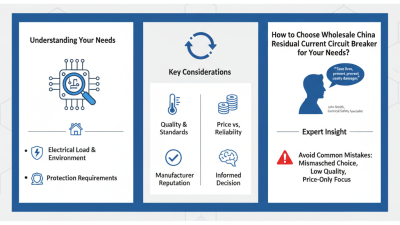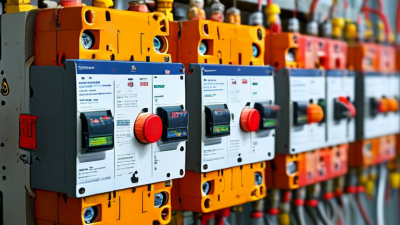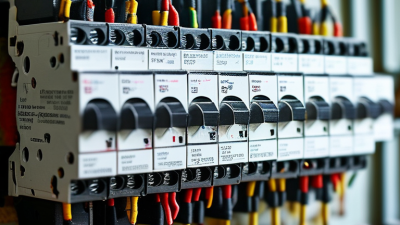
Picking a Residual Circuit Current Breaker isn’t just a box-ticking exercise. It’s a safety call, and a lot rides on things like load type, fault current, where it’s installed, and how well it’s maintained. A device can look like a perfect fit in the enclosure and still not protect the circuit the way it should. That’s a pretty uncomfortable thought, right? It deserves some real attention.
John Drengenberg, a former Consumer Safety Director at UL Solutions, has said it more than once: “Safety devices work best when they are correctly selected, installed, and tested.” That’s not just a nice quote—it comes from field experience. A workshop running variable-speed drives might need Type A or Type B protection, not just a basic Type AC model. A damp utility room? You’ll want to look closely at sensitivity, enclosure protection, and circuit loading. Small stuff can make a big difference.
This guide looks at the decisions behind reliable selection. We’ll go through rated current, residual operating current, poles, short-circuit capacity, trip characteristics, and how it all works with modern electronic equipment. We’ll also cover why manufacturer data is worth checking before you install anything. A 30 mA device is common for personal protection, sure—but common doesn’t always mean correct. Nuisance tripping can knock out refrigeration, alarms, or production equipment. Ignore that, and you’ve maybe created another risk.
Real installations are rarely perfect. Labels can be vague. Older wiring can hide weaknesses. And sometimes the breaker gets picked a little too fast. That’s where a proper professional inspection earns its keep. Engineers, electricians, and facility managers should look at the device together with the whole circuit, not just one isolated spec. Careful testing, documented maintenance, and qualified installation—that’s what turns a Residual Circuit Current Breaker from just a purchased component into dependable protection.

A Residual Current Circuit Breaker monitors the electricity leaving and returning through a circuit. Normally, both currents are equal.
Inside the device, a sensing transformer compares these currents continuously. If damaged insulation sends current toward earth, an imbalance appears. The breaker then opens the circuit, often within milliseconds. It detects leakage, not ordinary overloads or every short circuit. A separate overcurrent breaker may still be necessary.
The protection is practical. The U.S. Bureau of Labor Statistics recorded 145 fatal occupational injuries involving electric current in 2022. That figure does not prove every incident was preventable, but it shows why fault protection deserves careful design.
When choosing one, check the rated current, number of poles, tripping sensitivity, and compatible waveform type. A 30 mA device is commonly selected for additional personal protection under IEC 60364-4-41 requirements. Higher sensitivities may serve equipment or fire protection, depending on the installation.
Type AC suits simple alternating loads. Type A is more suitable for modern electronic equipment, which can create pulsating direct current. Type F or Type B may be needed for variable-speed drives, medical equipment, or charging systems. Local regulations decide the final arrangement.
I have seen nuisance trips blamed on the breaker. Often, accumulated leakage from filters caused the problem. Measure the circuit first. Do not select a higher trip level simply to silence repeated interruptions. That shortcut needs reflection.
RCD is the broad family name for devices that detect leakage current. An RCCB disconnects a circuit when leakage exceeds its rated threshold. It does not protect against overloads or short circuits. A separate miniature circuit breaker is still required.
An RCBO combines residual-current protection with overload and short-circuit protection. This saves space inside crowded distribution boards. The International Electrotechnical Commission’s IEC 60364 guidance supports additional protection with 30 mA devices in many socket-outlet and wet-area applications. However, local installation rules still control the final choice.
A practical selection starts with the load. Type AC suits simple alternating leakage, while Type A also detects pulsating direct-current leakage from modern electronic equipment. Heat pumps, variable-speed drives, and charging equipment may require Type F or Type B protection. The wrong sensing type can remain silent during a real fault.
NFPA data on 2016–2020 U.S. home fires found electrical distribution and lighting equipment involved in 57% of fires linked to electrical failure or malfunction. That figure is a warning, not a substitute for site testing. Labels can also confuse buyers, especially when “RCD” is used as a general term.
Tips: Match the device’s poles, rated current, trip sensitivity, and residual-current type to the circuit. Check neutral routing carefully. Test the device using its button after installation, then follow the local inspection schedule. A qualified electrician should verify discrimination, earthing, and measured trip time. I would not choose only by price. Availability and convenience can hide an unsafe compromise.
Assessing electrical requirements should begin with the circuit, not the breaker label. Record the supply voltage, phase arrangement, rated load, cable size, earthing method, and prospective fault current. Then identify connected equipment. Inverters, variable-speed drives, heat pumps, and electronic chargers may produce smooth or high-frequency leakage. A basic device may not detect every waveform. IEC 60364-4-41 identifies 30 mA residual protection for additional protection in several applications, but local rules still control installation decisions.
The environment matters just as much. Bathrooms, kitchens, workshops, outdoor sockets, and construction areas often need stronger protection against accidental contact. Check humidity, dust, temperature, cable length, and expected leakage from filters. Select the suitable residual-current type, rated current, pole arrangement, trip sensitivity, and short-circuit withstand rating. Coordination also matters. If several devices protect one installation, selective settings can prevent a whole building from losing power. It sounds simple. It is not always.
Tips: Measure existing leakage with a proper tester before choosing sensitivity. Leave operating margin for normal equipment leakage. NFPA reports that U.S. fire departments handled an estimated 32,220 home fires involving electrical distribution and lighting equipment annually from 2016 to 2020. That figure supports careful assessment, not automatic overprotection. A low trip threshold can improve safety, yet unnecessary tripping may encourage unsafe bypassing. I would review the design again after commissioning, because real loads often differ from the spreadsheet. Have a qualified professional verify testing, isolation, and local compliance.
Selecting the rated current and voltage starts with the circuit, not the breaker shelf. The rated current should match the cable’s permitted continuous load. It should also exceed the appliance’s normal operating current. A 20 A circuit, for example, may need a 20 A breaker, but only after checking cable size, installation method, and ambient temperature. More is not always safer.
Check the system voltage carefully. A breaker designed for 230 V may not suit a 400 V line-to-line circuit. Confirm the number of poles, frequency, and whether the circuit is single-phase or three-phase. The marked operational voltage must meet or exceed the supply voltage. Allowing a margin is sensible. Never guess from a familiar-looking label.
The phrase Residual Current Circuit Breaker with Overload Protection describes a device combining leakage protection with overcurrent protection. Its rated current protects the circuit from excessive load, while the residual operating current, such as 30 mA, responds to leakage. These are different values. I once found a correctly rated device installed on an undersized cable; the label looked convincing, but the installation was still unsafe. That mistake is easy to repeat. Check terminal markings, conductor dimensions, and the expected load profile. Motors and heating equipment may draw brief starting currents. A qualified electrician should verify coordination, disconnection requirements, and local standards before energizing the circuit. Don’t rely on appearance.
Choosing the appropriate residual operating current begins with the circuit’s purpose, not the breaker’s label. The rated residual operating current, written as IΔn, indicates the leakage level that triggers protection. For socket outlets, bathrooms, outdoor equipment, and portable tools, 30 mA is commonly selected for additional protection against electric shock. It is not a substitute for grounding, insulation, or correct installation.
A larger setting, such as 100 mA or 300 mA, may suit an upstream device where equipment leakage and fire risk require different coordination. However, it should not be treated as personal shock protection. Check the expected leakage from power supplies, filters, heating elements, and long cables. A clamp meter can reveal normal leakage before selection. Measure during startup, too. Some equipment behaves differently then.
Avoid choosing 30 mA automatically. A neat answer can be incomplete. If several circuits share one protective device, their combined leakage may cause nuisance tripping. I have seen a circuit appear healthy until a motor started. The measured value was acceptable, but its short surge exposed poor coordination. Consider circuit grouping, selectivity, and the upstream device’s time delay. The breaker’s residual-current type also matters: AC, A, F, or B may be needed for different current waveforms. Always compare the final choice with local electrical standards and the equipment manufacturer’s data. Field conditions can challenge a tidy calculation.
Choosing a Residual Current Breaker requires more than matching a current rating. Check the circuit’s phase arrangement first. A two-pole device commonly serves single-phase circuits, while a four-pole device suits three-phase systems with a neutral. The neutral must pass through the correct sensing path. A wiring mistake can leave protection incomplete.
Select the type according to the connected load. Type AC detects alternating residual current, while Type A also responds to pulsating direct current from modern electronic equipment. Some systems may require Type B, but this depends on equipment design and local electrical rules. Check the rated residual operating current, such as 30 mA, only where the installation standard requires personal protection. Verify compliance with recognized standards, including IEC 61008 or IEC 61009, and confirm the marking matches the product’s actual function.
Tips: Inspect the enclosure rating, ambient temperature, moisture, and available space before installation. Tighten terminals to the specified torque, not by guesswork. Keep neutral and protective conductors correctly separated. Press the test button after installation and during scheduled checks. The button is useful, but it does not replace professional testing. In practice, a clean panel can still hide a loose connection. I have found that assumption is often the weak point. Have a qualified electrician verify polarity, insulation, and trip performance under local regulations.
Check the number of poles against the supply arrangement before selecting an RCCB or RCBO. The chart shows common pole configurations used in low-voltage installations.
Installing a Residual Circuit Breaker begins with the circuit schedule, not the toolbox. A qualified electrician should confirm supply voltage, pole arrangement, rated current, and residual operating value. Disconnect and lock out the supply before opening the distribution board. Verify the meter on a known live source, test the circuit as dead, then verify the meter again. It feels repetitive. That is the point. Line and load conductors must enter their marked terminals. Protective earth must remain continuous and separate. Loose terminals can create heat, nuisance trips, or false protection.
After installation, restore power carefully and press the built-in test button. The breaker should trip immediately, but this button cannot replace a measured test. An electrician can use a calibrated residual-current tester to check trip current and response time. Test at several settings. Record the results, circuit identification, date, and instrument used. A failed test means the circuit should not be treated as protected. Investigate wiring, neutral connections, leakage, and device condition before re-energizing it.
Maintenance needs a practical routine. Press the test button at the interval required by local rules and instructions. Monthly checks are common, but requirements vary. Keep the enclosure dry, clean, and accessible. Look for discoloration, cracked insulation, unusual warmth, or repeated tripping. Do not simply reset it again and again. That habit hides faults. Dust and renovation work can change leakage patterns, so retest after major alterations. Records help, although they can still miss intermittent faults.
It compares current leaving and returning through a circuit. A leakage path creates an imbalance. The device then opens the circuit, often within milliseconds.
No. It mainly detects current leaking toward earth. A separate overcurrent breaker may still be necessary. One device cannot cover every fault.
An RCCB provides residual-current protection only. An RCBO also handles overloads and short circuits. This combination can save space in a crowded panel.
A 30 mA device is commonly used for additional personal protection. Higher settings may suit equipment or fire protection. The installation rules and measured conditions must guide the choice.
Type AC suits simple alternating-current loads. Type A also detects pulsating direct-current leakage. Some variable-speed equipment may require a more advanced type. Do not guess.
A two-pole device commonly serves a single-phase circuit. A four-pole device often suits a three-phase circuit with neutral. The neutral must pass through the correct sensing path.
Check rated current, enclosure conditions, moisture, temperature, and available panel space. Route neutral conductors correctly. Separate neutral and protective conductors. Tighten terminals to the specified torque.
Measure the circuit before changing the trip setting. Several filters may create accumulated leakage. Inspect insulation, wiring, and connected equipment. Silencing repeated trips may hide a real problem.
A Residual Circuit Current Breaker is a protective device designed to disconnect an electrical circuit when it detects current flowing unintentionally to earth. Understanding its operating principle helps distinguish it from related devices: an RCD is a general term for residual-current protection, an RCCB provides residual-current protection without built-in overcurrent protection, while an RCBO combines residual-current and overcurrent protection in one unit. Selecting the right device begins with assessing the system type, circuit purpose, load characteristics, and expected fault conditions.
The breaker should be chosen according to the circuit’s rated current and voltage, with sufficient capacity for normal operation and possible load variation. Its residual operating current must balance effective protection with resistance to unnecessary tripping. Users should also check the number of poles, device type, applicable standards, enclosure rating, temperature, moisture, wiring space, and installation environment. After installation, connections should be verified carefully, followed by functional testing with the test button and, where appropriate, professional measuring equipment. Regular inspection and testing help confirm reliable operation and support long-term electrical safety.