Leave Your Message
0%

Choosing an MCCB for an international project isn’t just about matching the current rating—there’s a bit more to it. You have to think about how it’ll be installed, what kind of load it’s expected to handle, the fault level, and the environment it’ll be working in. For example, if the breaker’s going inside a tight control panel, heat and poor ventilation can become a real issue. Or if it’s headed to a dusty workshop, you might need a different enclosure and a solid maintenance plan. Honestly, small details matter—probably more than you’d expect.

Alright, here's the thing—this guide gives you ten practical checks to run through when you're comparing products and suppliers. You'll cover rated current, voltage, pole configuration, and short-circuit breaking capacity. But it also digs into why trip settings, coordination with upstream protection, and accessory requirements are worth a careful look. And for DC circuits, well, you can't just pick any old breaker—you need a Dc Mccb that's specifically matched to your system's voltage and current direction. Don’t assume you can just swap an AC design for a DC one—they’re not automatically interchangeable. Always dig into the manufacturer’s technical specs instead of trusting the product label at face value.

One more thing—when you're sourcing, don't just skim the specs. You really want to dig into the standards, test reports, traceability, warranty terms, and what after-sales support looks like in the market you're shipping to. And double-check that all the paperwork actually lines up with the exact model you're being quoted. You'd be surprised: even seasoned buyers miss a tiny mismatch between a datasheet and the PO spec. It happens to the best of us. So before you approve samples or drop a bulk order, ask straight questions—and save the answers somewhere. You'll thank yourself later. Look, these steps won’t magically eliminate every project risk—but they do make comparisons a lot more consistent, and they help buyers spot potential gaps before anything gets installed.

10 MCCB Buying Tips for Global Buyers?

Understand MCCB Functions, Types, and Applications

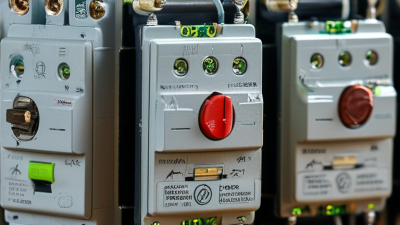
A molded case circuit breaker (MCCB) protects electrical circuits from overloads and short circuits. Its trip mechanism opens the contacts when current exceeds a set limit, helping reduce equipment damage and fire risk. Many models use thermal-magnetic protection; electronic trip units can offer more precise adjustment and monitoring. Check the rated current and interrupting capacity against the system’s available fault current. A high current rating alone does not guarantee suitable protection.

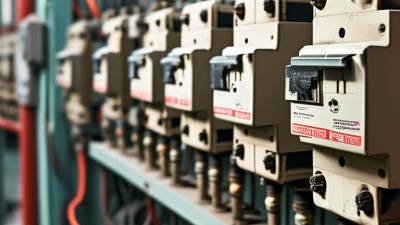
For buyers comparing Mcb And Mccb, the practical difference is often adjustability and application range. MCCBs commonly serve larger feeders, motors, generators, and commercial distribution panels, while smaller branch circuits may need a different device. Pole count matters too: a three-pole unit can protect a three-phase circuit, but neutral requirements depend on the installation. Details matter. Review the manufacturer’s trip curves and installation instructions with a qualified electrical professional.

Also consider enclosure dimensions, terminal access, operating temperature, and coordination with upstream and downstream breakers. For example, a panel in a warm plant room may need derating, while a motor circuit may experience brief starting currents. An adjustable trip setting can help, but an incorrect setting can leave cables exposed to overheating. This is easy to overlook. Confirm cable size, load profile, and fault levels before selecting a model; field conditions rarely match a neat catalogue example exactly.

Define System Requirements and Operating Conditions

Before comparing a Molded Case Circuit Breaker Mccb, document the system it must protect. Record the supply voltage, phase arrangement, frequency, and available fault current. Note the conductor material and size, too. These details shape suitable ratings; a device that fits the panel may still be unsuitable for the circuit.

Then describe actual operating conditions, not just the room temperature. Is the enclosure exposed to dust, moisture, vibration, or direct sunlight? Will the breaker sit beside heat-producing equipment? A crowded cabinet can affect temperature and may require checking the manufacturer’s derating guidance. Keep the installation manual available. It is easy to overlook.

Also clarify how the circuit behaves during normal operation. Motors, transformers, and other loads can draw temporary starting current, while frequent switching may affect device selection. List expected load changes and how quickly power must be restored after a trip. Don’t guess at fault levels. Ask a qualified electrical professional to verify calculations and coordination with upstream and downstream protection. One assumption can travel through an entire specification. I have seen buying discussions focus on current rating alone; that shortcut leaves important conditions unanswered. A clear requirements sheet gives suppliers a practical basis for recommending and confirming a suitable configuration.

10 MCCB Buying Tips for Global Buyers: Define System Requirements and Operating Conditions

These are examples of common three-phase nominal system voltages, not a complete list of regional systems. Before selecting an MCCB, confirm the site voltage, frequency, grounding arrangement, number of poles, and prospective short-circuit current. Choose a breaker with suitable rated operational voltage and interrupting capacity, and check any ambient-temperature or enclosure-related derating in the manufacturer’s technical data.

Check Current, Voltage, Breaking, and Trip Ratings

A molded-case circuit breaker (MCCB) must match the circuit, not just the equipment nameplate. Start with rated current and the load’s continuous demand. Then check conductor size, ambient temperature, and enclosure conditions; heat can reduce a breaker’s usable capacity. IEA’s Electricity 2025 report says global electricity demand grew 4.3% in 2024, increasing pressure on distribution systems. That figure is context, not a sizing rule. Small mismatch. Big consequence.

Verify rated voltage and frequency against the supply. IEC 60947-2 covers circuit breakers for systems up to 1,000 V AC or 1,500 V DC; confirm the selected device’s actual ratings. Breaking capacity must meet or exceed the prospective short-circuit current at its installation point. A high current rating alone does not prove adequate fault protection. Check the curve. Compare the trip unit’s overload and instantaneous settings with motor starting current, cable protection, and coordination requirements. In practice, the coordination study is often rushed; that is precisely where assumptions should be challenged. Ask for test documentation and a fault-level calculation, then record the values beside the panel schedule for later review.

Verify Compliance with Regional Standards and Certifications

Regional compliance is not a paperwork formality. A Moulded Case Circuit Breaker Mccb must match the standards and certification rules of its destination market. IEC 60947-2 may be relevant in many markets, while UL 489 is commonly required for certain North American applications. Requirements vary by country and use. Check the market.

Review the certificate’s scope, not just its logo. Confirm that it covers the exact model, rated voltage, current, breaking capacity, and pole configuration you plan to buy. A certificate for a similar frame size may not cover the selected trip unit or accessories. Ask for current test reports and verify the issuing body through an independent channel. Small mismatch, big delay.

Also compare the product’s markings and datasheet with the documents. Names, ratings, and model codes should agree. If the seller cannot explain a discrepancy clearly, pause and request written clarification. It is tempting to treat a familiar standard as a universal passport, but that assumption can fail at customs or during installation review. Check local acceptance before placing a large order.

10 MCCB Buying Tips for Global Buyers? - Verify Compliance with Regional Standards and Certifications

# Buying tip What to verify Standards, evidence, or regional context
1 Match the applicable product standard Confirm the exact standard and edition required for the destination market and intended application. IEC 60947-2 covers circuit-breakers used in low-voltage switchgear and controlgear. North American projects commonly require evaluation to UL 489 and/or CSA C22.2 No. 5.1; China has GB/T 14048.2. Confirm local requirements rather than assuming standards are interchangeable.
2 Check the certification scope Match the certificate or listing to the exact product family, frame size, trip unit, poles, ratings, and accessories being purchased. Use the issuing certification body's database or documentation to confirm scope and status. A document for a similar model does not establish compliance for the supplied configuration.
3 Understand marking versus certification Ask which legal obligations apply and what documentation must accompany the product. In the EU, CE marking is generally based on the manufacturer's conformity assessment and declaration for applicable legislation; it is not, by itself, proof of third-party certification. Verify the applicable legislation, technical documentation, and EU Declaration of Conformity.
4 Compare breaking-capacity ratings correctly Check the rated short-circuit breaking capacity against the prospective fault current at the installation point, at the specified voltage. For IEC-rated devices, review Icu and Ics at the relevant operational voltage. For UL-listed devices, check the interrupting rating at the applicable system voltage. Do not compare values without accounting for the rating system and test conditions.
5 Verify current and voltage ratings Confirm rated current, rated operational voltage, frequency, number of poles, and AC or DC suitability. Check the device nameplate and official datasheet for the precise configuration. A rating for one voltage, pole arrangement, or current path should not be assumed to apply to another.
6 Choose trip characteristics for the load Review overload and short-circuit protection settings, trip-unit type, and coordination with upstream and downstream protection. Use manufacturer time-current curves and the project protection study. Electronic and thermal-magnetic trip units may offer different adjustment ranges and functions; confirm that the selected unit suits the application.
7 Check installation and environmental limits Confirm ambient-temperature conditions, enclosure requirements, mounting orientation, terminal type, and available installation space. Apply any required manufacturer derating instructions. The MCCB's enclosure or panel may determine the overall ingress-protection level; do not assume the breaker alone provides the enclosure rating.
8 Validate accessories and auxiliary circuits Specify shunt trips, undervoltage releases, auxiliary contacts, alarm contacts, and motor operators as needed, including their control-circuit ratings. Verify accessory compatibility with the exact breaker frame and trip-unit configuration. Check wiring diagrams, control voltage, and any relevant accessory approvals before ordering.
9 Request traceable technical documentation Obtain the datasheet, installation instructions, test or certification records where applicable, wiring diagrams, and declaration documents required for the market. Check that model identifiers and ratings are consistent across the product marking, quotation, certificates, and technical documents. Keep the documents with project and inspection records.
10 Confirm acceptance in the destination market Before purchase, confirm local code, authority, utility, and project-specification requirements with the responsible engineer or inspector. Recognition of standards, marks, and certification bodies can differ by country and application. Confirm current local rules and any required registration, labeling, language, or import documentation.

Always verify the latest applicable requirements and the exact MCCB configuration with the relevant certification body, project engineer, or local authority.

Evaluate Product Quality, Manufacturer Capability, and Lead Times

When sourcing an Mccb Moulded Case Circuit Breaker, compare the rated current, breaking capacity, and operating conditions with your actual installation. A product sheet should state these values clearly, not leave key limits buried in fine print. Ask for relevant routine test records and evidence that production units match the approved sample. Details matter. Check terminal finish, enclosure fit, and whether labels remain readable after handling.

Manufacturer capability affects consistency as much as product design. Ask who performs assembly and testing, how batches are traced, and what happens when a unit fails inspection. A factory visit can help, but a clear audit report and sample inspection may be more practical for distant buyers. Do not judge capability by a large catalog alone. It is easy to overlook the supplier’s control of components and production changes.

Lead times need the same scrutiny. Request a written schedule covering sample approval, production, testing, packing, and dispatch. Confirm which dates depend on your drawings or payment, and ask how delays are communicated. A short quoted lead time may sound attractive, yet it is not useful if it assumes every component is already in stock. Build in a modest buffer. Buyers can also underestimate their own review time, so share technical requirements early and keep one person responsible for approvals.

Compare Total Cost, Documentation, Warranty, and Support

For an MCCB, the quoted unit price is only one part of the purchase. Compare freight, packaging, duties, accessories, and any commissioning costs before deciding. A low quote can still become expensive. Ask whether the price includes auxiliary contacts, shunt trips, or other options your design requires. Small charges add up.

Check documentation before placing the order. Request the product datasheet, dimensional drawings, wiring details, and relevant test records for the exact model and configuration. Confirm that ratings and installation conditions match your project, rather than relying on a similar-looking product sheet. Keep document versions with the purchase records. One detail I would double-check: do the drawings show the terminals and clearances you will actually receive? Paperwork can be incomplete, so ask specific questions early.

Read the warranty terms closely. Check its duration, what is covered, and how claims are handled, including shipping and replacement timelines. A long warranty matters less if support is difficult to reach. Ask who answers technical questions, what information they need, and whether support is available across your working hours. Clarify spare-part availability too. Compare the response process, not just the promise. I would still leave room for uncertainty: delivery estimates and service turnaround can change, so get key commitments in writing and plan a practical buffer.

FAQS

What information should I gather before selecting a molded case circuit breaker?

Record supply voltage, phase arrangement, frequency, and available fault current. Note conductor material and size. A panel fit alone proves little.

Why do operating conditions matter?

Dust, moisture, vibration, sunlight, and nearby heat can affect installation suitability. Check the enclosure temperature and applicable derating guidance. Details matter.

How should I account for motor starting current?

Motors and transformers may draw temporary starting current. List normal loads, expected changes, and switching frequency before comparing configurations.

Who should verify fault-current calculations?

Ask a qualified electrical professional to check fault levels and protection coordination. Don’t guess. One wrong assumption can affect the whole specification.

What should I check on a compliance certificate?

Confirm it covers the exact model, voltage, current, breaking capacity, and pole configuration. Similar-looking models may differ.

Is a familiar standard accepted in every market?

No. Requirements vary by destination market and application. Check local acceptance before placing a large order.

How can I spot mismatched product documents?

Compare markings, model codes, ratings, and datasheets with the certificates. Ask for written clarification if anything differs. Small mismatch, big delay.

What should I do if a seller cannot explain a discrepancy?

Pause the purchase and request current test reports. Verify the issuing body independently. I might be overlooking something, so written confirmation helps.

Conclusion

Choosing the right Mccb starts with understanding its functions, available types, and intended applications. Buyers should define the system’s requirements and operating conditions, including expected loads and environmental factors, before comparing products. Carefully check the rated current and voltage, breaking capacity, and trip characteristics to ensure the device is suitable for the installation and can provide the required level of protection.

A thorough evaluation also considers compliance with applicable regional standards and certifications, product quality, manufacturing capability, and realistic lead times. Look beyond the initial purchase price by comparing total cost, technical documentation, warranty terms, and after-sales support. A clear assessment of these factors helps global buyers make a more informed choice, reduce sourcing uncertainty, and select an Mccb that fits both operational needs and long-term expectations.
James

James

James is a seasoned marketing professional with over two decades of experience in the electrical manufacturing industry. Since joining GACIA, he has played a pivotal role in promoting the company’s commitment to excellence in circuit breaker research, development, and manufacturing. His deep......
Previous 7 Tips to Choose the Best MCB Circuit Breaker Types