Leave Your Message
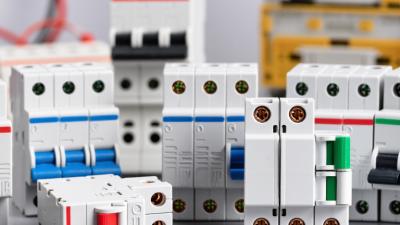
So, when you're picking from the Top 10 Miniature Circuit Breaker Types, it's not just about matching current ratings. Honestly, each design acts a bit differently when overloads, short circuits, installation conditions, and sensitive equipment come into play. For example, a B-curve breaker can be a good fit for lighting circuits, while a C-curve model is usually better at handling moderate motor starting currents. D-curve devices need a little extra care, since they tolerate higher inrush currents.
Electrical safety educator Mike Holt has a handy way of putting it: 'A circuit breaker protects conductors; it doesn’t fix a faulty design.' That warning really should guide every comparison you make. The breaker has to match the cable size, the expected load, the fault level, and the distribution board. And where it applies, it should also line up with recognized requirements, like IEC 60898-1.
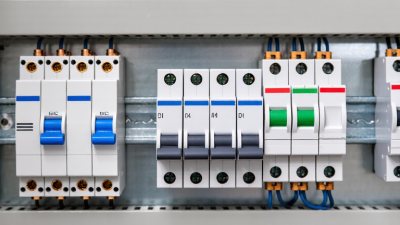
Honestly, it's the real-world installs that show you what actually matters. Take something like a narrow DIN-rail breaker—if your panel's already packed, that extra bit of room can make a big difference. And yeah, a trip indicator you can actually see? That can save you a ton of time when you're trying to figure out what tripped. Terminals matter, too, especially once you've tightened them over and over again. It's those little things that start to add up.
And just because something's popular doesn't mean it's the right pick.
Ever tried picking a Miniature Circuit Breaker and felt like you needed a decoder ring? This guide walks through ten MCB types—thermal-magnetic, electronic, single-pole, double-pole, and curve-specific designs. We'll look at how they work, where they shine, what they can't do, and the applications they're actually suited for. And yes, there's an awkward truth here: the label can look perfectly clear, and you still might not be sure which one to choose. Ratings also shift from one manufacturer to another—Schneider Electric, Siemens, ABB, Eaton, you name it. Before you go ahead and install anything, always double-check the technical data sheet. Honestly, taking that extra moment to make the right call helps keep people safe, protects your cables and equipment, and keeps the whole electrical system’s credibility intact.
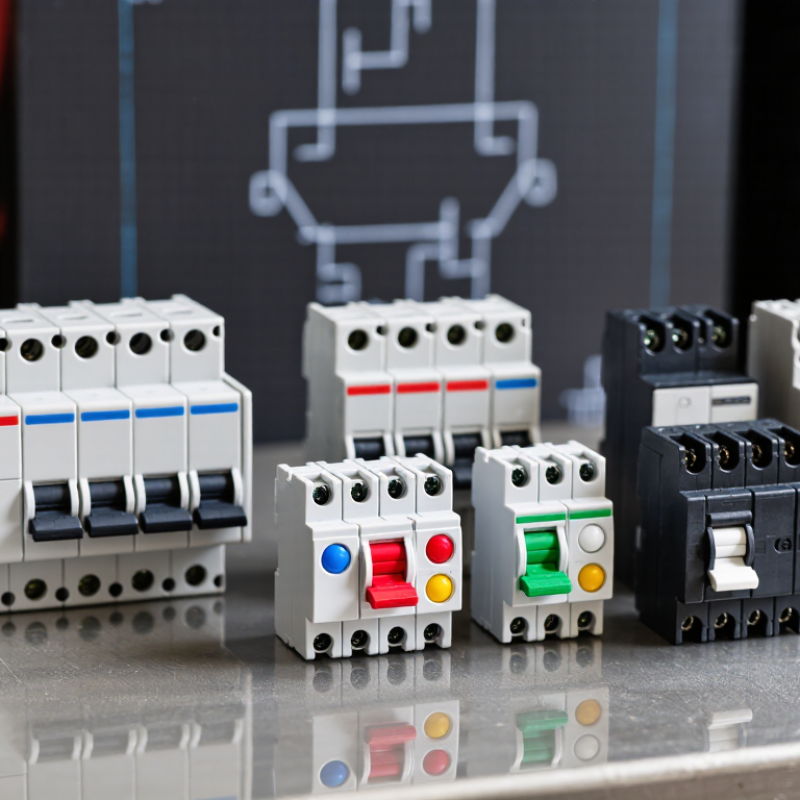
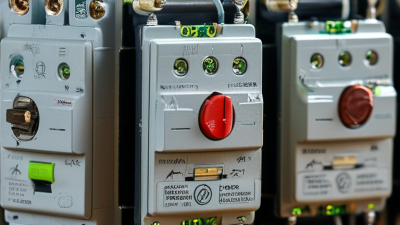
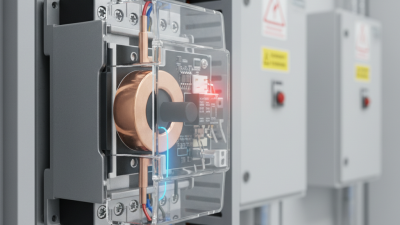
Miniature circuit breakers, or MCBs, protect low-voltage circuits from overloads and short circuits. They disconnect power before overheated conductors create serious damage. IEC 60898-1 defines key requirements for household and similar circuit breakers, including rated current, breaking capacity, and tripping performance.
The most useful MCB classifications include B, C, D, K, and Z curves, plus one-pole, two-pole, three-pole, and four-pole designs.
Curve B usually trips between 3 and 5 times rated current. Curve C commonly trips between 5 and 10 times. Curve D tolerates higher inrush currents from motors and transformers. K and Z curves serve more specialized loads.
Pole selection depends on the circuit arrangement, not personal preference. A four-pole unit can isolate three-phase conductors and the neutral.
The numbers matter.
NFPA home-fire data identifies electrical distribution and lighting equipment in roughly one out of four reported home fires. That finding supports careful protective-device selection, but an MCB cannot correct poor wiring or loose terminals. Real installations are less tidy than diagrams suggest. Ambient heat, cable grouping, and motor starting current can change the result.
Tips: Match the MCB rating to the conductor’s allowable current. Check the prospective short-circuit current and required breaking capacity. Test trip operation during commissioning. When uncertain, ask a qualified electrician to verify the design against local requirements.
A miniature circuit breaker automated assembly and inspection production line is an integrated manufacturing system designed to manage the complete process from component feeding to final packaging. It can automate component joining, pin insertion, riveting, pad printing, inkjet coding, and laser marking, while reducing manual handling and improving production consistency. According to the International Federation of Robotics’ *World Robotics 2024* report, 541,302 industrial robots were installed worldwide in 2023, reflecting the accelerating adoption of automated production technologies.
Quality assurance is built into each stage of the line. Automated inspection modules can verify time-delay performance, mechanical operation, electrical continuity, and dielectric withstand voltage. Qualified and non-conforming products are sorted automatically, helping prevent defective units from reaching packaging or shipment. Real-time process monitoring and automatic data storage also create traceable production records, supporting faster root-cause analysis and more reliable quality control.
For intelligent factory management, the system can manage recipes and process parameters, analyze energy consumption, and support remote operation and maintenance. Integration with MES, ERP, and big-data platforms enables production scheduling, equipment-status visibility, and performance analysis across the factory. Deloitte’s *2024 Smart Manufacturing and Operations Survey* found that 86% of manufacturing leaders expect smart manufacturing to be a major competitiveness driver within three years, highlighting the value of connected, data-centered production lines.
B-curve MCBs suit lighting, sockets, and low-inrush residential circuits. They trip magnetically at about three to five times rated current. They react quickly.
C-curve MCBs handle moderate starting currents. They may suit pumps, small motors, and fluorescent lighting. Check the actual starting current.
D-curve MCBs may suit transformers, compressors, and industrial motors with heavy inrush. They allow higher starting current before magnetic tripping. Do not guess.
It may delay fault clearance when available short-circuit current is too low. Verify the prospective fault current before installation. This detail is easy to miss.
Check rated voltage, polarity, interruption rating, and pole count. Direct current does not naturally cross zero. Arcs can remain intense.
It suits circuits with high prospective short-circuit current. Its breaking rating should exceed the measured or calculated fault level. Load current alone is insufficient.
An RCBO combines overcurrent protection with residual-current protection. It can disconnect a faulty bathroom circuit during leakage. Correct earthing remains necessary.
Check voltage, frequency, cable size, fault current, terminal capacity, and coordination with upstream protection. Tighten terminals using calibrated torque. Label every circuit.
Sometimes, but its starting current may still be substantial. A “small” motor can surprise the designer. Measure before choosing the curve.
Focusing only on cabinet space can create poor access and confusing wiring. Leave testing space and expect future load growth. I still find this easy to underestimate.
Miniature Circuit Breaker Types are essential for protecting electrical circuits from overloads and short circuits while allowing safe, convenient disconnection. This article explains how MCBs work, including their thermal and magnetic tripping principles, and shows how they are classified by trip curve, number of poles, and breaking capacity. B-, C-, and D-curve devices are compared according to the starting currents and operating characteristics of different loads, helping readers understand which curve is appropriate for lighting, household appliances, motors, or other demanding equipment.
The overview also covers single-, double-, triple-, and four-pole configurations, along with DC-rated MCBs, high-breaking-capacity models, and RCBOs that combine overcurrent and residual-current protection. Finally, it outlines practical selection factors such as circuit voltage, rated current, prospective fault current, load behavior, wiring compatibility, installation space, and required protection functions. These considerations support safer installations and help ensure that the chosen device matches both system requirements and local electrical practices.