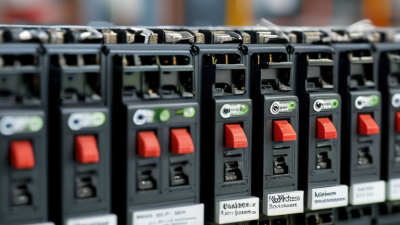
When it comes to China’s Overload Circuit Breaker manufacturing scene, it’s a pretty interesting mix of large-scale production and specialized engineering. In this overview, I’ll give you a sneak peek at ten Chinese manufacturers worth knowing about—names like CHINT, Delixi Electric, TENGEN, People Electrical Appliance Group, and Shanghai Liangxin Electrical come to mind. These companies stand out for various reasons, and we’ll cover that too.
We looked at things like certifications, thermal-magnetic protection, short-circuit ratings, how consistent their production lines are, and how good they are after the sale. On a more practical note, we also factored in terminal strength, heat resistance of enclosures, and how well their trip mechanisms perform, especially in crowded distribution boxes—because let’s be honest, those little details matter big time during installation.
Honestly, electrical safety isn’t something you can mess around with—it’s a must. And that’s exactly what safety expert John Cadick summed up perfectly: every reliable Overload Circuit Breaker should act before excessive current causes damage to wires, insulation, or the devices connected. Plus, it should reset smoothly once the problem’s gone—that’s just good engineering.
We’ll also be looking at brands like CNC Electric, Suntree, Meba Electric, Hongfa, and Geya Electrical. Their product ranges are pretty diverse—some mainly make residential miniature circuit breakers, while others focus on industrial panels, solar power systems, or even export markets.
Now, here’s the thing—certification alone doesn’t tell you everything. The real performance depends on strict testing, quality control during manufacturing, and what feedback from the field tells us. Sure, some supplier claims sound impressive, but you gotta take everything with a grain of salt until it’s independently verified. And the tricky part? Public technical data isn’t equally available from every maker, and quality can vary from one product series to another.
So, think of this ranking more like a starting point for your research rather than the final word on what to buy. We’ve tried to compare each manufacturer based on actual features, how suitable their products are for different applications, and whether there’s solid proof of consistent quality in their Overload Circuit Breakers.

What Is an Overload Circuit Breaker?
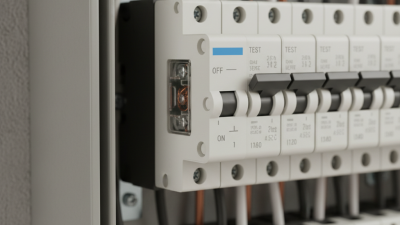
An overload circuit breaker is a protective switching device that interrupts power when current stays above a safe level. It protects cables from overheating, damaged insulation, and possible fire. The thermal element responds to sustained excess current. The magnetic element reacts much faster to a severe short circuit. That difference matters.
In a small distribution board, a 16-amp breaker may feed lighting circuits. Its rating must match the cable and expected load. A kettle, heater, and compressor starting together can create nuisance trips. Repeated tripping should not be ignored. It may indicate overload, loose terminals, or a failing appliance.
I have seen replacement breakers installed without checking conductor size. That shortcut can create a hidden hazard.
Some installations use a Residual Current Circuit Breaker with Overload Protection, combining earth-leakage and overcurrent protection in one device. This can save panel space, but selection still requires attention to poles, trip curve, breaking capacity, and local electrical requirements. During inspection, technicians check conductor size, terminal tightness, and actual equipment load. They should also test whether the breaker resets cleanly after cooling. A higher-rated replacement is not automatically safer. It can leave the cable underprotected.
How Overload Circuit Breakers Work
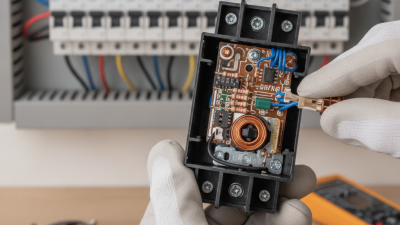
An overload circuit breaker protects electrical wiring from excessive current over time. It monitors the current flowing through a circuit. Under normal conditions, the breaker remains closed and supplies power to connected equipment. When a motor, heater, or appliance draws too much current, an internal bimetal strip begins to heat. The strip bends and releases the switching mechanism. Power is then interrupted before the wiring reaches dangerous temperatures.
The delay matters. It prevents harmless startup surges from causing unnecessary trips. Many breakers also contain a magnetic element for sudden short circuits. This mechanism reacts almost instantly when current rises sharply. Overload and short circuit protection are not identical. Each responds to a different electrical condition. A proper trip curve must match the equipment, conductor size, and expected starting current. Ambient heat also matters. A crowded enclosure can reduce the breaker’s effective capacity.
During inspection, technicians check terminal tightness, discoloration, and repeated tripping. Loose connections can create heat without obvious overcurrent. Darkened insulation is a warning sign. A nuisance trip should never be defeated with a larger breaker. That approach may hide the real fault and overstress the conductors. I have found that simple load records often reveal the cause faster than guesswork. The explanation is not perfect, though. Real installations include temperature changes, aging components, and imperfect connections. Resetting should occur only after the fault is identified and the circuit is considered safe by a qualified professional.
China Top 10 Overload Circuit Breaker Manufacturers? - How Overload Circuit Breakers Work
Technical values shown are representative market ranges rather than company-specific claims. Actual ratings, trip curves, temperature derating, and breaking capacity must be verified against the applicable product datasheet and installation conditions.
Key Standards for Selecting Chinese Manufacturers
Selecting a Chinese overload circuit breaker manufacturer requires more than comparing prices. Start with the product’s rated current, poles, voltage, and short-circuit breaking capacity. These values must match your actual panel design. A cheap device is not a bargain if its thermal trip drifts after repeated faults.
Ask for test reports based on IEC 60947-2, where applicable, and verify the issuing laboratory. Check whether the factory maintains ISO 9001 procedures, incoming material records, and batch traceability. For products sold in China, confirm relevant CCC requirements. Export projects may require additional national approvals. Standards matter.
A serious manufacturer should explain its calibration process clearly. Request sample units and test overload protection at different temperatures. Inspect terminal torque, contact movement, enclosure strength, and label accuracy. Do not confuse an Overload Relay with a circuit breaker; they provide different protection functions. The supplier should also state its interrupting rating under defined conditions.
Factory audits can reveal details that brochures hide. Look for automated assembly, calibrated test benches, aging records, and trained inspectors. Ask how rejected units are isolated. Ask for recent corrective-action reports, too. Some suppliers respond quickly but document poorly. That is a weakness worth recording.
I would review packaging and replacement support before signing a contract. A damaged terminal can create trouble months later. Specify inspection frequency, sample size, warranty handling, and change-notification rules. No selection process is perfect. A second independent inspection may still be worthwhile.
China’s Leading Overload Circuit Breaker Manufacturers
China’s leading overload circuit breaker manufacturers serve a rapidly expanding electrical equipment market. The China Electricity Council reported that national electricity consumption reached 9.22 trillion kWh in 2023, rising 6.7% year on year. This growth increases demand for dependable low-voltage protection in factories, buildings, and renewable energy systems.
Professional buyers should examine more than rated current. Strong manufacturers usually provide IEC 60947-2 testing evidence, thermal-magnetic trip curves, short-circuit capacity data, and batch traceability. Mordor Intelligence identifies industrial expansion and infrastructure investment as major drivers of the global circuit breaker market. However, a catalogue rating is not proof of field performance. Installation conditions, ambient temperature, cable size, and enclosure ventilation can change protection results. I have seen technically attractive samples fail to communicate these limits clearly. That weakness deserves attention.
Tips: Request a recent test report, not only a certificate copy. Confirm whether testing covers the exact model and pole configuration. Check endurance cycles, temperature-rise results, and replacement-part availability. Ask for factory inspection records and sample consistency data. A useful supplier should explain failure modes in plain language. No shortlist is perfect, and price comparisons can hide differences in copper content, calibration control, and final inspection.
Product Types and Technical Capabilities
China’s leading overload circuit breaker manufacturers compete through product breadth and measurable technical capability. Common ranges include miniature circuit breakers, molded-case breakers, motor protection breakers, and electronic-trip units. DC versions increasingly serve solar storage and charging systems. Fortune Business Insights valued the global circuit breaker market at about USD 7.5 billion in 2023, with continued growth expected through 2032. This expansion rewards suppliers with flexible production, not merely large catalogues.
Technical evaluation should begin with IEC 60947-2 compliance, rated current, and ultimate short-circuit capacity. Strong manufacturers publish both Icu and Ics values, rather than hiding behind a single headline rating. Thermal-magnetic models suit general distribution. Electronic versions offer adjustable overload protection, communication, and event records.
Motor applications may require coordinated protection with an Overload Contactor, though these are different devices. Factory testing should include temperature-rise checks, endurance cycles, dielectric strength, and trip-time verification. The China Electrical Equipment Industry Association reports steady investment in intelligent and low-voltage electrical equipment, but automation claims still need laboratory evidence.
Tips:
Ask for test reports, calibration dates, and installation derating tables. Check performance at 40°C, not only at room temperature. A compact breaker may look efficient, yet poor terminal design can create hot spots. I would also compare warranty terms and spare-part availability. Rankings can mislead. Field failure data remains difficult to verify, so buyers should inspect samples, audit production controls, and test critical batches independently.
Quality Control, Certifications, and Testing
When evaluating China’s top 10 overload circuit breaker manufacturers, quality control should come before price or production scale. An Ac Circuit Breaker needs stable thermal and magnetic protection under changing loads. Experienced factories inspect copper contacts, molded cases, terminals, and trip mechanisms at several production stages. Operators also check contact pressure and insulation distance with calibrated instruments. Small defects matter.
Reliable manufacturers usually operate documented quality systems, often aligned with ISO 9001. Product certifications may include applicable IEC standards and China Compulsory Certification requirements, depending on the product and market. Buyers should verify certificate numbers, issuing bodies, product models, and validity dates. A certificate copied into a brochure proves little. Traceability is stronger when each batch carries a date code, inspection record, and material reference.
Testing should reflect real service conditions. Factories may perform overload, short-circuit, temperature-rise, dielectric-strength, endurance, and mechanical operation tests. Samples should be tested before shipment, not only during development. A proper laboratory records current, voltage, trip time, temperature, and test-cycle results. It should also preserve failed samples for investigation. That detail is often overlooked. Quality teams can compare results across batches and identify drifting performance early.
No factory is flawless. Even strong suppliers may face inconsistent components or rushed inspections. I would request recent test reports, audit the calibration system, and inspect random finished units. A polished factory tour is useful, but evidence matters more.
How to Compare Suppliers and Choose the Right Manufacturer
A “top 10” list is only a starting point when selecting China overload circuit breaker manufacturers. Supplier comparison should begin with technical evidence, not attractive rankings. Check rated current, poles, tripping curves, short-circuit capacity, and operating temperature. Ask for current IEC 60947-2 test reports and calibration records. Documents matter. So does consistency.
Request production samples from the same batch. Compare terminal tightness, labeling, trip response, and enclosure quality. A reliable manufacturer should explain its incoming inspection, assembly controls, and final testing process. Factory audits can reveal details that catalogs rarely show, such as aging equipment or weak traceability. Review quality certificates, but verify their scope and validity independently. Also examine mold ownership, minimum order quantities, lead times, packaging, replacement policies, and technical support. The lowest quote may become expensive after repeated failures or delayed shipments. That mistake is common.
Speak with an engineer, not only a sales representative. Ask how the breaker performs under overload, heat, and frequent switching. Request a pilot order before committing to large volumes. Even a strong supplier may have inconsistent communication during peak seasons. Do not ignore that risk. A balanced scorecard covering safety, quality, price, capacity, and service makes the final choice more defensible. It may not identify a perfect manufacturer, but it can expose weak assumptions early.
China Top 10 Overload Circuit Breaker Manufacturers: How to Compare Suppliers
This neutral scorecard uses practical procurement dimensions for low-voltage circuit breakers. Certification and compliance should be verified against applicable standards, including IEC 60898-1 for circuit-breakers for household and similar installations and IEC 60947-2 for circuit-breakers used in industrial applications. The percentages are suggested evaluation weights, not claims about any specific company or brand.
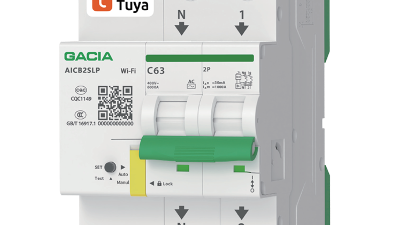
AICB2SLP RCBO Smart IoT Circuit Breaker: Smarter Protection for Connected Electrical Systems
AICB2SLP RCBO Smart IoT Circuit Breaker is designed for connected electrical systems that require dependable protection and intelligent control. By combining residual-current protection, overload protection, and short-circuit protection in one compact device, it helps improve electrical safety while simplifying panel installation. Its smart communication capabilities support Zigbee, Wi-Fi, 4G, and Ethernet connections, allowing users to monitor circuit conditions, control power remotely, and receive timely alerts through a cloud-based management platform.
Built for flexible deployment, AICB2 is suitable for smart homes, commercial buildings, campuses, banks, shopping centers, and public lighting networks. Facility managers can check operating status, identify abnormal power conditions, and coordinate maintenance without needing to access every distribution point directly. Remote connectivity is especially valuable in locations where regular inspections are difficult or where uninterrupted electrical service is essential. With support for centralized management and efficient operation, the breaker helps organizations improve energy visibility, reduce manual workload, and manage connected circuits with greater precision.
FAQS
It protects electrical wiring from excessive current over time. A heated bimetal strip bends and opens the circuit. The wires stay cooler.
Motors and appliances can create brief startup surges. The thermal mechanism allows short, harmless increases. The delay matters.
Overload protection responds to sustained excess current. Magnetic protection reacts almost instantly to sudden, sharp current rises. They solve different problems.
Request rated current, Icu, Ics, trip curves, and short-circuit capacity. Ask for exact model test reports. A certificate copy alone is insufficient.
Thermal-magnetic breakers suit general distribution. Electronic units offer adjustable settings and event records. Motor circuits may need coordinated protective equipment.
Ambient heat can reduce effective capacity. Crowded enclosures trap heat. Cable size, ventilation, and starting current also influence protection.
Check terminal tightness, discoloration, insulation, and load records. Loose terminals can generate heat without obvious overcurrent. Dark insulation is a warning.
No. A larger breaker may hide the fault and overstress conductors. Identify the cause first. Reset only after a qualified professional confirms safety.
Review calibration dates, endurance tests, temperature-rise results, and batch traceability. Inspect samples and audit production controls. Rankings can mislead.
Not always. Temperature changes, aging parts, and imperfect connections can alter results. The explanation is never completely perfect. Independent testing remains useful.
Conclusion
This guide explains what an Overload Circuit Breaker is, how it detects excessive current, and how it protects electrical systems from overheating and potential equipment damage. It outlines the main factors buyers should consider when evaluating Chinese manufacturers, including product reliability, rated current, breaking capacity, application range, customization options, production technology, and technical support. The article also reviews common product types and the technical capabilities required for residential, commercial, industrial, and specialized electrical applications.
In addition, the guide highlights the importance of quality control, relevant certifications, laboratory testing, safety verification, and consistent production standards. It provides a practical framework for comparing suppliers by examining manufacturing experience, product documentation, delivery performance, communication, after-sales service, and total purchasing cost. By applying these criteria, buyers can identify a qualified manufacturer that offers dependable Overload Circuit Breaker products, suitable technical solutions, and stable long-term cooperation.