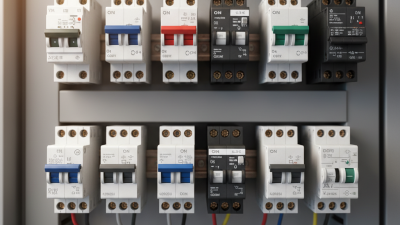
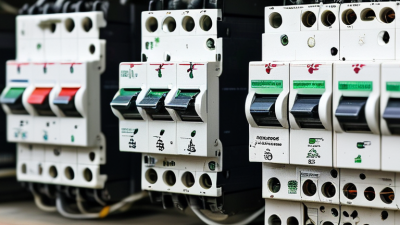
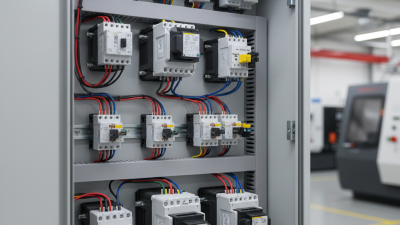
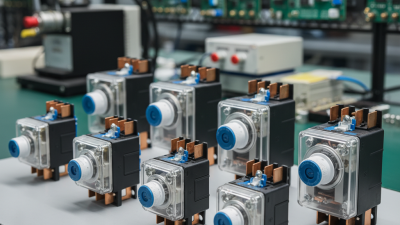
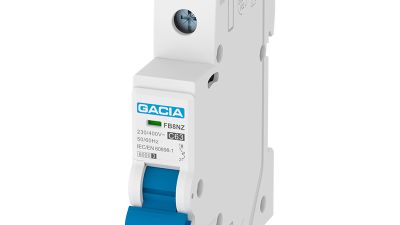
China has really become a major hub for sourcing MCB products—stuff used in residential, commercial, and industrial power distribution systems. This guide is designed to introduce you to some of the key Chinese MCB manufacturers out there, especially if you're a global buyer looking for reliable circuit protection, clear documentation, and solid after-sales support. We’re talking about brands like CHINT, Delixi Electric, People Electric, CNC Electric, and Meba Electric, among others.
Now, a trustworthy supplier isn’t just about giving you a good quote. It’s also about proving they’re legit—things like verified ratings, breaking capacity, different pole configurations, and proven performance data. When picking a product, it’s crucial to make sure it aligns with standards like IEC 60898-1 or IEC 60947-2, depending on what you need it for. If you're working with solar setups, battery storage, or DC systems, then you’ll want to pay extra attention to voltage handling, polarity, and arc interruption capabilities. Tiny details really do matter.
This overview takes into account various factors—factory experience, certification records, testing facilities, export readiness, and how well the suppliers communicate. It also points out some practical signs to look for, like consistent label printing, tight terminal screws, and traceable packaging. These little things can actually tell you a lot about how seriously a supplier takes quality control. But hey, nobody’s perfect—certifications can change, and a catalog might not always reflect what’s going out in every batch. So, always ask for up-to-date reports, samples, inspection records, and warranty info before making a purchase.
The goal here is pretty simple. Buyers around the world need real, apples-to-apples comparisons—not fake promises or glossy marketing. By combining technical insights with careful supplier checks, this guide aims to help purchasing teams avoid unnecessary risks. And it’s worth remembering: sometimes the cheapest price ends up costing more in the long run—through failures, delays, or having to replace parts. Seasoned importers know to do their own homework—that’s not a sign of weakness, but just good engineering sense.
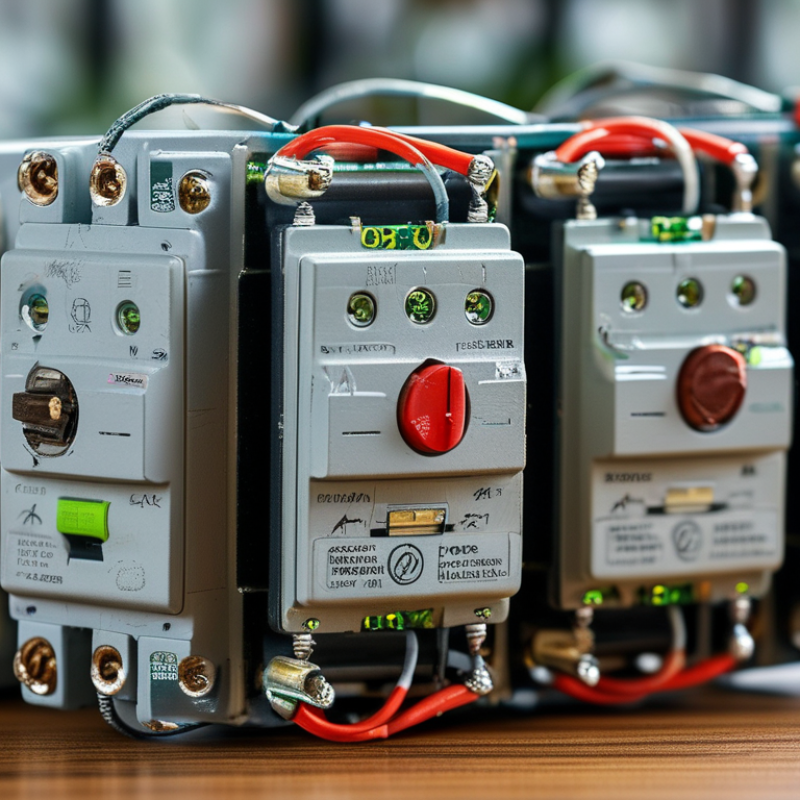
What MCBs Are and Why China Matters in Global Supply
What MCBs Are and Why China Matters in Global Supply
A miniature circuit breaker, or MCB, protects low-voltage circuits from overloads and short circuits. It trips automatically when current exceeds a safe level. Unlike a fuse, it can usually be reset after the fault is removed. Inside, thermal protection responds to sustained overloads, while magnetic protection reacts to sudden short circuits. Common choices include one-pole, two-pole, and three-pole designs. Trip curves, rated current, and breaking capacity must match the installation.
China matters because its electrical manufacturing network combines large production capacity with broad component access. Many factories can support customized terminals, labeling, packaging, and pole configurations. Export-oriented suppliers often understand inspection records, sample approval, and shipment documentation. Still, scale does not guarantee reliability. A low quotation may reflect weaker materials, limited testing, or unclear traceability. That part deserves careful thought.
Global buyers should request test reports, product samples, and production details before placing volume orders. Check applicable standards, such as IEC 60898-1 or IEC 60947-2, according to the product and application. Confirm the rated voltage, current, short-circuit capacity, temperature range, and mechanical endurance. Factory audits can reveal simple details, like storage conditions and calibration labels. Ask how rejected units are separated. Some suppliers answer well, but records may remain incomplete. That is not an automatic failure, though it signals a need for closer verification. Reliable sourcing depends on evidence, not attractive promises.
How to Evaluate China’s Leading MCB Manufacturers
Evaluating China’s leading MCB manufacturers requires more than comparing prices. A reliable supplier should explain its production process clearly, from copper parts to final packaging. Ask for factory records, inspection procedures, and recent test reports. Vague answers deserve attention.
Check whether the manufacturer controls critical details in-house. These include contact materials, thermal trip settings, magnetic trip response, and terminal strength. For an 80a Mcb, testing should reflect real overload conditions, not only a brief laboratory demonstration. Request samples from normal production batches. Then inspect the housing, screw threads, labels, and wiring connections. Small defects matter.
Independent certification can support trust, but certificates need verification. Match the certificate number, product range, ratings, and issuing laboratory. Also review traceability. Can the supplier identify the production date and test operator? Can it replace a failed batch quickly? These questions reveal practical reliability.
Communication is another useful test. Technical staff should discuss short-circuit capacity, pole configuration, installation temperature, and applicable standards without avoiding details. A polished factory tour can still hide weak process control. I would not rely on photographs alone. A sample may pass while later batches vary, so ongoing inspection remains necessary. Even experienced buyers can overvalue low prices. That mistake is expensive.
Key MCB Product Types, Ratings, and Certification Standards
China Top MCB Manufacturers for Global Buyers
The IEA Electricity 2024 report forecast global electricity demand to grow by about 4% in 2024 and 2025. This growth increases demand for compact circuit protection. Common MCB types include one-pole, two-pole, three-pole, and four-pole designs. Typical ratings range from 1A to 63A, with 230V or 400V systems. B, C, and D trip curves suit different loads. B curves fit lighting and residential circuits. C curves handle moderate motor starting currents. D curves need careful coordination with high-inrush equipment.
Breaking capacity matters more than appearance. Common values include 4.5kA, 6kA, and 10kA. A buyer should compare the prospective short-circuit current at the installation point. IEC 60898-1 generally covers household and similar MCBs. IEC 60947-2 applies more closely to industrial low-voltage equipment. In North American projects, UL 489 may be required. CB Scheme reports and accredited laboratory tests add useful verification. ISO/IEC 17025 laboratory competence is worth checking.
Tips: Request samples, test reports, thermal limits, and terminal torque data. Do not rely on a certificate image alone. Verify the model, rating, test standard, and issuing laboratory. I have seen attractive labels hide unclear test conditions. That remains a purchasing risk. Also review altitude, ambient temperature, wiring size, and selectivity with upstream devices. A perfect rating on paper can still perform poorly when installation conditions are ignored.
Manufacturing Quality, Testing, and Safety Control Practices
For global buyers, MCB quality begins with controlled manufacturing, not attractive packaging. A 16a Mcb should use consistent contact materials, calibrated springs, and flame-retardant insulation. Production lines need traceable batch records. Operators should verify terminal torque with digital tools, not intuition.
IEC 60898-1 defines key requirements for household circuit breakers, including temperature rise, endurance, and short-circuit performance. Each production batch should receive visual checks, insulation tests, and trip-current verification. Thermal testing must expose delayed tripping under overload. Magnetic testing should confirm rapid operation during fault conditions. Small failures matter.
The ISO Survey 2023 recorded over 1.26 million ISO 9001 certificates across 189 countries and economies. Certification supports process discipline, but it does not prove every unit is perfect. Buyers should request calibration records, test frequencies, and nonconformity reports. IEA’s Electricity 2024 report expects global electricity demand to grow strongly through 2026, increasing pressure on dependable low-voltage protection. Factory inspections should examine heat chambers, test benches, sealed samples, and operator training. A certificate alone is insufficient. Human error remains possible. Manufacturers should review failed samples openly and improve tooling, testing limits, and final inspection procedures.
OEM, Customization, and International Order Capabilities
Global buyers increasingly need more than a standard miniature circuit breaker. The International Energy Agency reported about 510 GW of renewable capacity additions in 2023. This growth increases demand for dependable low-voltage protection across factories, buildings, and solar installations.
A capable OEM supplier should support a 32a Mcb with adjustable labeling, terminal options, trip-curve selection, and regional packaging. Customization must follow applicable requirements, such as IEC 60898-1 or UL 489, depending on the destination market. Ask for type-test records, calibration evidence, material declarations, and batch traceability. A clear sample process also matters. One approved sample should match later production. That sounds obvious, but it is often where purchasing problems begin. International order capability includes stable lead times, export cartons, multilingual documents, and practical Incoterms. UNCTAD’s Review of Maritime Transport notes that over 80% of global merchandise trade moves by sea, so packaging is not a minor detail.
Tips: Confirm rated current, poles, breaking capacity, frequency, and trip curve before requesting a quotation. Request a pilot order before committing to large volumes. Compare actual test documents, not attractive catalog claims. Not every customization deserves approval; unnecessary changes can increase cost and create certification risks. Recheck connector dimensions with your electrician or panel builder. A small mismatch can delay an entire shipment.
Pricing, Export Logistics, and Supplier Comparison Factors
China Top MCB Manufacturers for Global Buyers
Pricing, export logistics, and supplier comparison require more than checking a unit quote. A 100a Mcb may appear inexpensive, but the final cost includes testing, packaging, inland transport, customs clearance, and destination delivery. Ask suppliers to separate product, tooling, documentation, and freight charges. This makes hidden fees easier to identify.
Experienced buyers request recent test reports, quality records, and production photos before placing an order. Confirm the rated current, breaking capacity, pole configuration, trip curve, and operating temperature. A supplier should explain these details clearly, not simply send a catalog. Sample inspection is useful. Even then, one sample cannot represent every production batch.
Export logistics often fail through small omissions. Check carton dimensions, pallet requirements, shipping marks, and export documents before production starts. Confirm the Incoterm and insurance responsibility in writing. For sea freight, compare port pairs and transit schedules, not only freight prices. Air shipment may suit urgent samples, but it can damage project margins. Supplier comparison sheets should include response time, minimum order quantity, lead time, payment terms, and after-sales handling. I have seen comparisons miss document charges and local delivery fees. That mistake is easy to repeat. A stronger review checks actual shipment records, factory consistency, and communication during a small trial order.
China Top MCB Manufacturers for Global Buyers - Pricing, Export Logistics, and Supplier Comparison Factors
Anonymized supplier comparison based on commonly quoted export specifications and indicative China factory price ranges
| Anonymous Supplier Profile |
Typical MCB Range |
Common Poles |
Rated Current |
Breaking Capacity |
Typical Factory Price* |
MOQ Range |
Production Lead Time |
Export Packaging |
Common Compliance Documents |
Best-Fit Buyer |
Profile A
High-volume
|
DIN-rail residential and light-commercial MCBs |
1P, 1P+N, 2P, 3P, 4P |
6–63 A |
4.5–6 kA |
US$0.85–2.40 per unit
EXW, depending on configuration
|
1,000–5,000 units |
20–35 days after artwork and deposit approval |
Individual carton; export master carton; pallet available |
IEC 60898-1 test report; CE declaration; RoHS declaration; factory inspection documents on request |
Distributors and private-label importers requiring competitive pricing |
Profile B
Balanced
|
Standard thermal-magnetic MCBs for building distribution boards |
1P, 2P, 3P, 4P |
1–63 A |
6 kA |
US$1.10–3.10 per unit
EXW or FOB quotation basis
|
500–2,000 units |
25–40 days |
Printed inner box; moisture-resistant master carton; mixed-SKU packing possible |
IEC 60898-1; CE declaration; RoHS; ISO 9001 certificate where applicable |
Electrical wholesalers and regional panel builders |
Profile C
Customization
|
OEM/private-label MCBs with customized labels and packaging |
1P, 1P+N, 2P, 3P, 4P |
6–125 A |
6–10 kA |
US$1.40–4.80 per unit
Excludes tooling and special testing
|
1,000–3,000 units per SKU |
30–50 days, including packaging approval |
Custom artwork; barcode labels; carton marks; palletization by destination |
IEC 60898-1 or IEC 60947-2, depending on product type; CE; RoHS; inspection report |
Importers developing a house brand or market-specific packaging |
Profile D
Higher capacity
|
Commercial and light-industrial MCBs with higher interrupting ratings |
1P, 2P, 3P, 4P |
10–125 A |
10 kA |
US$2.20–6.90 per unit
Indicative factory export range
|
300–1,000 units |
30–45 days |
Heavy-duty carton; separators; batch identification; pallet loading available |
IEC 60898-1; CE declaration; RoHS; routine test records; material declarations on request |
Commercial construction, industrial maintenance, and infrastructure projects |
Profile E
Small-batch
|
Standard MCBs for testing, replacement, and project orders |
1P, 2P, 3P |
6–63 A |
4.5–6 kA |
US$1.30–3.60 per unit
Usually quoted at higher small-order pricing
|
100–500 units |
15–30 days, subject to stock availability |
Standard carton; mixed models commonly accepted |
Product datasheet; CE declaration; routine inspection records; RoHS declaration where available |
Small distributors, maintenance contractors, and trial-market buyers |
Profile F
Project supply
|
MCB assortments supplied with distribution-board accessories |
1P, 1P+N, 2P, 3P, 4P |
6–100 A |
6–10 kA |
US$1.60–5.50 per unit
Accessory bundles quoted separately
|
500–2,000 units |
25–45 days |
Model-separated cartons; accessory kits; project-specific packing list |
IEC 60898-1; CE; RoHS; technical datasheet; batch traceability documents |
Turnkey electrical projects and buyers needing consolidated shipments |
*Price ranges are indicative market benchmarks for commonly specified low-voltage MCBs manufactured in China. Final prices vary with pole configuration, rated current, curve type, breaking capacity, certification scope, copper and resin costs, packaging, order quantity, and Incoterms. Confirm current quotations, test reports, and applicable destination-market requirements before purchase.
Export Logistics and Landed-Cost Comparison Factors
| Factor |
Typical Practical Range or Requirement |
Buyer Verification Point |
| Trade terms |
EXW, FOB, and CIF are frequently used for export quotations; DDP may be available for selected destinations |
Request a side-by-side quotation using the same Incoterm, destination port, currency, and validity period |
| Ocean freight |
Most economical for consolidated or full-container orders; transit commonly ranges from about 15–45 days after vessel departure, depending on route |
Check origin port, destination port, transshipment risk, documentation fees, and local destination charges |
| Air freight |
Suitable for samples or urgent replenishment; normally substantially more expensive per kilogram than ocean freight |
Confirm chargeable weight, battery restrictions for accessories, customs clearance, and delivery terms |
| Sample policy |
Samples may be free or chargeable; courier freight is commonly paid by the buyer |
Use production-equivalent samples and request the exact model code, curve, poles, and breaking capacity |
| Quality inspection |
Pre-shipment inspection can include appearance, dimensions, terminal torque, dielectric strength, trip performance, and marking checks |
Agree the inspection standard, sampling plan, acceptance criteria, and corrective-action process in writing |
| Documentation |
Typical documents include commercial invoice, packing list, bill of lading, certificate of origin, test report, and declaration of conformity |
Confirm whether documents satisfy the destination country’s customs and electrical-product compliance rules |
| Packaging efficiency |
Carton dimensions, units per carton, gross weight, and pallet configuration directly affect freight cost |
Request a final packing specification before calculating landed cost |
Technical and Commercial Due-Diligence Checklist
| Comparison Dimension |
Recommended Buyer Evaluation Criteria |
| Electrical performance |
Verify rated voltage, rated current, tripping curve, frequency, breaking capacity, number of poles, terminal capacity, and operating temperature range. |
| Applicable standard |
Match the product to IEC 60898-1 for commonly used household and similar MCB applications, or IEC 60947-2 where the application and product classification require it. |
| Certification validity |
Check that the model number on the certificate, test report, product label, and quotation is identical; confirm certificate scope and issuing laboratory. |
| Factory capability |
Review production equipment, routine testing, incoming-material controls, traceability, annual capacity, maintenance records, and experience with the destination market. |
| Warranty and claims |
Define warranty duration, evidence requirements, replacement policy, response time, responsibility for freight, and treatment of repeated failures. |
| Total landed cost |
Calculate product price, tooling, packaging, inspection, inland transport, freight, insurance, duties, VAT or sales tax, customs fees, and local delivery together. |
Grand View Research Insights: FB8NZ 6kA MCB for Automated Manufacturing Circuit Protection
The FB8NZ 6 kA miniature circuit breaker is designed for automated manufacturing environments that require dependable protection, efficient installation, and stable performance. As an upgraded AT-series solution, it combines a cost-efficient structure with a higher breaking capacity, helping protect low-voltage circuits against overloads and short circuits. Its modular design supports flexible integration into control cabinets, distribution boards, and production-line electrical systems where space, consistency, and rapid maintenance are important.
The “F” in FB8NZ represents forward-thinking innovation, reflected in its standardized architecture and production-oriented design. Manufactured in a smart, highly automated facility, the breaker benefits from controlled processes that promote consistent quality, improved throughput, and shorter lead times. These characteristics make it suitable for modern factories seeking practical circuit protection without adding unnecessary complexity to their electrical infrastructure.
As manufacturing systems become more connected and automated, dependable low-voltage protection remains essential for reducing equipment risks and supporting continuous operation. With its 6 kA interrupting capability, compact modular format, and focus on production efficiency, FB8NZ offers a balanced option for industrial automation applications, machine control panels, and other demanding circuit-protection requirements.
FAQS
: Common designs include one-pole, two-pole, three-pole, and four-pole models. They usually suit 230V or 400V systems. Select poles according to the circuit arrangement. The wrong choice can leave conductors inadequately protected.
Typical ratings range from 1A to 63A. Choose a rating that matches the cable capacity and expected load. A 16A circuit may suit lighting or small equipment. Do not select by current alone.
B curves commonly suit lighting and residential circuits. C curves tolerate moderate motor starting currents. D curves handle higher inrush currents. They require careful coordination. Check the actual equipment behavior.
Breaking capacity shows the fault current the MCB can safely interrupt. Common values include 4.5kA, 6kA, and 10kA. Compare the rating with the prospective short-circuit current onsite. Appearance means little here. That is risky.
Household applications commonly reference IEC 60898-1. Industrial low-voltage equipment may require IEC 60947-2. Some North American projects may require UL 489. Request complete test reports and accredited laboratory details. A certificate image alone proves very little.
Check contact materials, spring consistency, insulation, and terminal construction. Production should maintain traceable batch records. Important tests include insulation, temperature rise, endurance, thermal tripping, and magnetic tripping. Operators should verify terminal torque with calibrated tools. Small failures matter.
No certification guarantees every individual unit. Ask for calibration records, test frequencies, and nonconformity reports. Factory inspections should review test benches, heat chambers, sealed samples, and operator training. Human error remains possible. I would still inspect samples.
Confirm rated current, poles, breaking capacity, frequency, and trip curve. Review labeling, terminal options, packaging, and connector dimensions. Request a pilot order before purchasing large volumes. The approved sample should match later production. It sounds obvious, but mismatches happen.
Review ambient temperature, altitude, wiring size, and upstream device coordination. Selectivity should be checked with the complete protection system. A suitable paper rating may perform poorly onsite. Recheck details with the panel builder. Small errors can delay shipment.
Conclusion
China has become an important source for global MCB supply because its electrical manufacturing industry offers broad production capacity, competitive pricing, and flexible support for overseas buyers. When evaluating China’s leading MCB manufacturers, buyers should examine product range, technical experience, factory capabilities, quality systems, communication, and export performance. Key considerations include voltage and current ratings, pole configurations, tripping characteristics, application suitability, and compliance with recognized international certification standards.
Reliable manufacturers should demonstrate consistent production controls, automated assembly where appropriate, routine electrical testing, thermal and mechanical inspections, and strict safety procedures. Buyers may also assess OEM and customization options, packaging, documentation, sample services, and the ability to manage international orders. A practical supplier comparison should consider total cost rather than unit price alone, including tooling, certification, shipping, customs support, lead time, and after-sales service. By reviewing these factors carefully, global buyers can select an MCB partner that balances safety, quality, customization, delivery reliability, and long-term purchasing value.