Leave Your Message
0%

Choosing a Miniature MCB supplier isn't just about comparing prices per unit. You really need to find products that fit your distribution board, match your circuit needs, and come with clear, detailed technical docs. Sure, a breaker might look perfect in a catalog, but if its rated current, pole configuration, or breaking capacity aren’t just right for your setup, it’s not going to work. Small details like these actually matter a lot.

This guide introduces ten suppliers from around the globe and shares some practical tips to help you compare their product ranges better. Look for comprehensive datasheets, consistent model references, quick and helpful technical support, and transparent info on production and delivery processes. Make sure the test reports and certifications are specific to the exact product and the country where you’re installing it—don't assume one certificate covers everything. When comparing, don’t forget to check if it fits DIN rails, how the terminals are designed, what accessories are available, and whether the ordering info is clear. Sometimes these little things get overlooked but they’re pretty important.

Of course, no supplier list is perfect. Keep in mind that info can change, and a shiny website doesn’t always mean reliable quality. Think of each supplier as a starting point—then ask for current documentation and double-check the specs before you buy. Also, don’t forget to ask about samples and lead times. Even a tiny sample order can highlight issues like strange labels or awkward terminal access. You might see the term ‘MCB’ in product searches, but just seeing that name doesn’t say much about quality—it's worth digging deeper. Doing your due diligence helps make the whole selection process more realistic and less driven just by marketing hype.
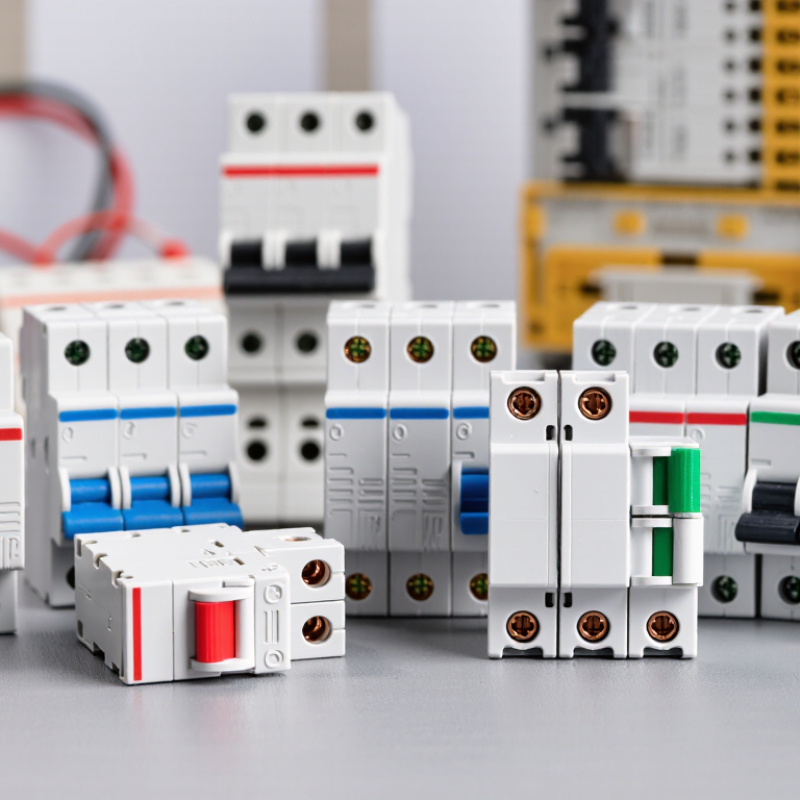
Top 10 Miniature MCB Suppliers for Global Buyers?

What Miniature Circuit Breakers Are and Where They Are Used

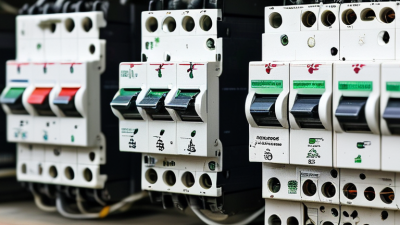
A miniature circuit breaker, or MCB, is a resettable protective switch fitted inside a distribution board. It interrupts current when a circuit carries too much for too long or experiences a short circuit. Many models use thermal and magnetic mechanisms: a heated strip responds to sustained overload, while a magnetic trip reacts quickly to a surge.

Small device. Serious job.

MCBs are common in homes, offices, shops, and light industrial panels. They protect individual circuits serving lights, wall outlets, pumps, or small equipment. When a breaker trips, the handle usually moves to an intermediate position. After the fault is found and corrected, it can often be reset. A trip should not be treated as an inconvenience to bypass; repeated trips may signal damaged wiring, excess load, or a failing appliance.

For DC systems, a Dc Miniature Circuit Breaker must be rated for the circuit’s voltage and current, since DC interruption differs from AC. Check pole configuration, trip curve, and breaking capacity against the system design. A rating that looks suitable may still be wrong for the actual fault level. Selection and installation should follow equipment instructions and be handled by a qualified electrician. Labels help, but they do not tell the whole story.

How to Assess Miniature MCB Suppliers for Global Purchasing

Global electricity demand rose 4.3% in 2024, nearly twice the average annual growth of the previous decade, according to the IEA’s Electricity 2025 report. For global buyers, that growth makes dependable miniature circuit breaker sourcing more important. But a polished catalogue proves little. Ask suppliers for test reports matching the exact model, rated current, pole configuration, and breaking capacity you plan to purchase. Check whether the product was assessed against the relevant parts of IEC 60898-1 or IEC 60947-2 for its intended application. Details matter.

Review the supplier’s quality system, production controls, and batch traceability—not just a certificate on a website. Request sample labels, inspection records, and evidence that routine tests cover the ordered configuration. Then compare promised lead times with documented production capacity and ask how component changes are communicated. Small differences can matter. A terminal design that looks minor may affect installation time or fit inside a crowded distribution board.

Assess after-sales support before approving a supplier. Agree on response times, warranty handling, and the records needed to investigate a field issue. Independent laboratory reports and recognized accreditation can strengthen confidence, but verify their scope and validity directly. I would also test samples under realistic installation conditions; paperwork can miss awkward details. Supplier scorecards help, though they are never perfect. References from comparable markets can reveal practical strengths, such as packaging quality or consistent delivery.

Top 10 Miniature MCB Suppliers Serving International Markets

International buyers need more than a low unit price when comparing miniature MCB suppliers. They need consistent ratings, traceable test documents, dependable lead times, and responsive technical support. The International Energy Agency’s Electricity 2024 report projected global electricity demand growth averaging 3.4% annually from 2024 to 2026. That expansion increases pressure on electrical supply chains, but demand alone does not prove a supplier’s quality.

A useful top-ten comparison should examine export experience, product range, quality controls, and documentation. Check whether specifications identify rated current, breaking capacity, and the intended operating environment. Miniature Circuit Breaker Types differ in tripping characteristics and applications, so buyers should match each device to the circuit and installation requirements. IEC 60898-1 and IEC 60947-2 cover different breaker applications; confirm which standard applies before comparing quotations. Ask for current test reports and verify certification details with the issuing body. Paperwork matters.

Delivery promises deserve equal scrutiny. Request sample labels, packaging dimensions, and confirmation of spare-part availability before placing a large order. A neat comparison table can still hide slow responses or unclear warranty terms. I would also check how a supplier handles a product revision; this detail is easy to overlook. Regional distribution can shorten replenishment times, yet local stock claims should be checked against actual inventory. The strongest shortlist is built on verifiable evidence, not polished catalogues alone.

How Supplier Product Ranges and Certifications Compare

When comparing miniature MCB suppliers, look beyond the headline pole count. A useful range may include one-, two-, three-, and four-pole models, several current ratings, and different tripping curves. This matters when a buyer needs to match a device to a lighting circuit, motor load, or compact distribution board. Miniature Circuit Breakers Mcbs should be compared by rated voltage, breaking capacity, mounting dimensions, and terminal design—not appearance alone.

Certificates need close checking. Ask whether the exact model has test reports or conformity documents for the standards and markets relevant to your project. IEC 60898-1 is commonly associated with household and similar installations, while IEC 60947-2 covers circuit-breakers in broader industrial applications. Scope matters. A supplier’s general certificate may not cover every rating or product variant. Check the model number against the document, and confirm who issued the test report.

Practical details reveal differences too. A clear datasheet should state ambient-temperature limits, wire sizes, tightening torque, and expected service conditions. Ask about routine quality checks and traceability for production batches. Samples help assess terminal access and labeling, though one sample cannot prove long-term consistency. Supplier comparisons can still feel untidy; documents may use different formats, and that deserves a second look.

Top 10 Miniature MCB Suppliers for Global Buyers? — How Supplier Product Ranges and Certifications Compare

Reading note: Company identities are intentionally omitted. The profiles below are illustrative market-screening categories, not verified claims about ten specific manufacturers. Current ratings and breaking capacities are representative of commonly available MCB products; check each exact model’s datasheet and certification records before purchasing. IEC standards are standards, not proof that a particular product is certified.

No. Anonymized supplier profile Typical MCB range to compare Related product lines to check Relevant standards / market evidence to request Buyer checks
1 Broad-range residential profile Commonly 1P–4P; B, C and D trip curves; current ratings often span roughly 1–63 A; breaking-capacity options commonly include 4.5, 6 or 10 kA. RCCBs, RCBOs, isolators and distribution boards. Request model-specific test reports against IEC 60898-1; check applicable national approvals for the destination market. Confirm all ratings are stated at the required voltage and pole configuration.
2 Compact modular profile DIN-rail MCBs, typically 1P–4P, with common B/C curves and current ratings selected by series; compact widths vary by pole count and design. Auxiliary contacts, shunt trips and undervoltage releases on selected ranges. Request IEC 60898-1 evidence for household-type MCBs and dimensional drawings for the exact series. Check compatibility of accessories across frame sizes and product generations.
3 Higher breaking-capacity profile Series may offer 6 kA or 10 kA options; trip curves and current ratings depend on the specific product family. MCBs, RCBOs and backup-protection combinations where tested. Request IEC 60898-1 test evidence and verify the declared short-circuit breaking capacity for each pole and voltage configuration. Do not assume a higher kA rating applies to every current rating in a series.
4 Industrial-focused profile MCB offerings may include higher current or application-specific variants; ranges and ratings are series-dependent. MCCBs, motor-protection devices and control accessories. Ask whether the device is assessed to IEC 60898-1 or IEC 60947-2; these standards cover different application contexts. Match the standard and utilization conditions to the installation design.
5 Residual-current portfolio profile MCB range may sit alongside combined overcurrent and residual-current protection products; exact ratings vary by model. RCCBs and RCBOs, with sensitivity and residual-current type specified by product. For RCBOs, request evidence against IEC 61009-1; for RCCBs, check IEC 61008-1 where applicable. Verify residual-current type, rated residual operating current and pole arrangement separately.
6 Export-oriented profile Product families may be offered in multiple voltage, frequency, pole and terminal configurations for different markets. MCBs, RCCBs, RCBOs and enclosure components. Request destination-specific declarations, test reports and approval listings. CE marking is a conformity marking, not a universal third-party certificate. Confirm the exact SKU is covered by the documentation supplied for the destination country.
7 Value-focused modular profile Common configurations may include 1P–4P devices and standard trip curves; availability and interrupting ratings vary by series. Basic MCBs, isolators and selected residual-current devices. Request current test reports, factory quality documentation and traceable model markings; verify the applicable IEC standard. Compare warranty terms, batch traceability and test documentation—not price alone.
8 Application-specific profile Special trip-curve or ambient-temperature options may be available, subject to the product family’s documented limits. MCBs with selected accessories and application-specific protection devices. Request the relevant standard report plus temperature-rise, endurance and operating-characteristic data for the intended application. Check derating requirements and coordination with upstream and downstream protection.
9 Private-label / OEM profile Range may be configured around buyer requirements; product availability, markings and ratings need to be confirmed per contract and SKU. OEM-branded MCBs, accessories and coordinated panel components. Verify that certificates or test reports identify the actual manufacturer, model and production site—not only a similar product. Agree on change control, product identification, factory audits and document ownership.
10 Project-supply profile Range breadth, lead times and configuration options depend on the project specification and confirmed production capacity. MCBs, residual-current protection, enclosures and related panel equipment. Request SKU-level conformity documentation, inspection records and destination-market approval evidence before order release. Assess supply continuity, lot consistency, packaging and after-sales technical support.

Standards reference: IEC 60898-1 covers circuit-breakers for overcurrent protection for household and similar installations; IEC 60947-2 covers low-voltage circuit-breakers; IEC 61008-1 and IEC 61009-1 address RCCBs and RCBOs respectively. Always confirm the current edition, applicable national adoption and product-specific scope.

What to Know About Pricing, Lead Times, and After-Sales Support

Comparing miniature MCB suppliers takes more than checking the unit price. Ask for quotations against the same pole count, rated current, breaking capacity, trip curve, and terminal requirements. A low offer may exclude testing documents, packaging, or shipping. Request a sample and inspect its markings, terminal finish, and fit on a standard DIN rail. Small differences matter during installation.

Lead times can shift when a configuration is customized or a component is unavailable. Ask whether the quoted schedule covers production, inspection, and dispatch, and request milestone updates. After-sales support matters too. Confirm how the supplier handles technical questions, damaged goods, and performance concerns. Get response times and warranty terms in writing. One overlooked detail: a fast reply before purchase does not guarantee useful support afterward.

Tips

Compare like-for-like quotations, not just headline prices. Ask for recent lead-time estimates and written support terms. Keep a record of sample results and supplier answers. A spreadsheet helps, but it can hide assumptions; verify the details with a real sample and direct questions.

How to Select and Verify the Right MCB Supplier

Choosing a Miniature Circuit Breaker supplier starts with the application, not a polished catalogue. Confirm rated current, voltage, breaking capacity, pole configuration, trip curve, and mounting dimensions against your panel design. Ask for current test reports and traceable production records. A neat PDF is useful, but it is not proof by itself.

Check that samples match the drawings and declared specifications. Inspect terminal finish, housing seams, label clarity, and the firmness of the rail clip. Request test evidence against the relevant product standards, and verify report numbers with the issuing body when possible. Ask how the supplier controls changes in materials and production. Small changes matter. A spring or contact alloy can affect performance, even when the exterior looks unchanged.

Then assess delivery reliability, communication, and technical support. Ask for realistic lead times, minimum order quantities, and a named contact for product questions. Compare answers in writing, not only during a sales call. If a supplier avoids specific questions, pause and investigate. Price still matters, but a low quote can hide weak documentation or inconsistent batches. No checklist catches everything; repeat sample checks after production begins. One successful shipment is not lasting proof. Verify again when designs, factories, or components change.

FAQS

What documents should I request from a miniature circuit breaker supplier?

Request test reports for the exact model, current rating, pole count, and breaking capacity. Check that the documents cover your intended application. Details matter.

How can I check whether a certificate applies to the model I need?

Match the model number and product variant against the certificate or test report. Confirm its scope and issuing laboratory. General documents may not cover every configuration.

Which product specifications should I compare?

Compare rated voltage, breaking capacity, trip curve, mounting dimensions, and terminal design. Also check wire-size limits and tightening torque. Appearance is not enough.

Why should I request a sample?

A sample lets you inspect markings, terminal access, finish, and fit on a standard DIN rail. Try it in a realistic installation. One sample cannot prove long-term consistency.

How can I assess production quality and traceability?

Ask for inspection records, sample labels, routine-test details, and batch traceability evidence. Check how component changes are communicated. Paperwork can still miss small problems.

What should a supplier quotation include?

Compare offers for the same pole count, current rating, breaking capacity, trip curve, and terminal requirements. Check whether testing documents, packaging, and shipping are included. Low prices can hide differences.

How should I evaluate lead times?

Ask whether the schedule includes production, inspection, and dispatch. Request milestone updates, especially for customized configurations. Estimates can shift.

What after-sales support should I confirm?

Get response times, warranty terms, and procedures for technical questions or damaged goods in writing. A quick reply before purchase does not guarantee helpful support later. I still double-check.

Conclusion

Miniature Mcb devices protect electrical circuits from overloads and short circuits in homes, commercial buildings, and industrial installations. For global buyers, choosing a suitable supplier involves more than comparing product prices. Buyers should review the supplier’s product range, technical specifications, quality controls, relevant certifications, and experience serving international customers. Clear documentation and dependable communication can also make it easier to assess whether products fit the intended application.

The top suppliers may differ in available ratings, configurations, customization options, and support services. Before placing an order, compare quotations alongside minimum order quantities, production and shipping lead times, warranty terms, and after-sales assistance. Verify product documents and supplier credentials, clarify testing and packaging requirements, and request samples when appropriate. A careful comparison helps buyers balance cost, delivery expectations, product suitability, and long-term support when selecting and verifying the right Miniature Mcb supplier.
Sophia

Sophia

Sophia is a seasoned marketing professional with 23 years of experience within the circuit breaker industry. Since joining GACIA in its pivotal years, she has played a crucial role in establishing the company as a leader in low-voltage circuit breaker manufacturing and exports. Her deep......
Previous China Top 10 Overload Circuit Breaker Manufacturers?