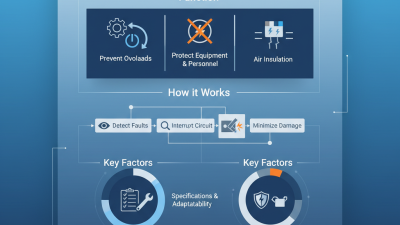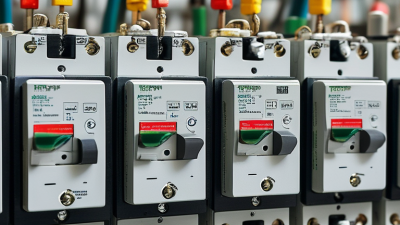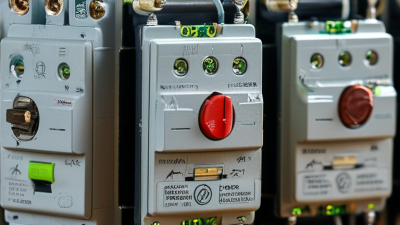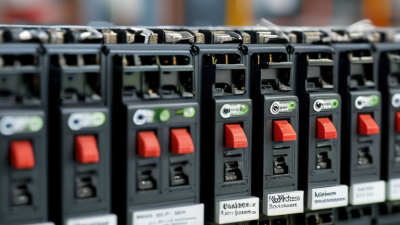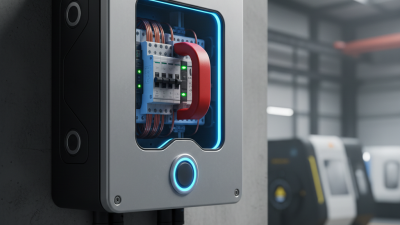
Think of an MCB (Miniature Circuit Breaker) as a tiny, yet mighty protector for low-voltage electrical setups. Basically, it kicks in to cut the power when things get too hot due to overloads or if there’s a short circuit. And the cool part? Unlike those old-school fuses, you can usually reset it after fixing the problem—that small lever makes all the difference. You’ll find these in homes, offices, workshops, even behind control panels—they matter more than you might think.
Now, with energy demands exploding (thanks to the growing number of gadgets and appliances), having reliable protection is more crucial than ever. According to the International Energy Agency’s Electricity 2024 report, global electricity use is expected to grow around 3.2% each year from 2024 to 2026. That means more loads, more chances for overloads or wiring issues. Picking the right MCB can help minimize conductor damage and lower the fire risk. But hey, don’t think of it as a magic safety fix. It doesn’t replace good grounding, insulation, residual-current devices, or the importance of expert installation.
Standards play a key role here. IEC 60898-1 is all about circuit breakers in homes and similar setups, while IEC 60947-2 deals more with those used in industrial environments. These standards set the technical benchmarks—things like rated current, breaking capacity, how they handle temperature, and their trip characteristics. For example, a Type B breaker usually reacts faster to small surges or lower inrush currents, making it ideal for general circuits. On the other hand, Type C is better suited for circuits with motors or transformers that have moderate starting currents.
Remember, size isn’t everything. A quick on-site check might reveal loose terminals, wrong cable sizes, or just breaker installations done for convenience rather than safety. That’s why assumptions can be misleading. For a proper selection, you need to consider the actual load profile, the potential fault current, enclosure conditions, and the local electrical rules. This guide will walk you through how an MCB works, where it fits, and what careful, thoughtful selection really means.
What Is an MCB Miniature Circuit Breaker?
An MCB is a compact protective device installed inside an electrical distribution board. Its main purpose is to interrupt current when a circuit becomes unsafe. It responds to overloads and short circuits. An overload may occur when too many appliances share one circuit. A short circuit can create a sudden, dangerous surge. The MCB trips quickly, disconnecting power before cables become overheated. It can then be reset after the fault is identified and corrected.
In practical electrical work, an MCB helps protect wiring, equipment, and people from avoidable electrical hazards. Its rating must match the cable size and expected load. Pole configuration also matters, especially in circuits with multiple conductors. A higher rating is not automatically better. That is an easy mistake. A qualified electrician should check the installation, test the circuit, and confirm suitable protection. MCBs reduce risk, but they cannot repair damaged insulation or poor connections. No device is perfect.
Tips: Check the label before resetting a tripped MCB. If it trips repeatedly, unplug appliances and seek professional inspection. Never force the switch into position. Keep the distribution board dry and unobstructed. Small details matter.
An MCB is an automatically operated protective device that disconnects an electrical circuit when it detects an overload or short circuit. The chart shows the typical instantaneous magnetic tripping ranges defined for common IEC 60898-1 trip characteristics, expressed as multiples of the rated current (In).
Type B generally trips at 3–5 × In, Type C at 5–10 × In, and Type D at 10–20 × In. These ranges help indicate how an MCB responds to short-duration high currents; actual protection also depends on the device rating, installation conditions, and applicable standards.
What Is an MCB Miniature Circuit Breaker?
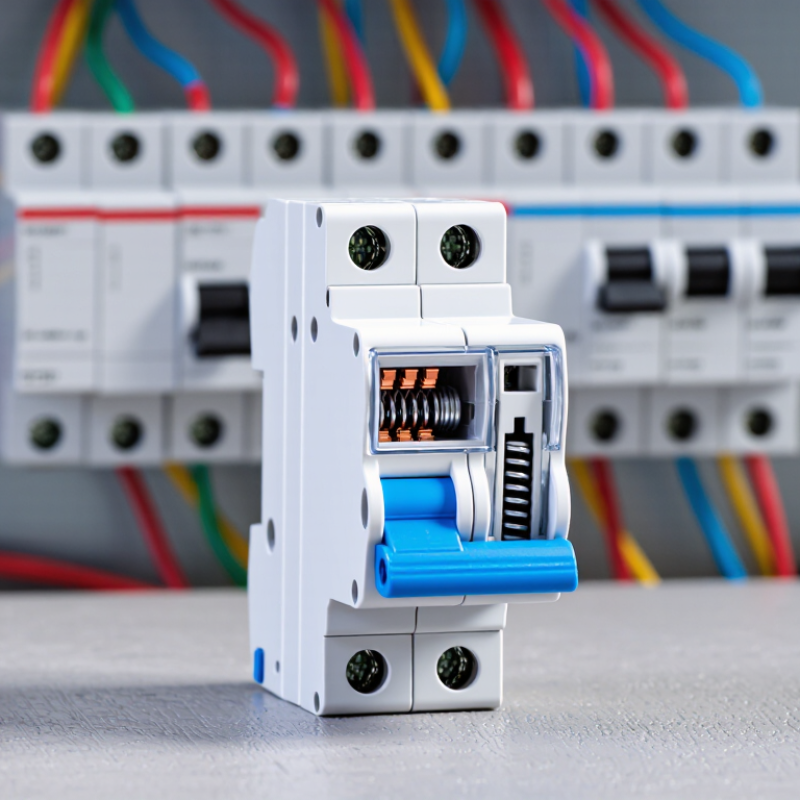
Inside an MCB, each component has a specific safety task. The fixed and moving contacts carry current during normal operation. A spring-loaded mechanism opens them when a fault occurs. The thermal trip uses a bimetal strip. It bends slowly during prolonged overloads. The magnetic trip uses a solenoid and reacts almost instantly to a short circuit. This difference is easy to overlook.
An arc chute sits near the contacts. It divides and cools the electrical arc after separation. The terminal clamps the conductor, while the toggle shows the operating position. In a Dc Miniature Circuit Breaker, polarity and arc-extinguishing design deserve closer attention. Direct current does not naturally cross zero, so the arc can remain persistent. IEC 60898-1 provides performance requirements for household and similar MCB applications, including overcurrent behavior and testing.
Field inspection adds useful evidence. A loose terminal may feel warm, show brown discoloration, or smell slightly burnt. Do not ignore these signs. NFPA’s Home Structure Fires report estimated that electrical distribution and lighting equipment was involved in about 46,700 reported U.S. home structure fires annually from 2015 to 2019. Those fires caused approximately 390 civilian deaths and 1,100 injuries. The figures are not a direct measure of MCB failure, but they show why connection quality matters. One imperfect assumption remains common: a tripped MCB is not always defective. The underlying overload, poor termination, or damaged cable still needs investigation.
What Is an MCB Miniature Circuit Breaker?
An MCB protects a circuit by interrupting current when it becomes unsafe. Its most important task is fault detection. During an overload, current heats a bimetal strip. The strip bends slowly and releases the trip mechanism. This response matches faults that develop over minutes, such as too many appliances sharing one circuit.
A short circuit behaves differently. Current rises sharply between conductors with very low resistance. An electromagnetic coil then creates a strong magnetic force and trips the contacts almost instantly. IEC 60898-1 defines performance requirements for household and similar circuit breakers, including response and endurance testing. According to the National Fire Protection Association’s Home Structure Fires report, electrical distribution and lighting equipment appeared in about 24% of reported home fires during 2015–2019. The figure is serious, but an MCB cannot detect every hazard. Loose terminals, damaged insulation, and some arc faults may remain invisible to its thermal and magnetic sensors. That limitation deserves more attention.
Tips: Match the MCB rating to the cable and circuit design, not simply the appliance load. Check the trip curve and breaking capacity during professional inspection. Test the installation after alterations. A switch that never trips is not automatically safer; it may indicate that faults have not occurred, or that protection is unsuitable. Real wiring is rarely perfect, and assumptions can fail.
| Data Dimension | Electrical Fault or Feature | Detection Method | Internal Operating Principle | Typical Response | Protection Purpose |
|---|---|---|---|---|---|
| Device definition | Miniature Circuit Breaker (MCB) | Automatically monitors current flowing through a circuit | Opens the circuit when current exceeds a defined limit or when a short-circuit current is detected | Manual reset is normally possible after the fault has been cleared | Protects conductors and connected equipment from overcurrent damage |
| Overload | Current is higher than the circuit's rated current for an extended period | Thermal sensing through a bimetallic strip | The bimetal heats, bends, and releases the trip mechanism when the overload persists | Time-delayed tripping; a larger overload generally causes faster operation | Limits overheating of cables caused by sustained excessive current |
| Short circuit | Very high current caused by a low-resistance connection between conductors | Magnetic sensing through an electromagnetic coil | The high fault current creates a strong magnetic field that rapidly operates the trip mechanism | Near-instantaneous tripping, typically within milliseconds | Reduces thermal and mechanical stress during severe faults |
| Rated current (In) | Continuous current the MCB is designed to carry under specified conditions | Thermal and magnetic trip characteristics are selected around this rating | Examples of commonly available ratings include 6 A, 10 A, 16 A, 20 A, 32 A, 40 A, 50 A and 63 A | The breaker should carry its rated current without nuisance tripping under reference conditions | Helps coordinate circuit protection with conductor ampacity and connected load |
| Trip characteristic | Magnetic sensitivity to short-circuit or high inrush current | Defined by the instantaneous magnetic trip range | Type B commonly trips magnetically at about 3–5 times In; Type C at about 5–10 times In; Type D at about 10–20 times In | Selection depends on expected starting current and prospective fault current | Balances reliable fault protection with reduced nuisance tripping |
| Arc interruption | Electrical arc created when contacts separate under load | Arc chute and internal arc-control components manage the arc | The arc is split, cooled, lengthened, and extinguished inside the breaker | Interruption occurs during the opening operation | Helps prevent the arc from damaging the enclosure or continuing to energize the circuit |
| Number of poles | Single-phase or multiphase circuit protection | One or more switching and tripping paths monitor the relevant conductors | Common configurations include 1-pole, 2-pole, 3-pole and 4-pole devices | All linked poles may open together, depending on the device design | Provides isolation and overcurrent protection for the selected circuit arrangement |
| Breaking capacity | Maximum prospective fault current the MCB can safely interrupt | Specified by testing under the applicable product standard | Typical residential and light-commercial values may include 4.5 kA or 6 kA; higher ratings are available for suitable applications | The selected value must be equal to or greater than the prospective short-circuit current at the installation point | Ensures safe interruption without destructive failure during a fault |
| Reset operation | Restoration after a trip | Manual handle movement after identifying and clearing the fault | The mechanism must be moved fully to the reset position before the contacts can reclose | Resetting does not remove the original electrical fault | Allows the circuit to be re-energized after safe inspection |
| What an MCB generally does not detect | Small leakage current to earth or a person-contact shock hazard | Not normally detected by the standard thermal-magnetic mechanism | Residual-current protection requires a separate RCD, RCBO, or equivalent protective device | Operation depends on the type and sensitivity of the additional device | Provides protection beyond ordinary overload and short-circuit protection |
| Coordination requirement | Interaction with cable size, load current, fault level and upstream protection | Design verification and selection against installation conditions | The MCB rating and curve must be suitable for the conductor and the expected operating current | Correct coordination reduces overheating and unwanted interruptions | Supports safe, reliable operation of the complete low-voltage circuit |
Note: Trip times, current ranges, ratings and breaking capacities vary according to the applicable standard, product design, ambient temperature and installation conditions. The manufacturer's technical documentation and local electrical regulations should be consulted for final selection.
What Is an MCB Miniature Circuit Breaker?
An MCB protects low-voltage circuits from overloads and short circuits. It disconnects power before excessive current damages cables, terminals, or connected equipment. Unlike a fuse, it can usually be reset after the fault is cleared. Its thermal element responds to sustained overloads, while its magnetic element reacts quickly to short-circuit current.
Miniature Circuit Breaker Types are often identified by their tripping curves. A Type B MCB trips magnetically at about three to five times its rated current. It suits lighting circuits, sockets, and resistive household loads. A Type C device trips at roughly five to ten times its rating. It handles moderate inrush currents from motors, transformers, and fluorescent fittings. Type D requires about ten to twenty times the rated current, making it suitable for equipment with strong startup surges.
Curve selection needs practical judgment. A 16 A Type C MCB may tolerate a motor starting briefly, while a Type B device might trip unnecessarily. That can be frustrating. However, choosing a slower curve without checking cable capacity can reduce protection. The installation method, ambient temperature, prospective fault current, and conductor size all matter. K and Z curves also exist for specialized applications, but their permitted use depends on the applicable electrical standard. A curve chart helps, yet it is not the whole decision. Field measurements and qualified inspection remain important, especially when nuisance tripping continues.
A Miniature Circuit Breaker protects low-voltage circuits from overloads and short circuits. Its ratings deserve careful reading, not quick selection. The rated current, or In, shows the continuous current the device can carry under specified conditions. Common ratings include 6A, 10A, 16A, 20A, and 32A. A 16A device should not automatically protect every 16A circuit. Cable size, installation method, ambient temperature, and voltage drop also matter.
The tripping curve changes practical performance. Type B usually trips magnetically at about three to five times its rated current. Type C generally trips at five to ten times In. Type D may require ten to twenty times In, making it suitable only where high inrush currents are expected. Breaking capacity is equally important. A 6kA rating means the MCB can interrupt a prospective fault current up to 6,000 amperes under test conditions. The actual fault level must still be assessed.
The IEC 60898-1 standard defines key requirements for household and similar circuit breakers. Meanwhile, the IEA Electricity 2024 report forecasts global electricity demand growth of about 3.4% annually from 2024 to 2026. More electrical loads make correct protection increasingly important. A recurring inspection mistake is matching only the amperage. It looks simple, but it is incomplete. Labels can mislead without a system calculation. Even experienced installers should verify coordination, selectivity, terminal temperature limits, and local installation rules before approval.
Selecting the right Miniature Circuit Breaker (MCB) starts with the circuit, not the cabinet.
An MCB interrupts excessive current before conductors overheat. Check the system voltage, number of poles, expected load, and available fault current. Match the rated current to the cable’s allowable capacity. A higher rating is not automatically safer. It may leave the cable unprotected. Measure the load. Choose the trip curve according to inrush current from lighting, sockets, motors, or other equipment. The breaking capacity must meet or exceed the prospective short-circuit current.
Installation should be completed by a qualified electrician under applicable electrical codes. Isolate the supply and verify that the circuit is dead with an approved tester. Do not rely only on a switch. Mount the MCB securely on the DIN rail, then follow the line and load markings. Tighten terminals to the specified torque. A loose connection can create heat slowly, then fail suddenly.
Miniature Circuit Breaker Accessories, such as busbars or auxiliary contacts, must also match the enclosure and circuit design.
Before energizing, inspect conductor routing, terminal tightness, labeling, and enclosure clearance. Test continuity, insulation, polarity, and protective operation where required. Ambient heat, bundled cables, and future load increases can change the original calculation.
Even careful installers can overlook these details. I would recheck the cable sizing rather than trust an old panel schedule. Small assumptions deserve another look.
An MCB is a compact protective switch inside an electrical distribution board. It disconnects power during overloads or short circuits. This helps limit overheating and equipment damage. It is not a repair device.
A thermal bimetal strip bends during prolonged excessive current. This movement releases the mechanism and opens the contacts. The response is gradual. That delay helps manage normal short-term starting currents.
A magnetic solenoid reacts almost instantly to a sudden current surge. It opens the contacts before severe heating develops. An arc chute helps divide and cool the electrical arc. Fast action matters.
Repeated trips may indicate too many appliances, a damaged cable, or a loose terminal. Unplug appliances and inspect for obvious issues. Do not force the toggle. Professional testing is needed if tripping continues.
Match the rated current with the cable’s allowable capacity and expected circuit load. Check voltage, pole configuration, fault current, and trip curve. A higher rating is not automatically safer. It may leave the cable exposed.
A loose terminal may feel warm or show brown discoloration. A faint burnt smell is another warning sign. Do not touch suspected damage while energized. Small marks can precede sudden failure.
A qualified electrician should isolate the supply and verify that the circuit is dead. Check conductor size, terminal markings, DIN-rail mounting, and tightening torque. Inspect cable routing and enclosure clearance. Old records may be wrong.
Yes. Direct current can maintain an electrical arc because it does not naturally cross zero. Polarity and arc-extinguishing design require careful attention. Use protection suitable for the circuit. This detail is easy to miss.
No. It mainly interrupts excessive current. It cannot repair damaged insulation, poor connections, or incorrectly sized cables. A tripped MCB may be functioning correctly. The underlying fault still needs investigation.
An MCB Miniature Circuit Breaker is a compact protective device designed to interrupt an electrical circuit when it detects an overload or short circuit. It helps protect wiring and connected equipment while allowing the circuit to be restored after the fault is cleared. Inside an MCB, key components include fixed and moving contacts, a thermal element, a magnetic trip mechanism, an arc-control chamber, and an operating handle. The thermal mechanism responds to sustained overcurrent, while the magnetic mechanism reacts rapidly to sudden high fault currents.
MCBs are available with different tripping curves, such as B, C, and D, to suit lighting, household, commercial, or motor-related loads. Important specifications include rated current, voltage, breaking capacity, number of poles, and curve type. Selecting the correct MCB requires matching these values to the circuit’s cable size, expected load, and installation conditions. Installation should be carried out with the power isolated, correct connections confirmed, and local electrical safety requirements followed.