




Choosing Circuit Protection by Risk: MCB, RCCB or RCBO Breaker?
When it comes to ensuring the safety of electrical installations, selecting the right circuit protection device is crucial. Among the options available, MCB, RCCB, and RCBO breakers are the most common choices. Understanding their differences and applications can help in choosing the best protection for your specific needs.
Understanding the Basics: MCB, RCCB, and RCBO
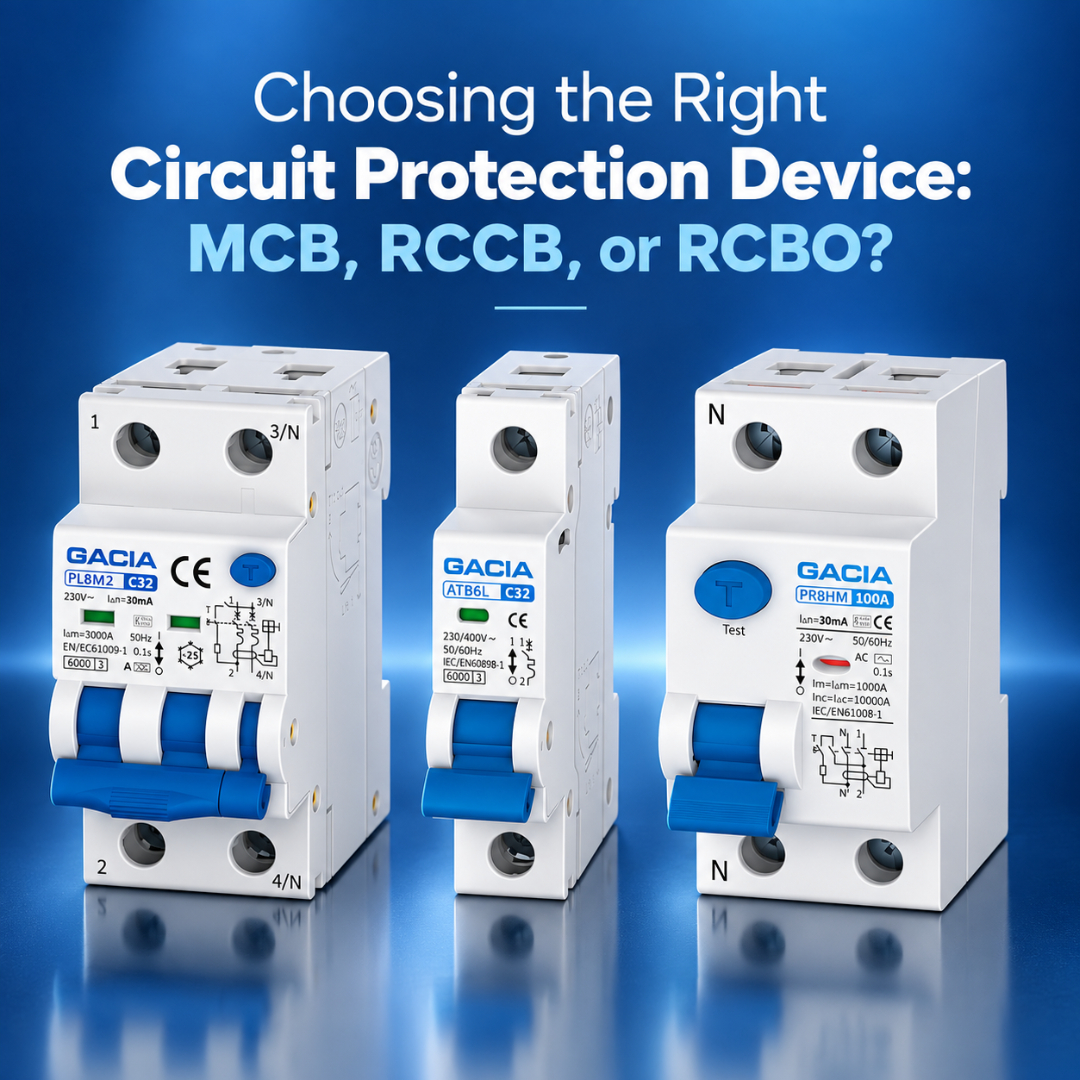
Miniature Circuit Breaker (MCB) is designed to protect electrical circuits from overcurrent, specifically due to short circuits or overloads. It automatically cuts off the electrical flow when the current exceeds a predefined limit. For example, the GACIA ATB6 MCB is designed to provide reliable protection against overload and short-circuit faults. With a 6kA breaking capacity, it is suitable for residential and light-commercial distribution systems, including lighting, socket, and general branch circuits. Its modular DIN-rail design also makes installation and replacement straightforward in standard distribution boards.
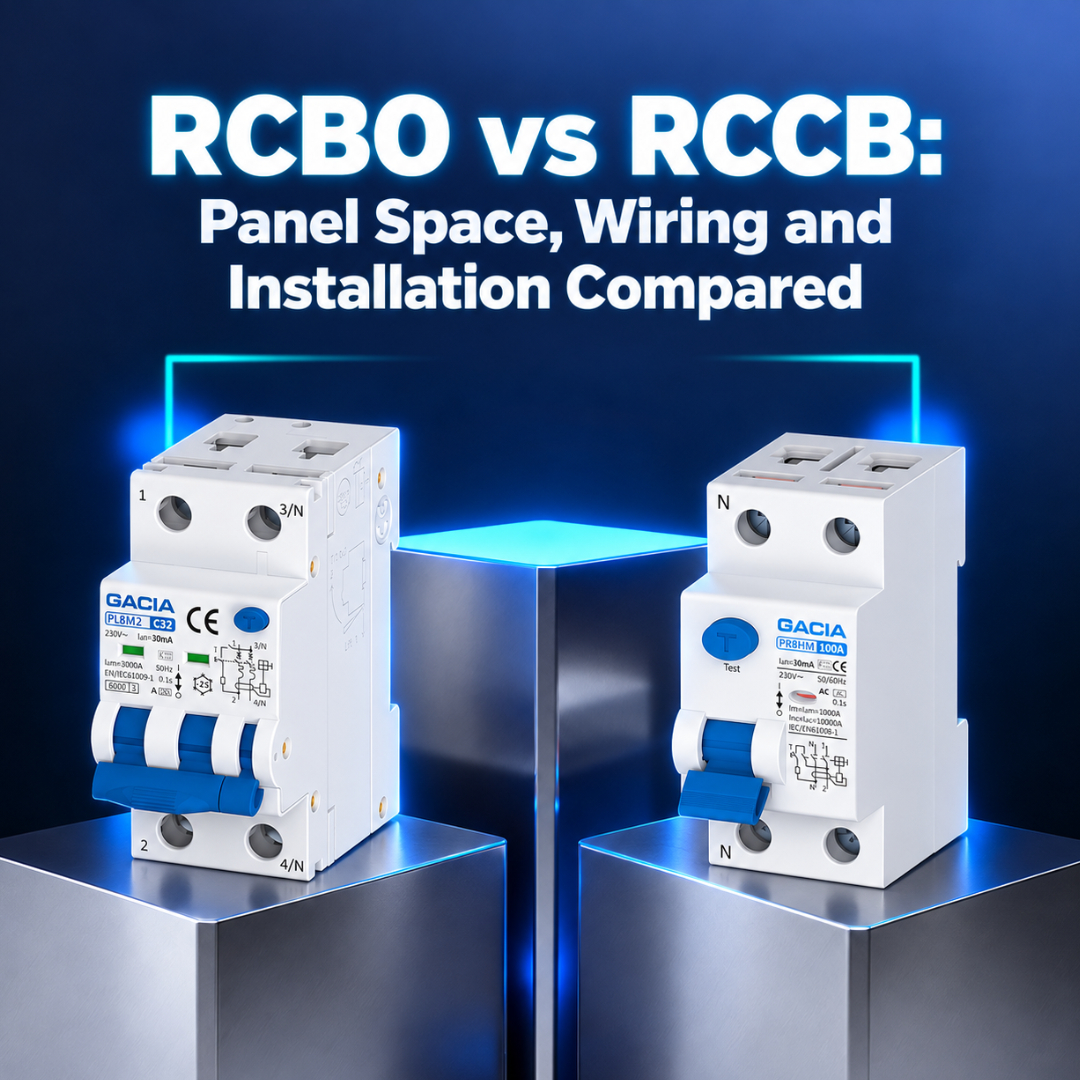
Residual Current Circuit Breaker (RCCB) focuses on detecting earth faults. It disconnects the circuit whenever it identifies a difference between the live and neutral wires, indicating potential leakage current that could lead to electric shocks. The GACIA PR8HM RCCB provides dedicated residual-current and earth-leakage protection, helping reduce the risk of electric shock and electrical hazards caused by insulation faults. Available with different rated-current and residual-current options, it is suitable for residential, commercial, and distribution-board applications where additional leakage protection is required.
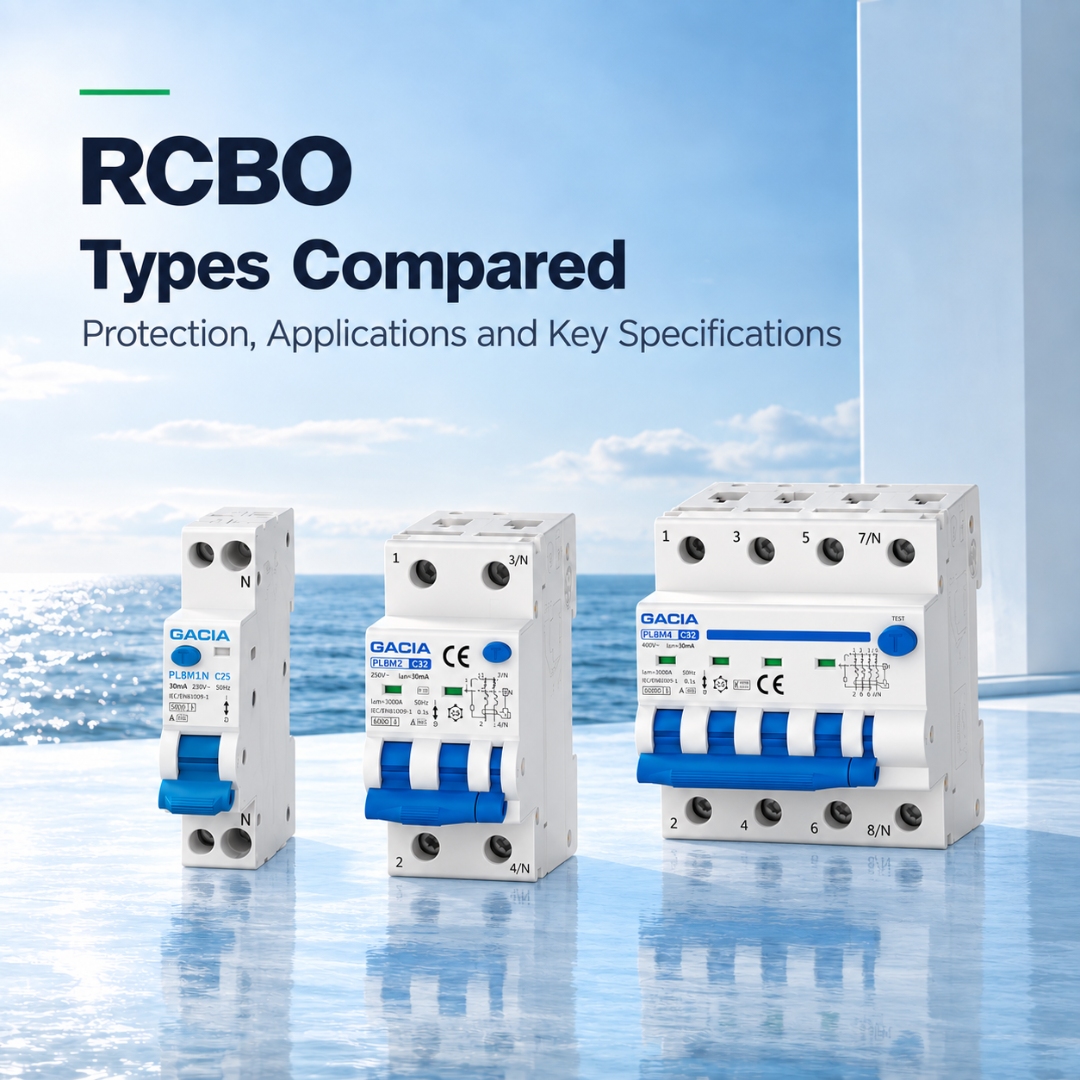
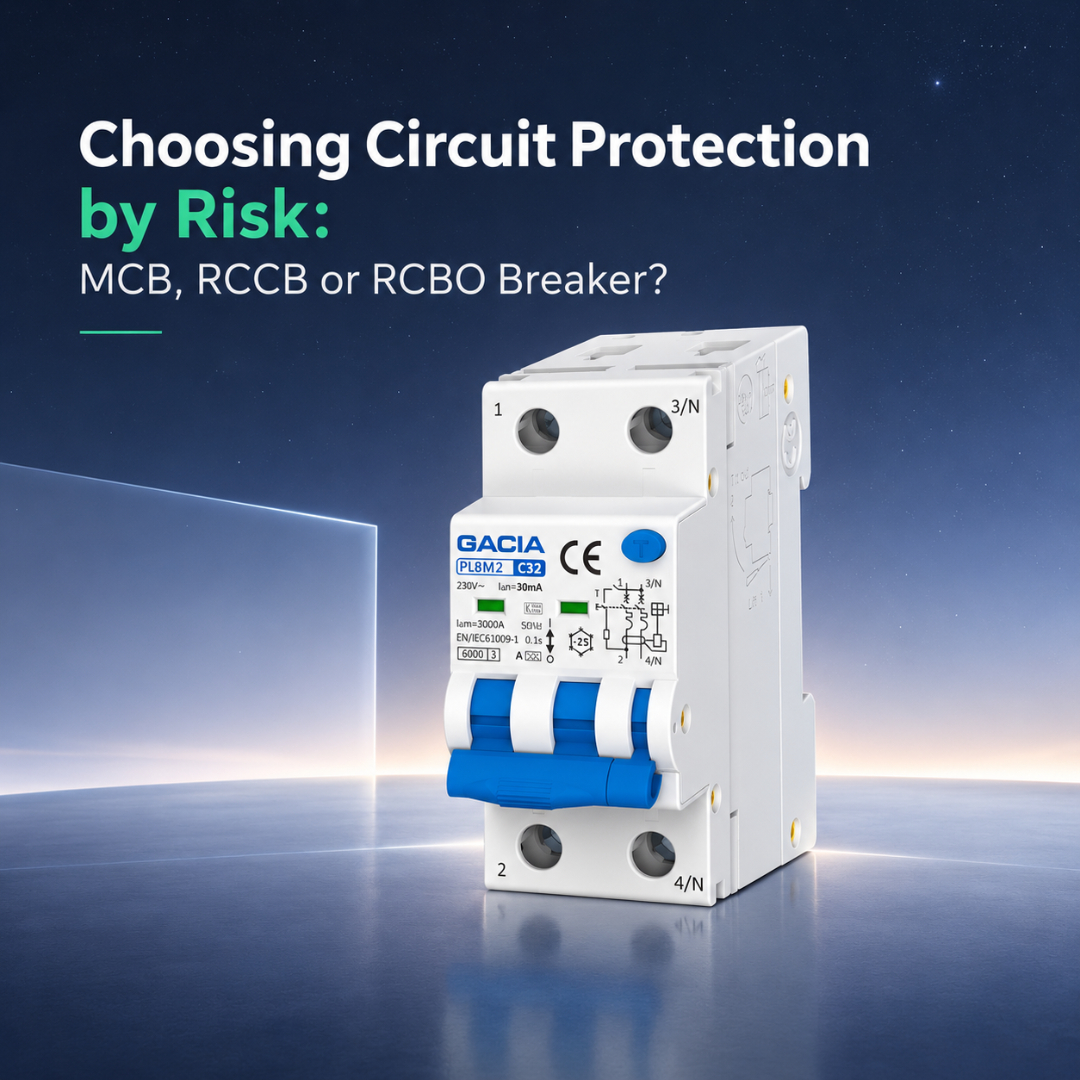
Residual Current Circuit Breaker with Overload Protection (RCBO) combines the functionalities of both MCB and RCCB. It provides comprehensive protection against overcurrents and earth faults within a single device, making it ideal for all-round circuit protection. The GACIA PL8M2 / PL8M4 RCBO combines overload, short-circuit, and residual-current protection in a single device. Available in 2P and 4P configurations, the series offers a practical solution for circuits that require both overcurrent and leakage protection. Its integrated design can simplify distribution-board layouts while providing more comprehensive protection for individual circuits.
What is the Difference Between MCB, RCCB, and RCBO?
The primary difference lies in the type of protection each device offers. While MCBs guard against overcurrent, RCCBs handle earth fault conditions. RCBOs deliver both types of protection. For instance, in areas with higher risk of electric shocks or where space is limited, an RCBO breaker might be more suitable as it integrates two protective functions.
Applications and Use Cases
When choosing between these devices, consider your application's specific requirements. MCBs are often used in residential installations where circuit overloads are the primary concern. For environments where protecting people from electric shock is paramount, RCCBs are recommended. In settings that demand comprehensive protection, RCBOs offer a combination of safety measures in one convenient package.
How Do You Choose Between MCB, RCCB, and RCBO?
Choosing the right breaker involves assessing both the electrical environment and the specific risks involved:
- For Overcurrent Protection Only: Prioritize MCBs if the main concern is circuit overloading.
- For Earth Fault Protection: Install RCCBs in scenarios where personal safety against earth faults is crucial.
- For Comprehensive Protection: Opt for RCBOs when you need both overcurrent and earth fault protection without compromising on space.
Additional Factors to Consider
Apart from basic protection needs, consider factors like installation complexity, maintenance requirements, and environmental conditions. For long-term reliability and performance, the quality and brand reputation of these circuit breakers can also influence the decision-making process.
Comparative analysis like RCBO vs MCB helps in understanding scenarios where each device excels, aiding in an informed choice.
Furthermore, consulting with a certified electrician can ensure that the chosen solution meets all regulatory standards and specific operational requirements.
The right selection of a circuit breaker not only enhances the safety of an installation but also promotes energy efficiency and longevity of equipment.
In conclusion, the decision to use an MCB, RCCB, or RCBO should be based on a thorough evaluation of the electrical system’s needs, potential risks, and the level of protection required. While each device offers distinct advantages, understanding their unique functionalities empowers users to safeguard their electrical systems effectively and efficiently.