



Choosing the Right Low Voltage Circuit Breaker for Different Uses
Selecting the right low-voltage circuit breaker is essential for ensuring electrical safety, system reliability, and efficient power distribution. Different applications require different rated currents, breaking capacities, protection functions, installation environments, and smart control capabilities. This guide explains the key factors to consider when choosing a low voltage circuit breaker and introduces GACIA solutions for different electrical applications.
Understanding Low Voltage Circuit Breakers
A low voltage circuit breaker is a protective device that interrupts electrical current when abnormal conditions such as overloads or short circuits occur. Depending on the application, different types of circuit breakers can provide different levels and combinations of protection.
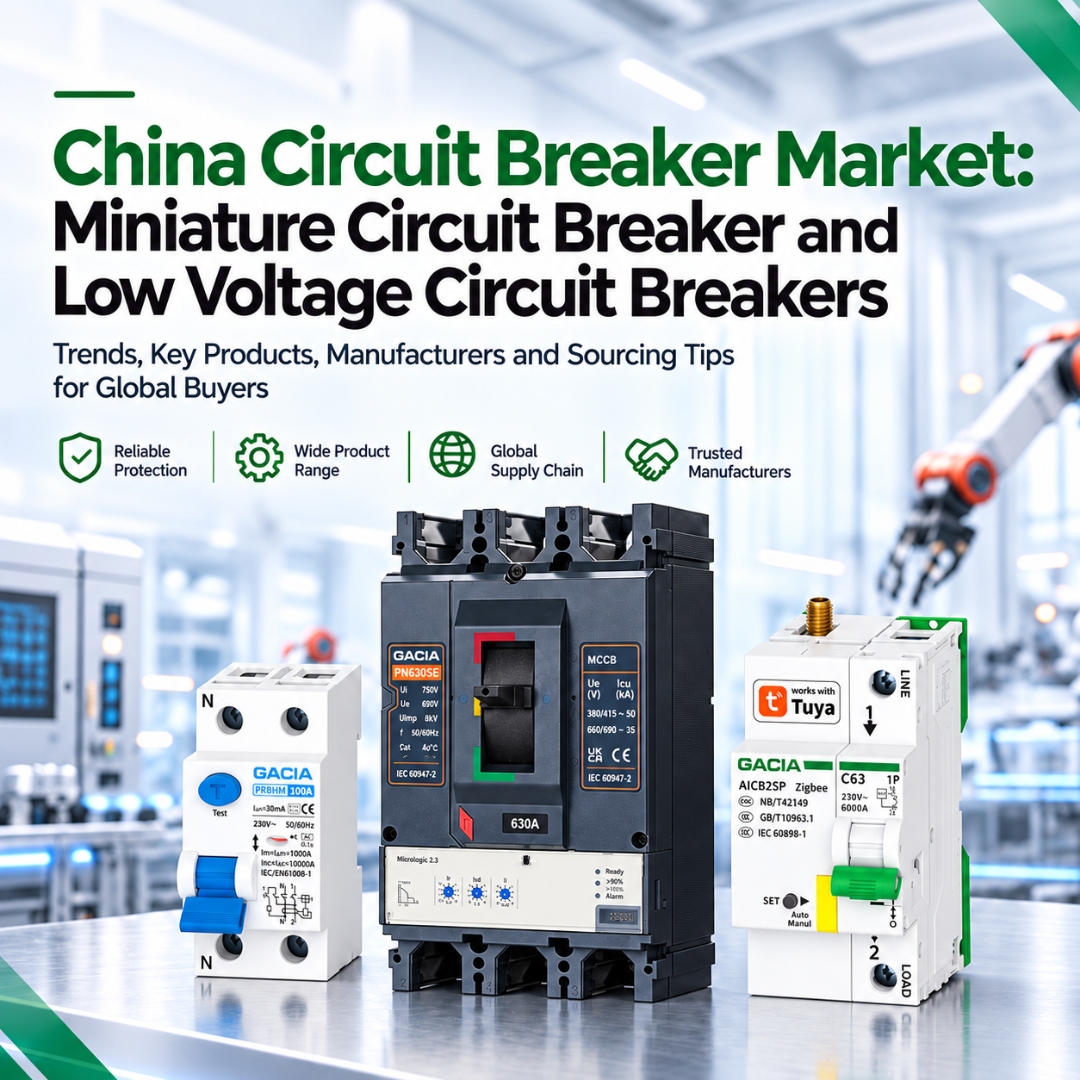
Common low voltage circuit breakers include MCBs, MCCBs, RCCBs, RCBOs, and smart circuit breakers. Choosing the appropriate type depends on the electrical load, protection requirements, fault current, installation environment, and other system conditions.
Different Types of Low Voltage Circuit Breakers
There are several types of low-voltage circuit breakers available for residential, commercial, and industrial applications. Understanding their differences is the first step in selecting the right solution.
Molded Case Circuit Breaker (MCCB)
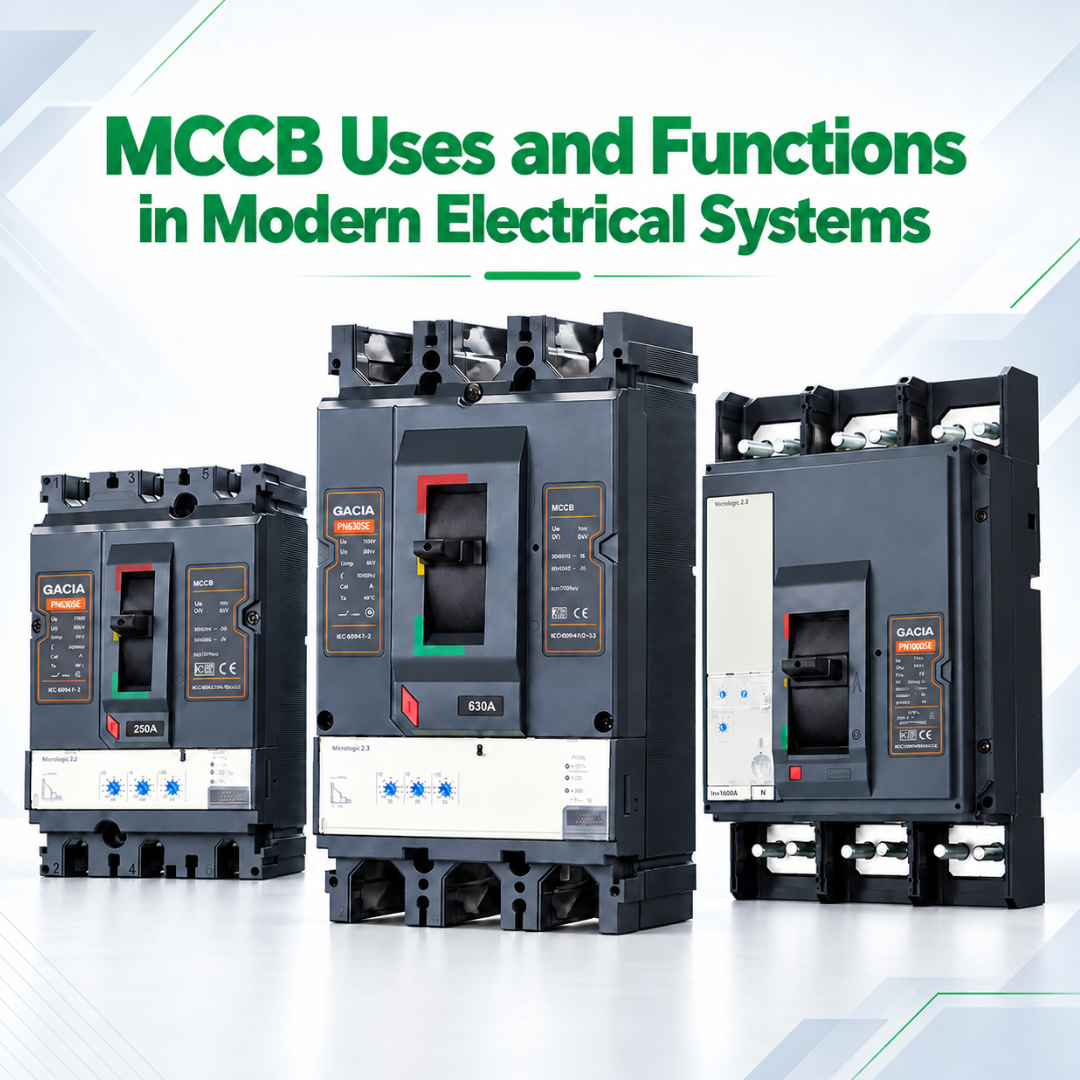
MCCBs are generally used when electrical systems require higher current ratings and greater fault protection capabilities. They are commonly found in commercial buildings, industrial facilities, and power distribution systems.
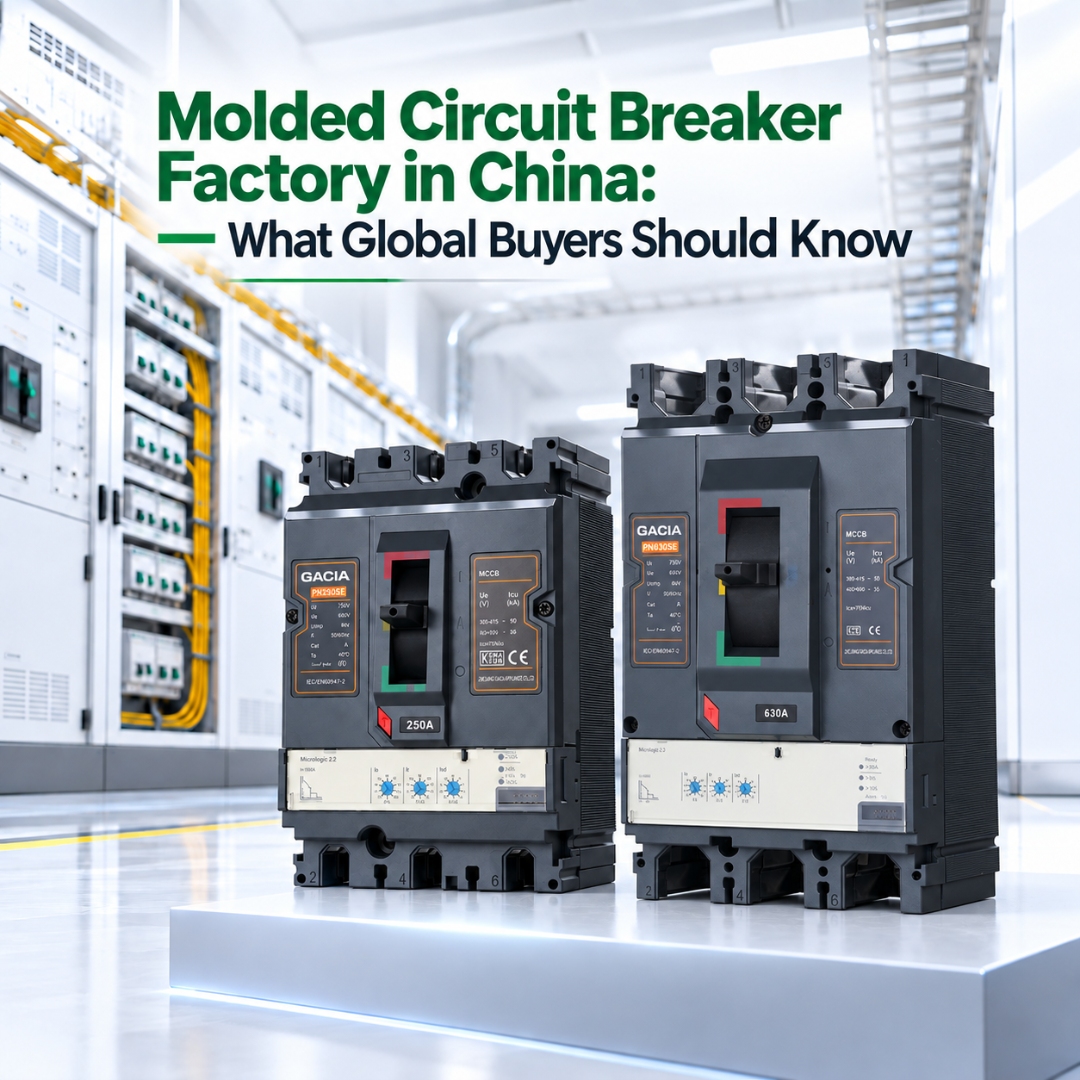
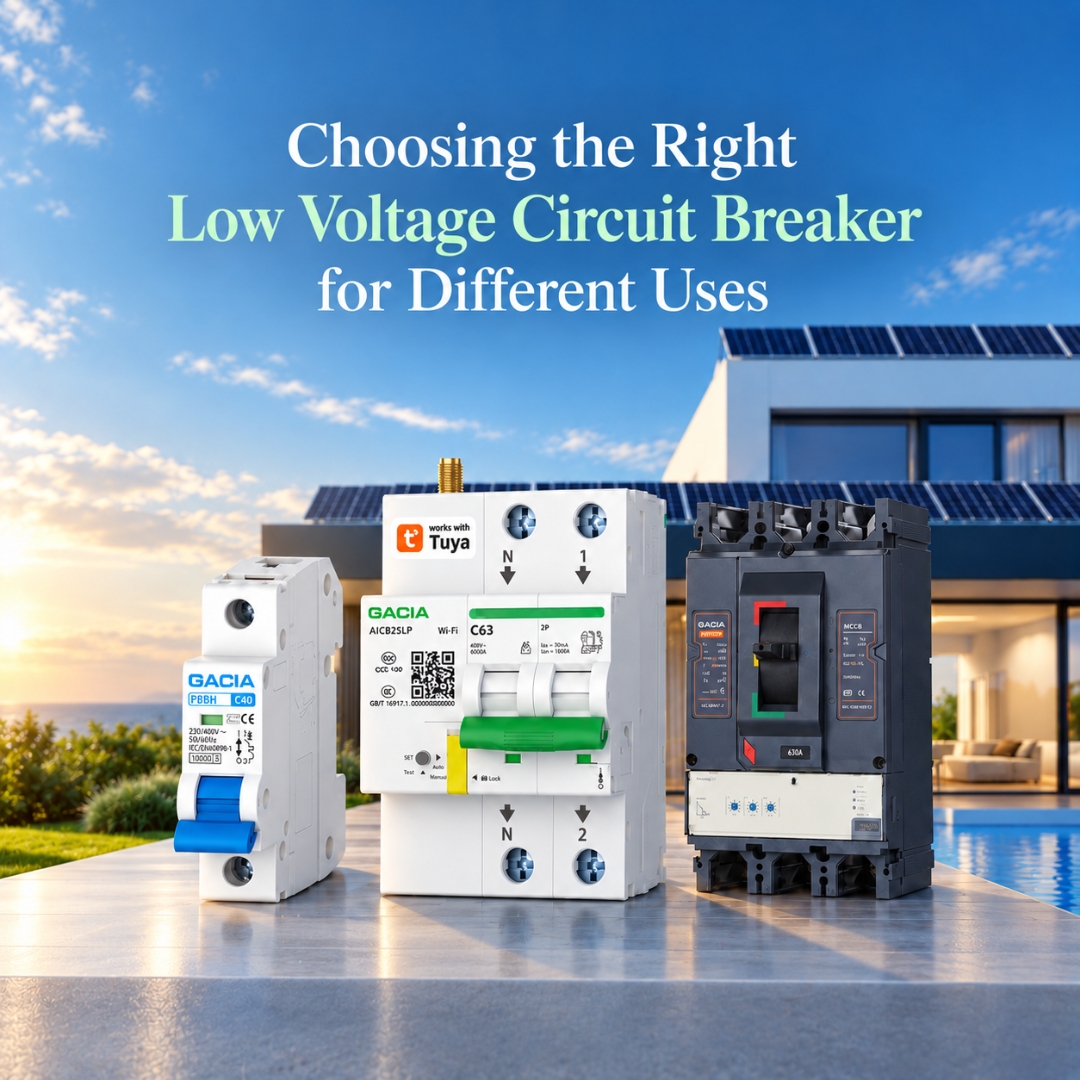
The GACIA PN630 PN Series MCCB is designed for higher-current applications. It supports rated currents from 250A to 630A and rated operating voltages up to 690V. It is available with thermal-magnetic or electronic trip units, making it suitable for demanding industrial and commercial distribution systems.
Residual Current Circuit Breaker (RCCB)
RCCBs are designed primarily to protect against residual or earth leakage currents. They are particularly useful in applications where additional protection against electric shock and leakage faults is required.
Unlike an MCB, an RCCB does not normally provide overload and short-circuit protection by itself. Therefore, it is often used together with an overcurrent protection device.
Residual Current Breaker with Overcurrent Protection (RCBO)
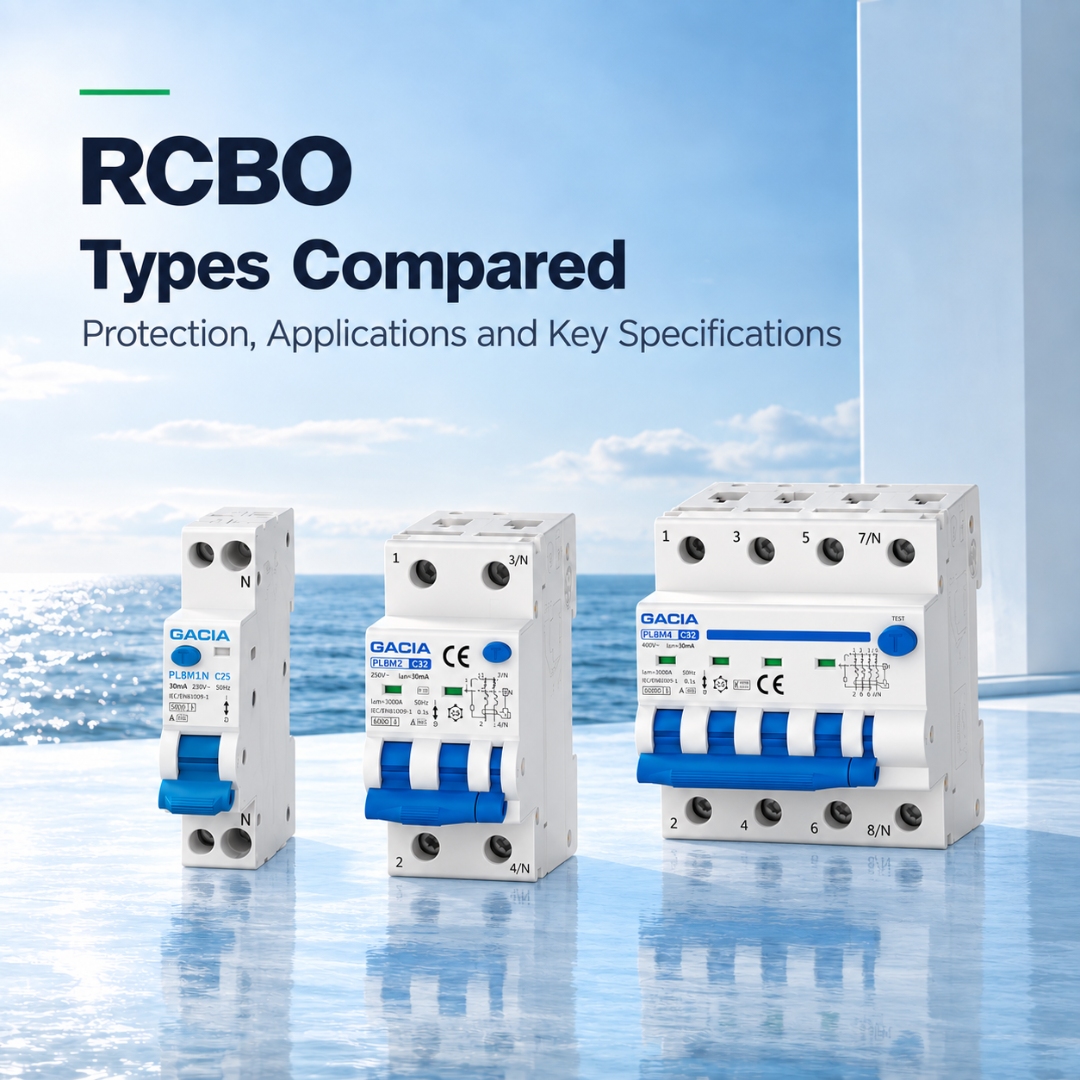
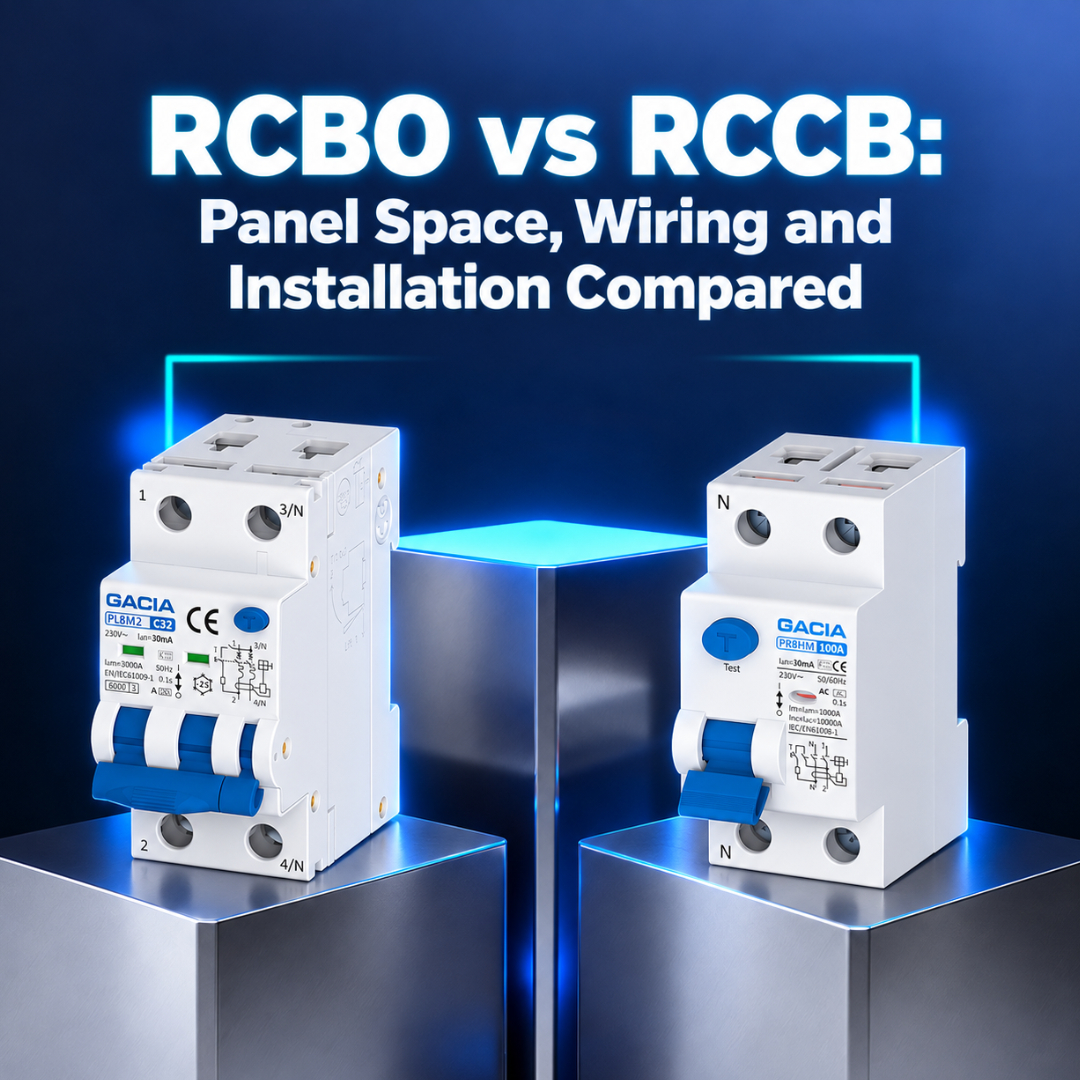
RCBOs combine residual current protection with overload and short-circuit protection in a single device. This makes them a practical choice when both overcurrent and earth leakage protection are required while saving space inside an electrical distribution board.
For modern smart electrical systems, the GACIA AICB2SLP RCBO Smart IoT Circuit Breaker combines electrical protection with intelligent monitoring and control capabilities. It supports communication technologies such as Zigbee, Wi-Fi, and 4G, making it suitable for smart homes, commercial facilities, campuses, banks, shopping centers, and other applications that require remote monitoring and control.
Miniature Circuit Breaker (MCB)
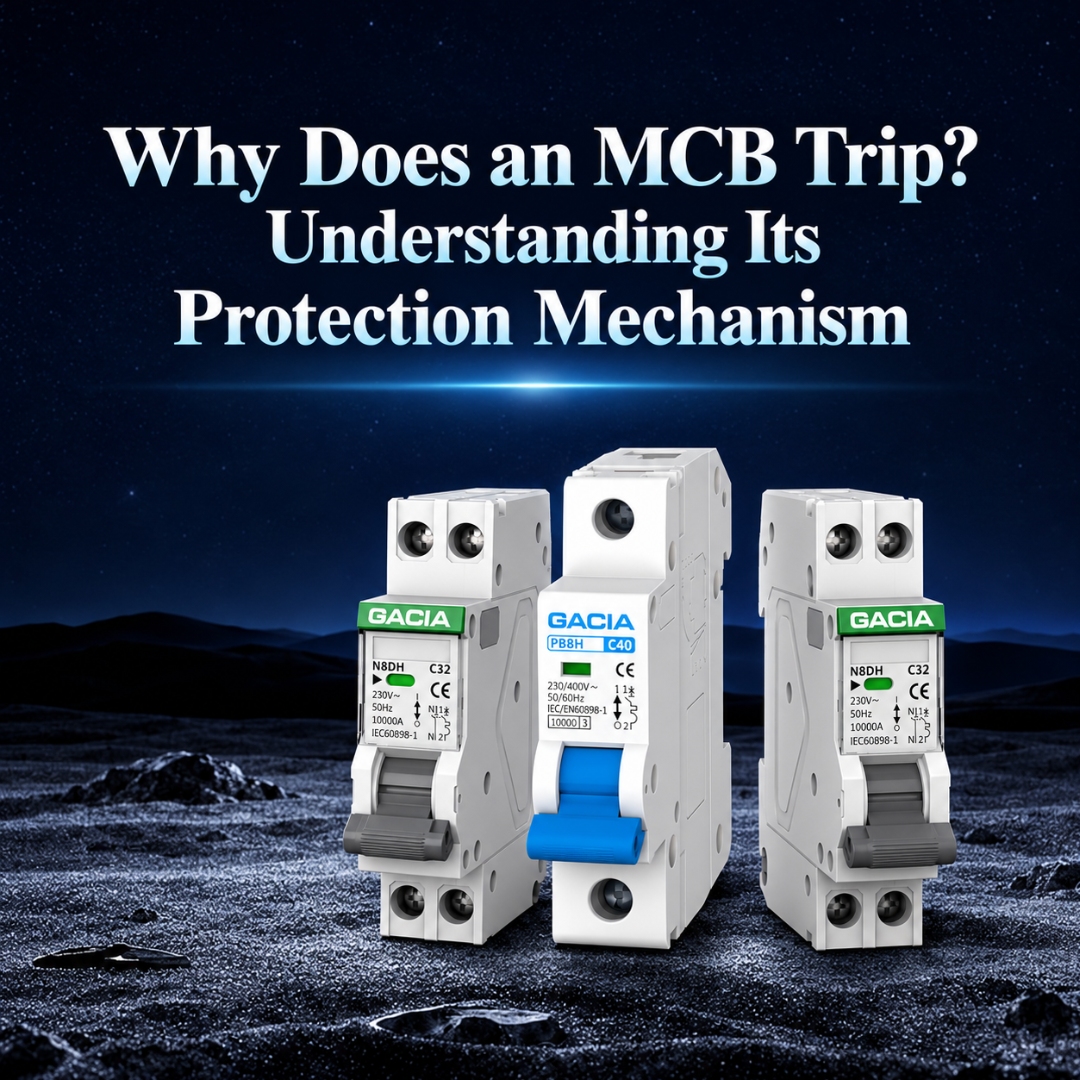
MCBs are commonly used in residential, commercial, and light industrial electrical systems. They primarily provide protection against overloads and short circuits and are available in different rated currents, pole configurations, and tripping characteristics.
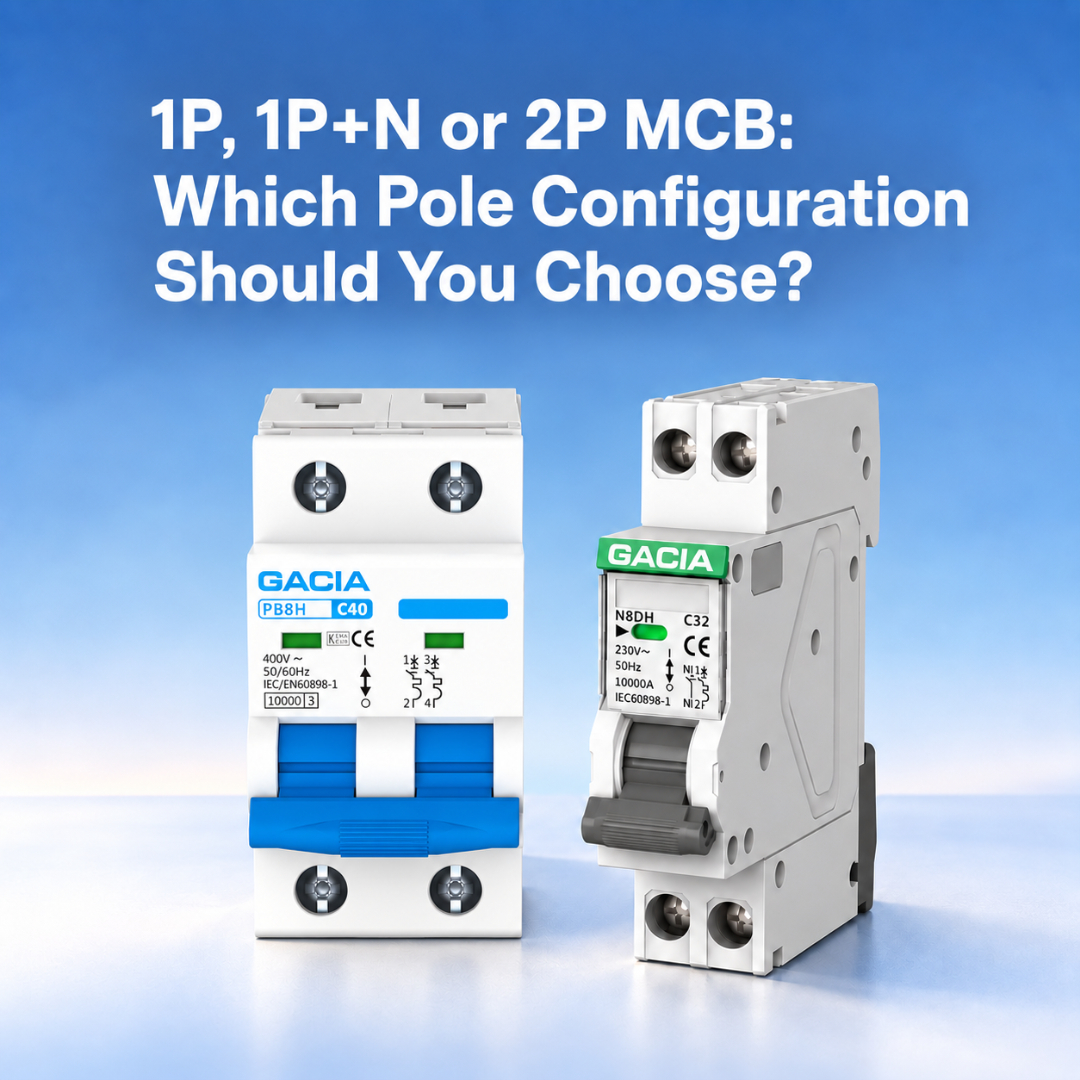
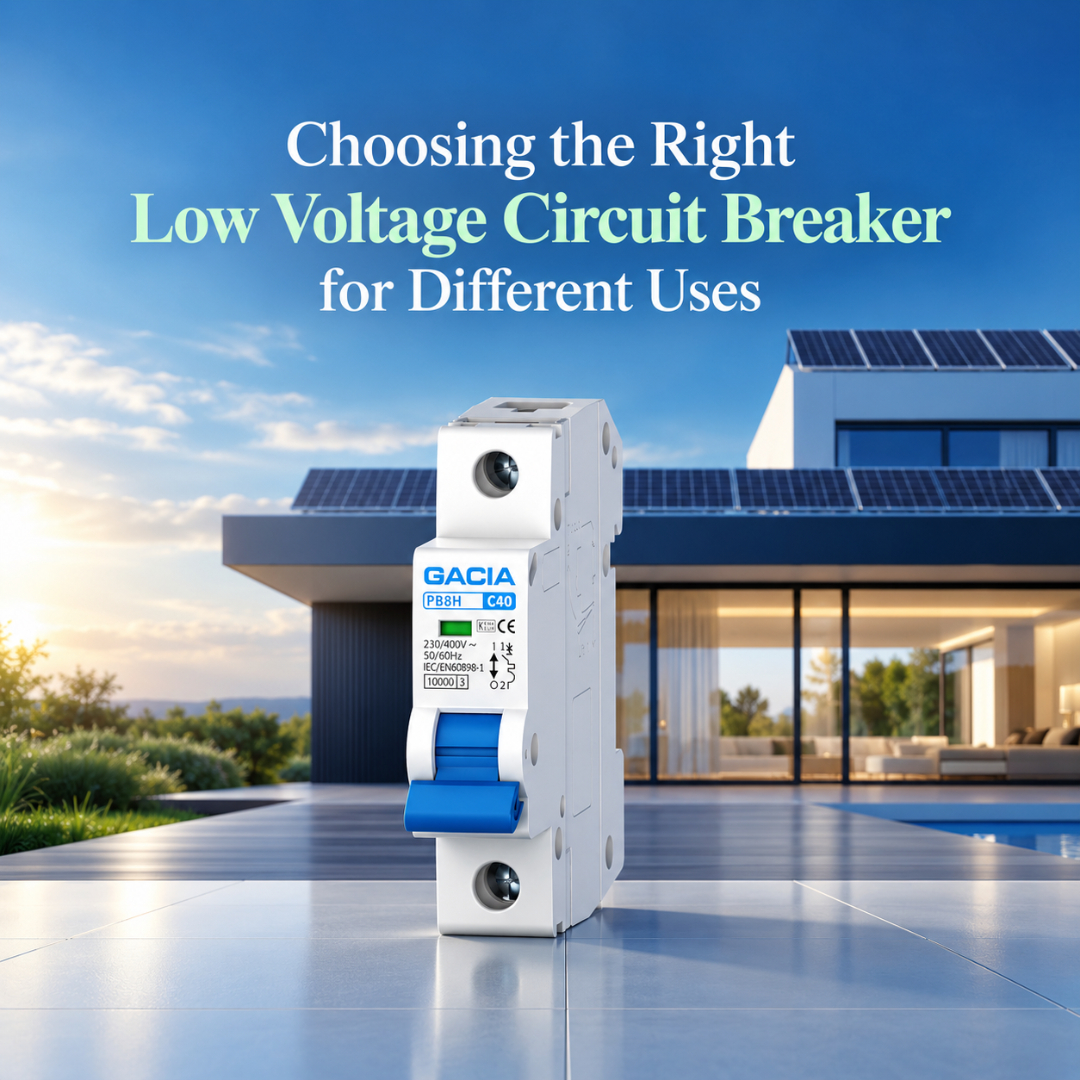
For example, the GACIA PB8H 10kA Professional P Series MCB is designed for a wide range of electrical distribution applications. It offers rated currents from 1A to 63A and a breaking capacity of up to 10kA. It is available in multiple pole configurations and is suitable for domestic, commercial, and industrial electrical systems.
Key Factors to Consider When Choosing a Low Voltage Circuit Breaker
When selecting a low voltage circuit breaker, several technical factors should be evaluated to ensure the breaker matches the requirements of the electrical system.
1. Rated Current
The rated current should match the expected load of the circuit while providing appropriate protection for the connected conductors and equipment. Selecting a breaker with an unsuitable current rating can result in nuisance tripping or insufficient protection.
For smaller circuits, an MCB such as the GACIA PB8H may be appropriate, while higher-current distribution systems may require an MCCB such as the GACIA PN630.
2. Rated Voltage
The circuit breaker's rated voltage must be compatible with the electrical system. Before selecting a breaker, check the system voltage and confirm that the breaker's rated operational voltage is suitable for the application.
3. Breaking Capacity
Breaking capacity indicates the maximum fault current that a circuit breaker can safely interrupt under specified conditions. The selected breaker should have a breaking capacity greater than or equal to the prospective short-circuit current at the installation point.
For example, the GACIA PB8H offers a breaking capacity of up to 10kA, making it suitable for applications where a higher short-circuit capacity is required.
4. Protection Requirements
Consider what type of protection the electrical system requires. MCBs and MCCBs primarily provide overload and short-circuit protection, while RCCBs focus on residual current protection. RCBOs combine residual current protection with overcurrent protection.
For applications requiring remote monitoring and control, a smart circuit breaker such as the GACIA AICB2SLP can provide additional IoT-based functions beyond traditional circuit protection.
5. Application Environment
The installation environment should also be considered. Factors such as ambient temperature, humidity, dust, installation space, and operating conditions can affect the selection and performance of a circuit breaker.
6. Number of Poles
The number of poles should correspond to the electrical system and wiring configuration. Depending on the application, circuit breakers may be available in 1P, 1P+N, 2P, 3P, 3P+N, or 4P configurations.
7. Standards and Certifications
Always check whether the circuit breaker complies with the standards and certification requirements applicable to the target market. Compliance can help ensure product safety, reliability, and compatibility with local electrical regulations.
Choosing a Low Voltage Circuit Breaker for Different Applications
Residential Applications
Residential electrical systems generally require compact circuit breakers for lighting, sockets, appliances, and other household loads. MCBs and RCBOs are commonly considered depending on the required protection functions.
For smart homes, an IoT-enabled RCBO can additionally provide remote monitoring, switching, and other smart energy management functions.
Commercial Applications
Commercial buildings often have more complex electrical distribution systems. The selection may involve MCBs for branch circuits, RCCBs or RCBOs for residual current protection, and MCCBs for higher-current distribution circuits.
Industrial Applications
Industrial facilities typically involve higher loads, larger distribution networks, and potentially higher short-circuit currents. MCCBs are often suitable for main and sub-distribution circuits, while MCBs can be used for individual branch circuits and auxiliary equipment.
For higher-current industrial distribution systems, the GACIA PN630 MCCB provides rated current coverage up to 630A and rated operating voltage up to 690V, making it suitable for demanding commercial and industrial applications.
Why Choose GACIA for Low Voltage Circuit Protection?
GACIA specializes in the research, development, manufacturing, and marketing of low-voltage electrical protection products, including MCBs, RCCBs, RCBOs, MCCBs, and smart circuit breakers.
With a broad product portfolio, GACIA provides circuit protection solutions for different electrical applications, from compact MCBs for residential circuits to high-current MCCBs for industrial distribution systems and smart circuit breakers for connected electrical applications.
GACIA's products are designed to meet the diverse requirements of residential, commercial, industrial, and intelligent electrical systems, providing customers with reliable solutions for modern power distribution and circuit protection.
Conclusion
Choosing the right low voltage circuit breaker requires more than simply matching the current rating. Rated voltage, breaking capacity, protection functions, number of poles, installation environment, and applicable standards should all be considered.
For lower-current residential and commercial circuits, an MCB such as the GACIA PB8H can provide reliable overload and short-circuit protection. For higher-current commercial and industrial distribution systems, an MCCB such as the GACIA PN630 can provide higher current capacity and fault protection. For smart electrical systems requiring remote monitoring and control, the GACIA AICB2SLP Smart IoT RCBO offers an intelligent approach to circuit protection.
By matching the circuit breaker to the specific electrical requirements of the application, users can achieve a safer, more reliable, and more efficient electrical system.