

Inside a Low-Voltage Distribution Board: Key Components and Their Roles
A low-voltage distribution panel receives electrical energy and supplies it to various circuits, providing protection, isolation, and system arrangement. Knowledge about important components in distribution boards can help contractors, panel assembly makers, and consumers choose the right equipment in residential, commercial, and industrial installations.
The exact arrangement varies from project to project; however, most boards have incoming protection devices, busbars, outgoing circuit breakers, neutral and earth bars, surge protection, metering devices, and an enclosure.
Main Distribution Board Components
The main components of the distribution board operate in coordination in order to regulate incoming power and safeguard the circuits that come after it.
Main Incoming Circuit Breaker or Isolator
The incoming device controls the main supply to the distribution board.
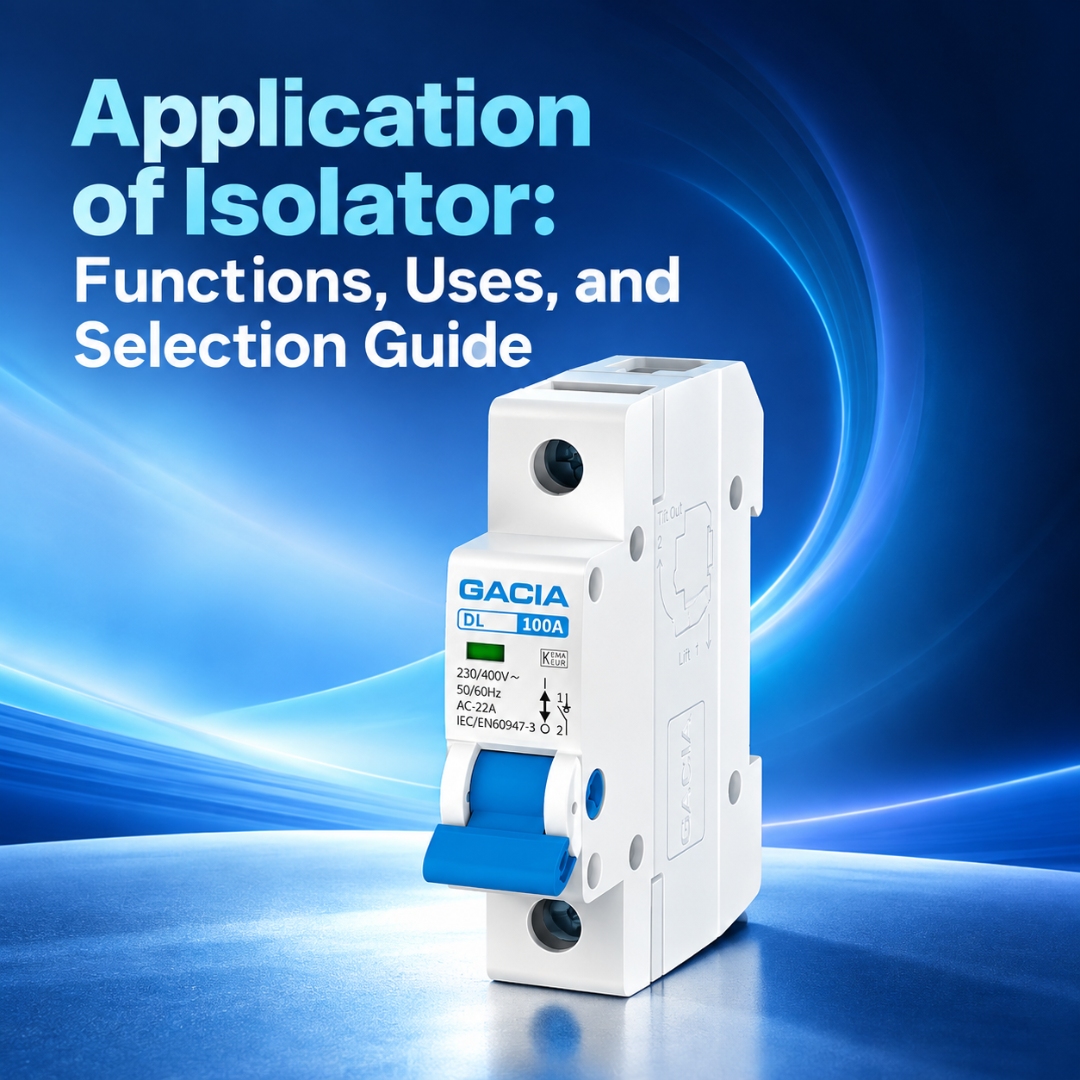
A circuit breaker connects or disconnects the circuit in the event of overload or short-circuit conditions. An isolator is used for manual disconnection during maintenance.
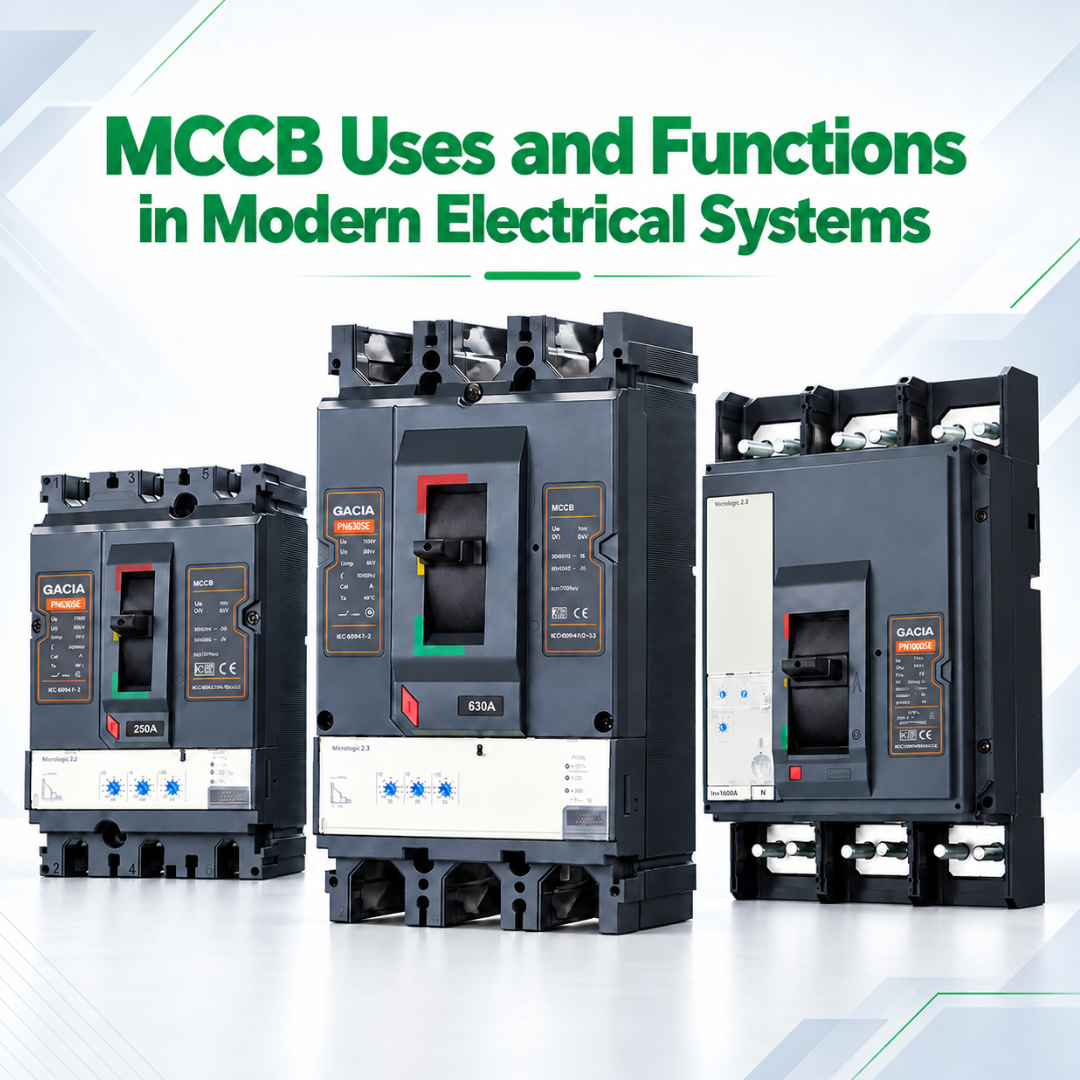
For commercial and industrial projects that require additional electrical loads, it is common to use an MCCB due to its high current ratings and breaking capacity.
Busbars
Busbars distribute power from the incoming supply to individual outgoing circuits.
Usually, they are made with aluminum and copper materials and need to be rated for the current of the system, temperature rise, and short-circuit conditions. In addition to that, their arrangement contributes to the board capacity and future expansions.
Outgoing Circuit Breakers
Outgoing protective equipment is used for circuit protection from electrical faults. Depending on the application, MCB, RCBO or MCCB appliances can be used in the distribution board.
MCBs are the main devices providing protection from overloads and short circuits while RCBOs protect against overcurrent and residual current as well.
GACIA Protection Devices for Distribution Boards
Various solutions for circuit protection are offered by GACIA that are adaptable to various regions in the low-voltage distribution system.
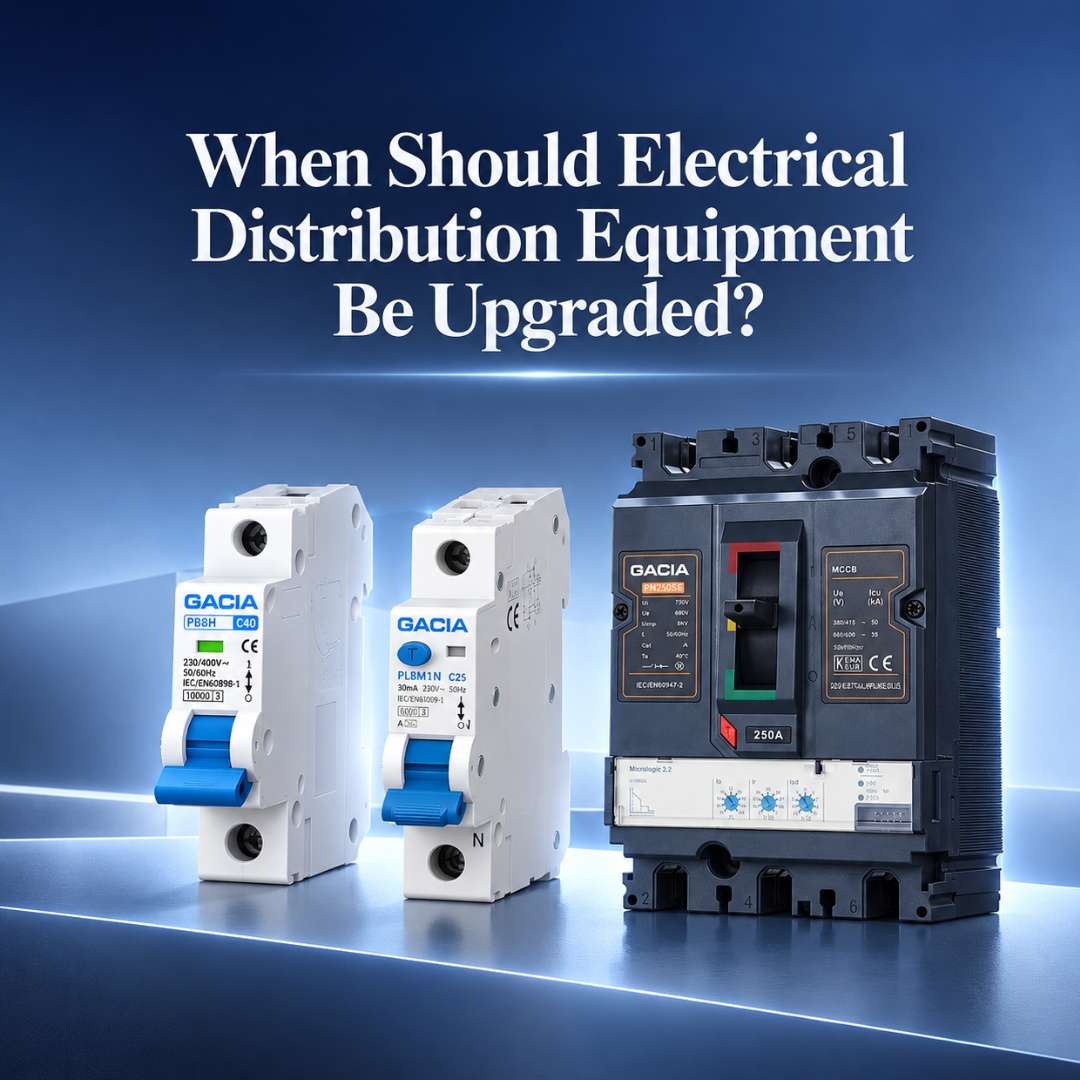
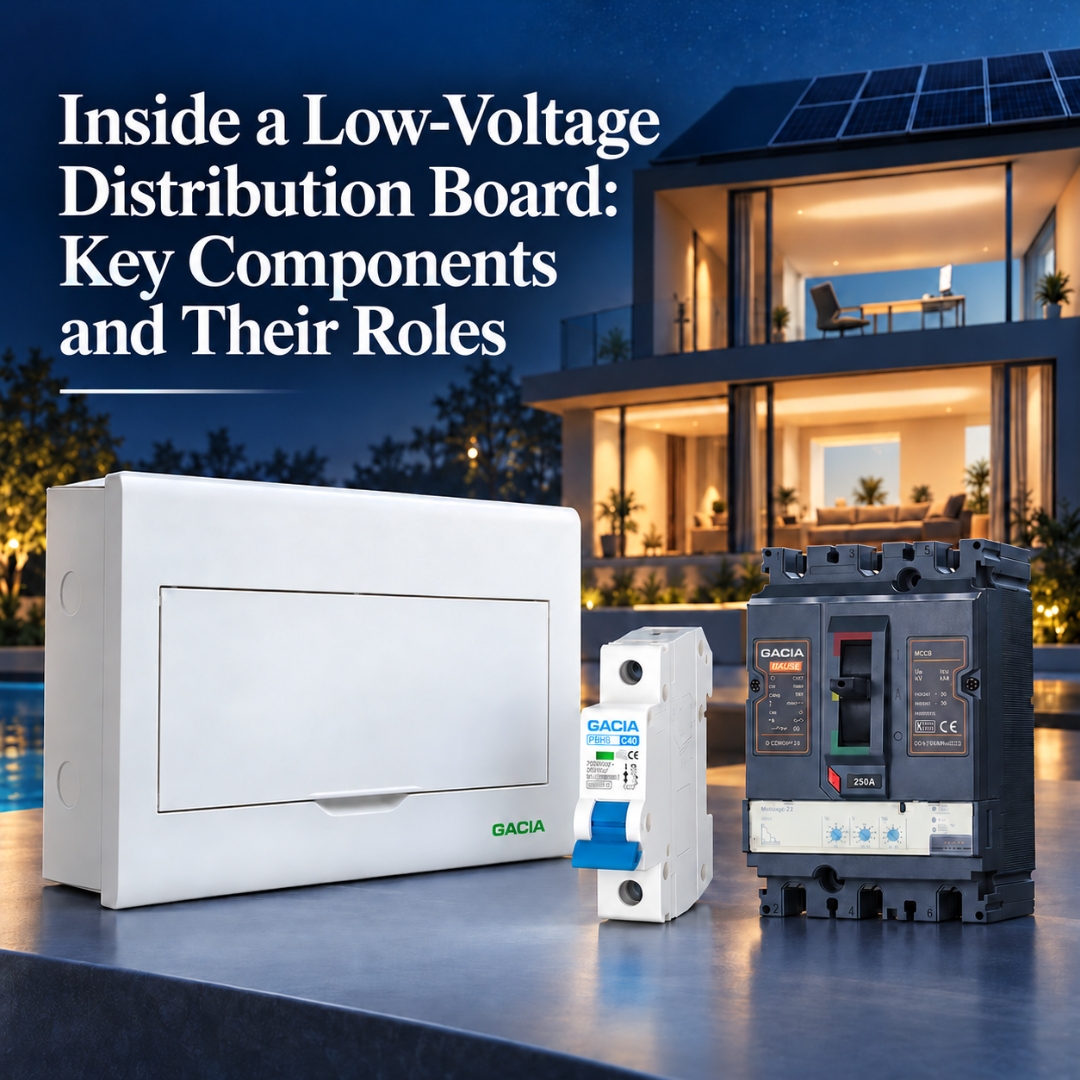
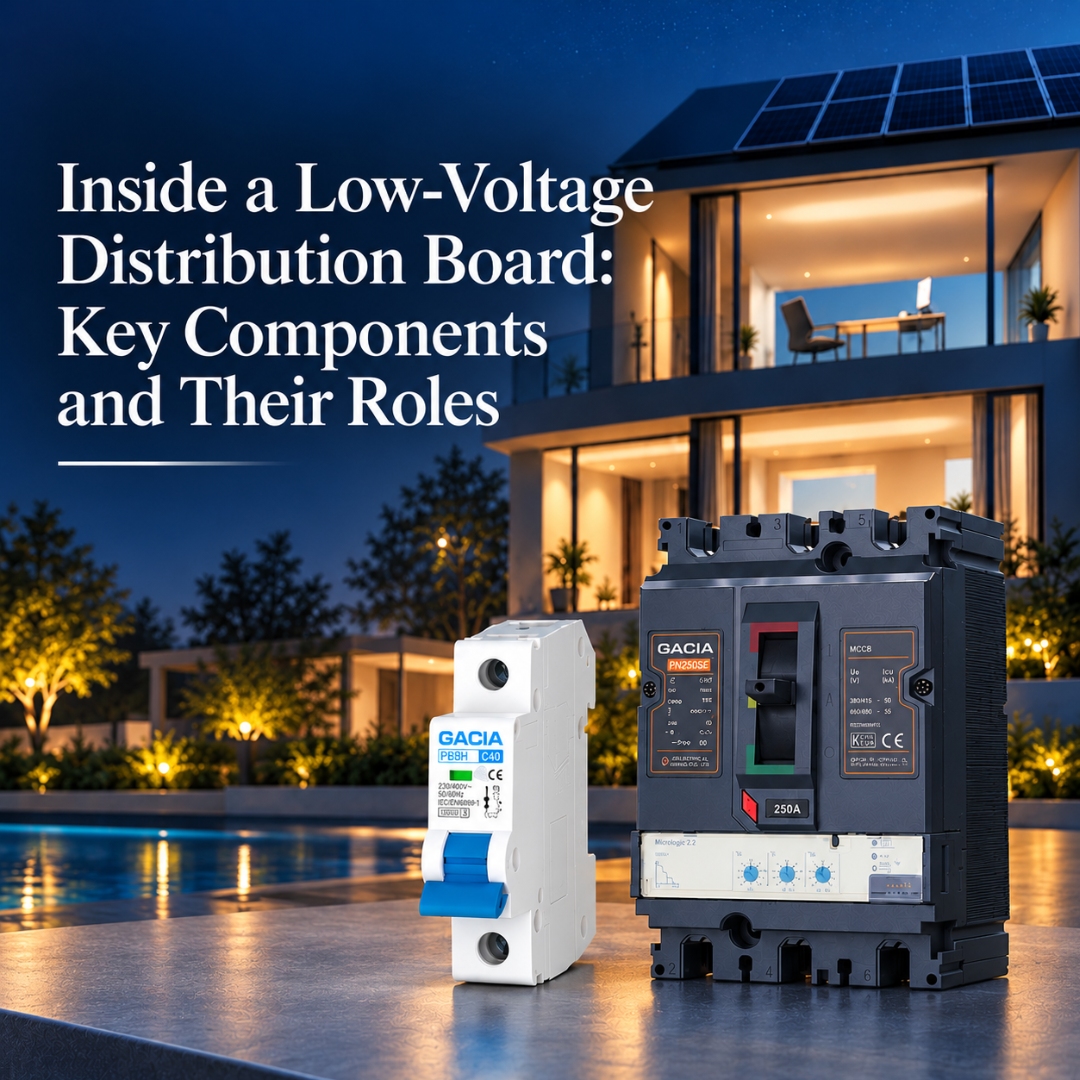
GACIA PN250 MCCB
The GACIA PN250 is suitable for higher-current distribution and feeder protection.
You have the option of 3P or 4P configurations with rated currents as high as 250A. The PN250 is available with thermal or electronic trip units and can work with 415V AC, 500V AC, or 690V AC power supply.
The ultimate breaking capacity specified is 50 kA for the S level at AC415V and 85 kA at the H level. It was in accordance with IEC 60947-2 rules.
Consequently, this makes it appropriate for primary or secondary distribution systems which call for high short-circuit strength.
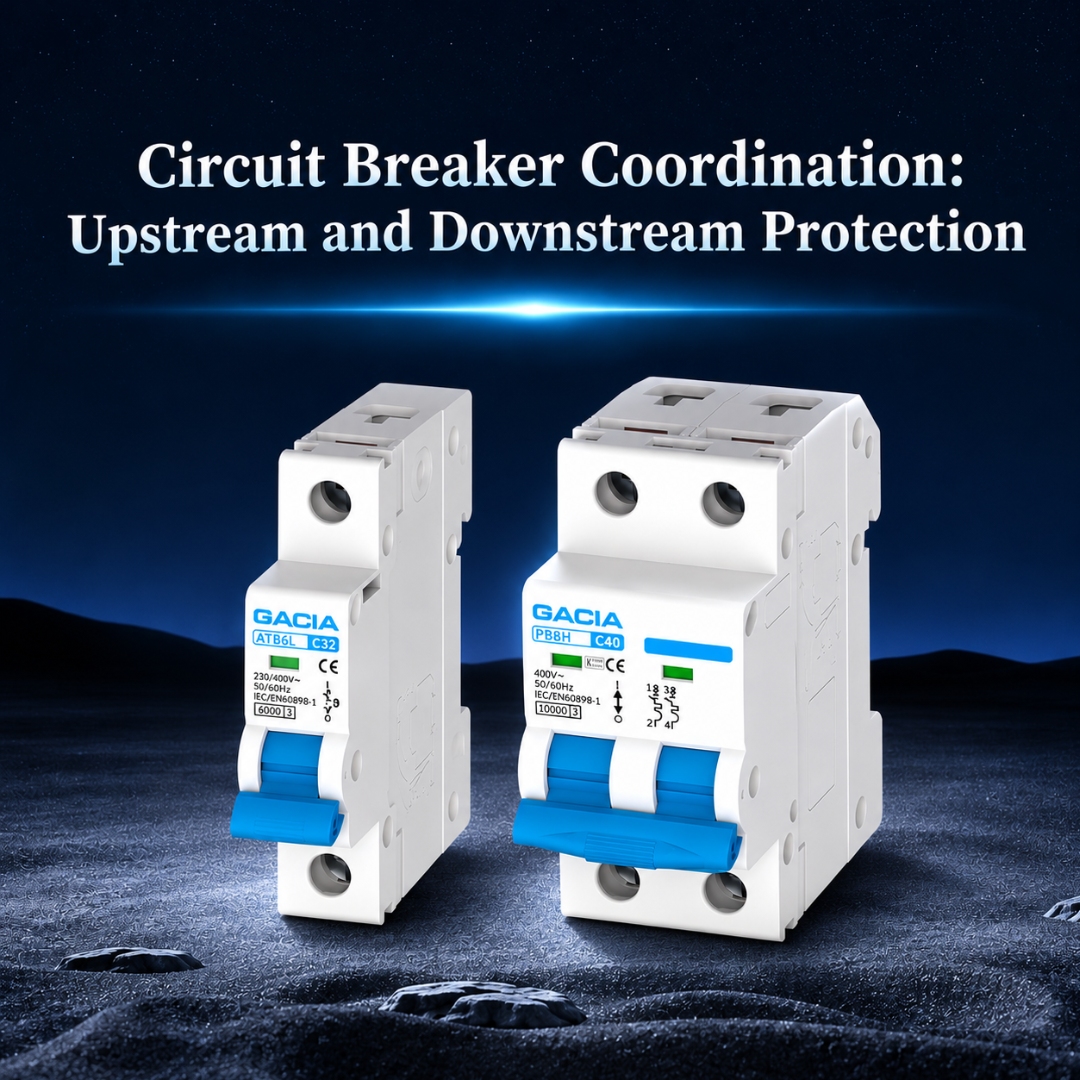
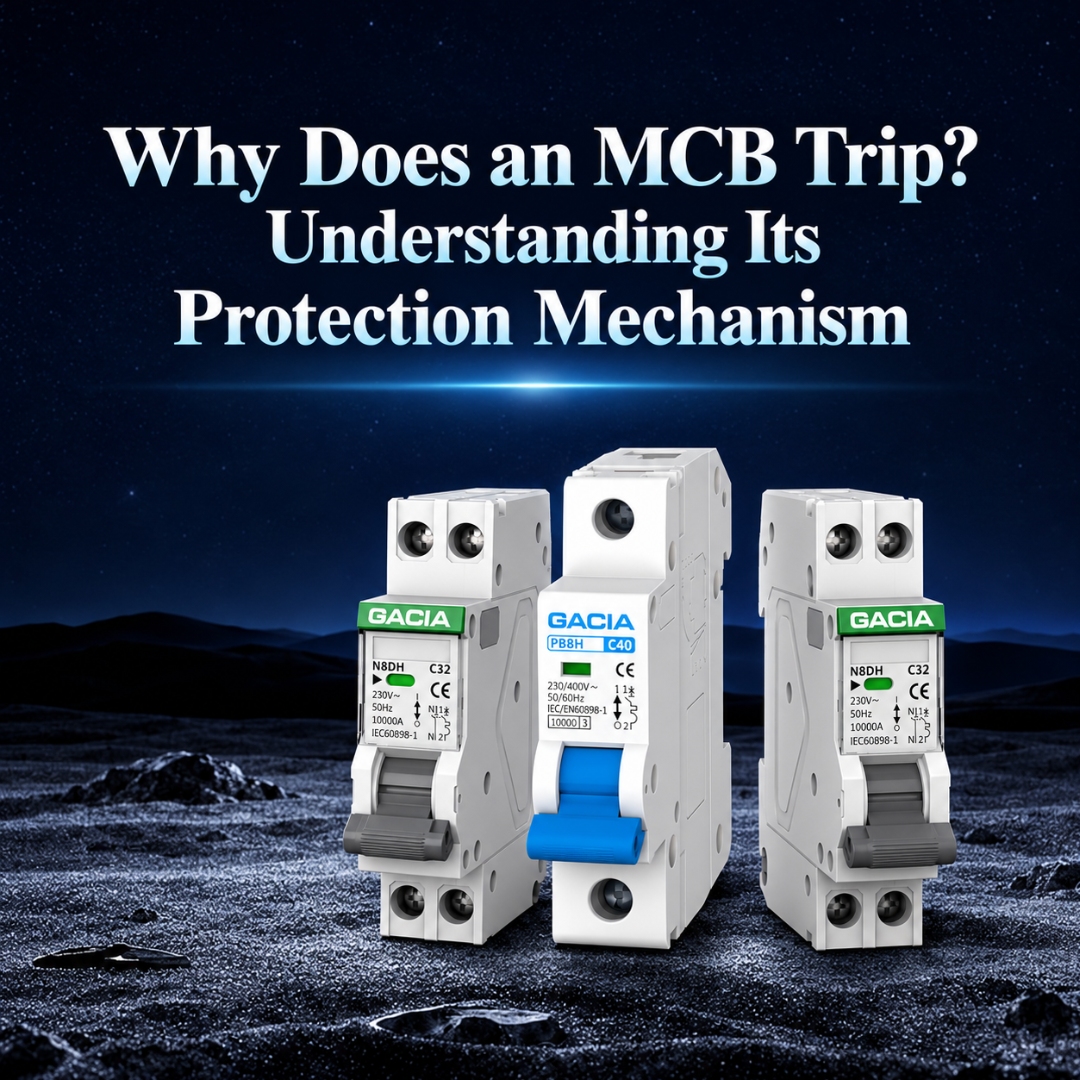
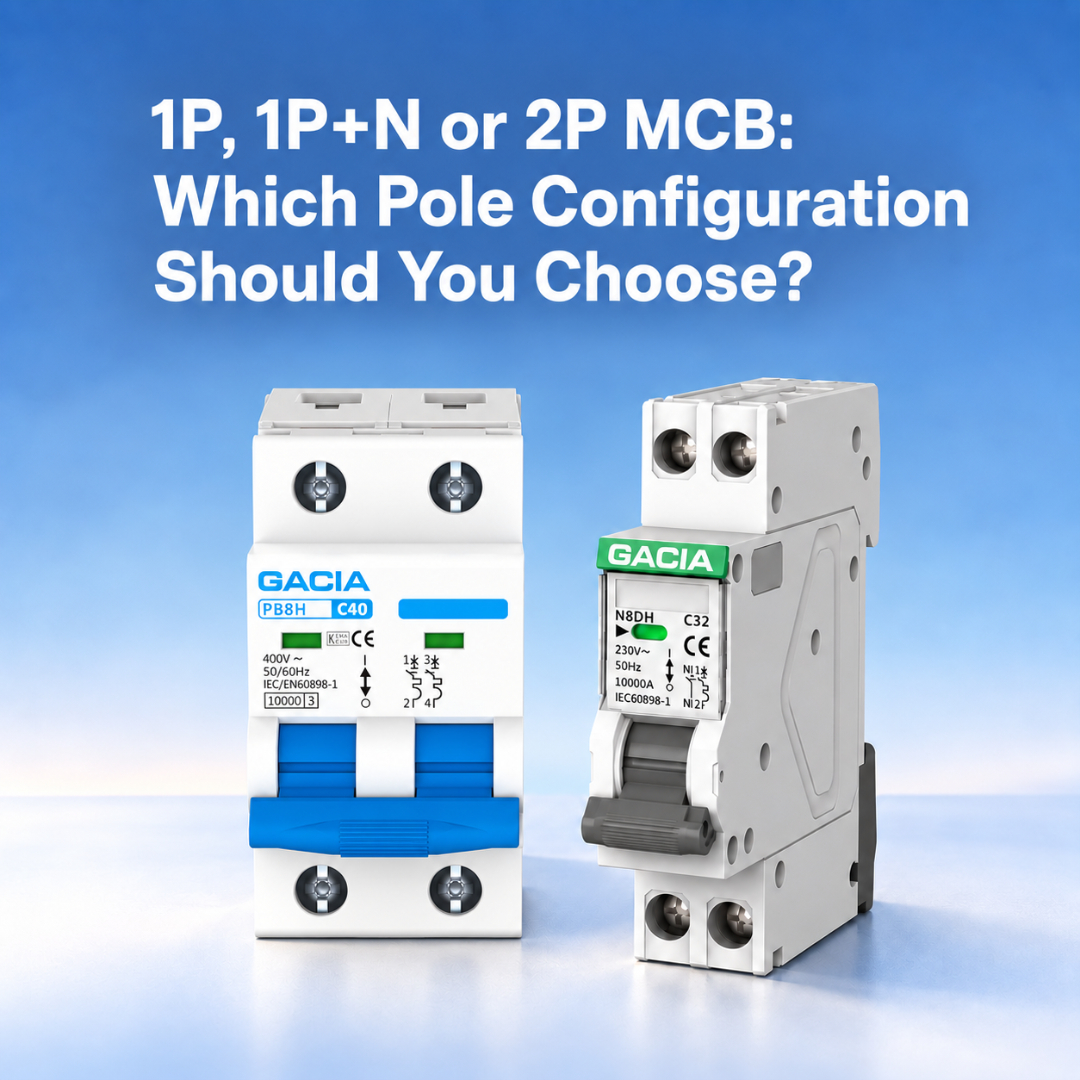
GACIA PB8H MCB
The PB8H Professional P Series MCB offers protection against overloads and short circuits in outgoing final circuits.
It can be found in 1P, 1P+N, 2P, 3P, 3P+N, and 4P variations and has an operating current range of 1A to 63A and a 10kA interruption capability.
The PB8H offers B, C, and D trip characteristics and complies with IEC/EN 60898-1.
Its variety of pole configurations allows it to accommodate different distribution-board configurations and circuit needs.
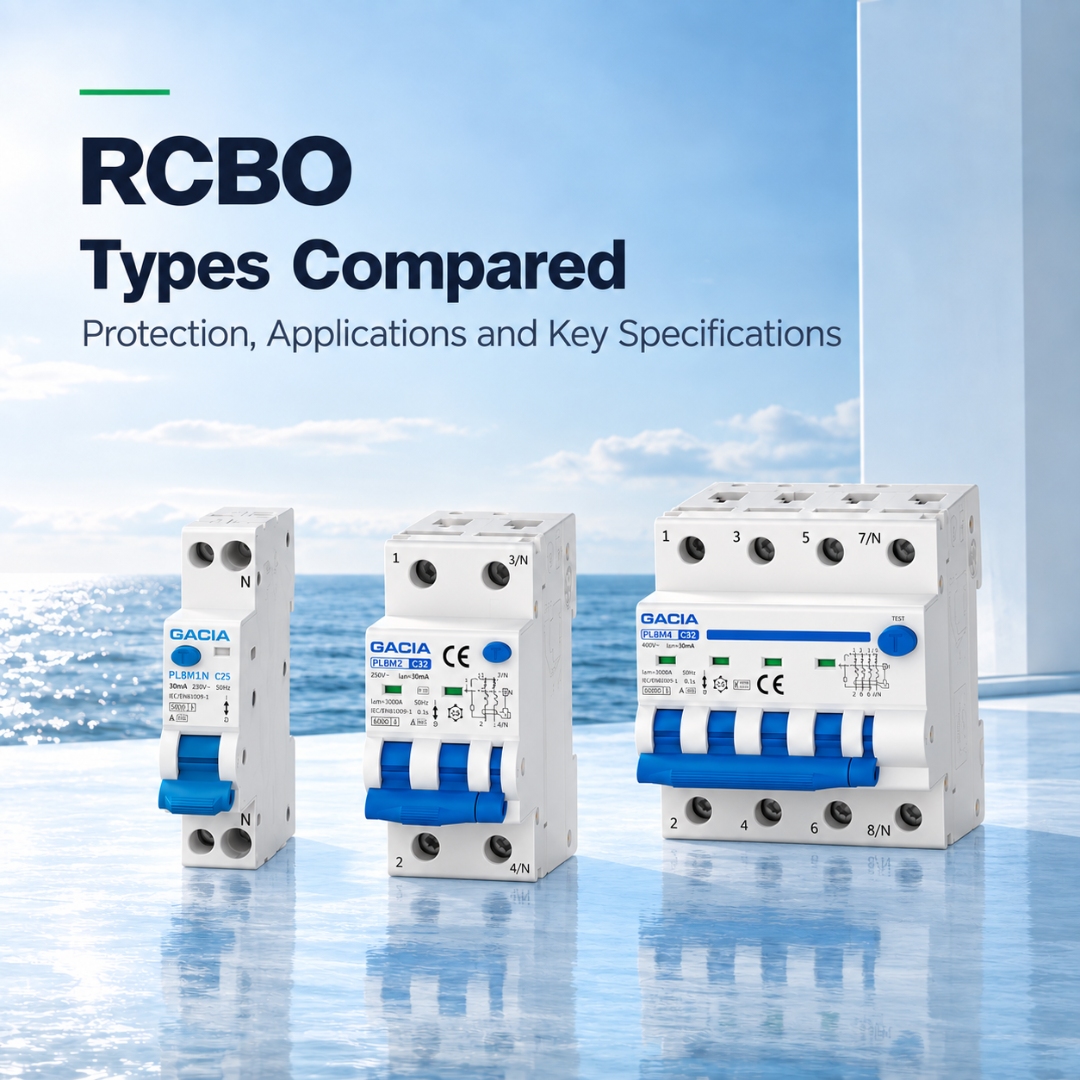
GACIA PL8M1N RCBO
The PL8M1N offers a compact solution as a residual-current device as well as an overcurrent device.
It offers:
- 6A–25A rated current
- 6kA breaking capacity
- B and C curves
- Type AC and Type A options
- 18mm single-module width
- IEC/EN 61009-1 compliance
Its compact design is particularly useful where DIN-rail space is limited.
Neutral and Earth Bars
Neutral and earth bars organize the neutral and protective conductors inside the board.
The neutral bar connects circuits with negative voltage, while the earth bar connects safety wires to ground.
This arrangement ensures clear electrical wiring, compliance with all related regulations, and ease of maintenance.
Surge Protection and Metering
Surge protection devices safeguard equipment against transient overvoltages induced by lightning and switching events.
Equipment for metering can also be included in order to control energy consumption, current, or other electrical parameters.
In big plants, this functionality allows operators to monitor system performance and discover unusual situations.
Enclosure and Internal Layout
The enclosure safeguards the inside parts of electric distribution equipment from being touched, touched by dust, and other environmental conditions.
A well-designed internal configuration also provides adequate space for various functions like wiring, heat dissipation, service, and prospective expansion.
When evaluating a distribution board, buyers should consider not only the enclosure size but also:
- Rated current
- Short-circuit capacity
- Number of outgoing circuits
- Available DIN-rail space
- Breaker type and pole configuration
- Surge protection requirements
- Metering requirements
- Future expansion capacity
Conclusion
The low-voltage distribution board should be understood as an assembly of circuit breakers that function under optimal conditions. Its effectiveness relies on how well the incoming device, bus bars, outgoing protection devices, neutral and earth bars, surge protection, and monitoring equipment perform their functions.
Some of the GACIA products, like PN250 MCCB, PB8H MCB and PL8M1N RCBO, provide a range of protection possibilities for main distribution applications, outgoing circuits and compact final circuit applications. Correctly choosing the available protection according to the current value, the conditions of faults and the design of the distribution board results in safer and more comfortable systems.