






Why Does an RCBO Trip? Understanding Overload, Short Circuit and Leakage Faults
The RCBO disconnects a circuit whenever it senses that there is an unsafe condition. If the RCBO tripping happens unexpectedly, this can be caused by overload, short circuit, current leak to earth, faulty appliances, dampness, or issues with wiring.
The trip is more than just an inconvenience; it is a warning of danger as well. Constantly resetting the device without knowing the cause could lead to electrocution, damage to equipment, or even a fire. This guide explains the main causes of RCBO tripping, how to identify them, and at what point to seek professional help.
What Is an RCBO?
RCBO stands for Residual Current Circuit Breaker with Overcurrent protection. It combines:
-
MCB protection against overloads and short circuits.
-
RCD protection against earth leakage and electric shock.
As both functions are incorporated in one appliance, an RCBO can protect and isolate a single circuit without switching off the whole distribution panel.
The efficiency of its operation is reliant upon specifications such as rated current, trip characteristics, ground fault operating current, pole arrangement, breaking strength, and relevant electrical standards.
Why Does an RCBO Trip?
An RCBO will trip if the current surpasses a safe value or if it detects current leakage towards the earth. This is usually caused by the following.
1. Overload on the Circuit
An overload is said to occur when the connected load exceeds the rating of the circuit or the rating of the RCBO. This is commonly the case when there is the simultaneous operation of several electrical devices with a big power demand.
In contrast to a short circuit, an overload may not necessarily trip the RCBO at first instance. The unit may separate after some time when the temperature increases.
To prevent the chance of an RCBO trip from happening, do not operate numerous high-wattage devices on the same circuit. In case of continuing tripping under a nominal load, a competent electrician should verify the circuit rating, wire size, and the condition of the device.
2. Short Circuit
The live and neutral wires can short-circuit straight away if they touch. With an immediate rise in current in the wires, this is when the RCBO will trip.
Some potential explanations may be insulation damage, loose terminal connections, crushed cables, improper wiring or defective components, or metal touching a live surface. Signs of the presence of a serious malfunction may include burning odors, sparks, burn marks, or crackling noises.
In case of recurring RCBO short-circuit trip, avoid resetting it. Switch off the concerned appliance if permissible and arrange for it.
3. Earth Leakage or Residual Current
The term earth leakage refers to the situation when current travels outside the proper live-to-neutral route to the ground. The presence of earth leakage could be due to damaged insulation, too much moisture, a malfunctioning appliance, or an erroneous connection of neutral to earth.
RCBO monitors both live and neutral wires. The device disconnects the appliance from the supply in case of a negligible difference between the amperes.
The most common reasons for leakage trips are faulty appliance insulation, outdoor equipment being wet, wet cable connections, faulty heating appliances, defective wiring, or several appliances leaking at the same time. Leakage trips can happen right away or intermittently, or only when certain appliances are used.
4. Faulty Appliances
When the RCBO trips every time an appliance is either in use or plugged in, you may well find that this appliance is to blame for the problem. Heating elements, motors, power supplies, filters, and compressors can all develop faults in insulation or overcurrent over time.
Turn off and unplug devices connected to the particular circuit, reset the RCBO, and reconnect devices one at a time. If the circuit trips again after connecting one appliance, stop using that particular device and arrange testing or repair.
5. Moisture or Water Ingress
Moisture can lead to leaks in outdoor wire boxes, garden tools, washrooms, light fixtures, telephone circuits, and cable splices.
If the tripping started after some rain or flooding, switch off the circuit. Wet electrical installations should not be dealt with when live. A qualified electrician must find the source of moisture before switching everything back on again.
6. Wiring or Installation Faults
Bad wiring could lead to tripping taking place even if the appliances are working normally. Some of the common issues involve faulty neutral circuits, neutral and earth faults, worn-out connections, broken wires, common neutrals, and incorrect connections.
A professional electrical specialist should conduct the testing for defects, which will require continuity, insulation resistance, residual current, and polarity tests.
7. Defective or Incorrectly Rated RCBO
The RCBO can sometimes be improperly functioning or not fit for use. Problems arise due to incompatible values among current rating, trip characteristics, number of poles, residual current, and break capacity.
Using a better-rated RCBO just to keep it from tripping is unsafe. The protection device has to be in agreement with the cable capacity and design of the circuit.
Overload vs. Short Circuit vs. Leakage Trip
An overload trip occurs when a circuit has conducted excessive electrical current for a prolonged duration, typically when too many high-wattage loads are connected to the circuit.
As soon as electricity is turned on in the circuit or the defective device, a short-circuit trip is most likely to occur as a result of a fault or error creating a pathway for the current to travel through.
It may happen immediately or intermittently. Earth leak trips are often related to water presence, insulation failure, defective appliances, or faulty wiring.
The timing of the trip can offer helpful hints, but it does not validate the reason behind it. Adequate electrical tests may still be needed.
How to Reset an RCBO Safely
If there are no signs of smoke, fire, exposed conductors, water, or physical damage:
-
Switch off or unplug appliances on the affected circuit.
-
Move the RCBO fully to OFF.
-
Reset it to ON once.
-
Reconnect appliances individually if it remains on.
-
If it trips again, leave it off and seek professional assistance.
Do not keep forcing the RCBO back into action, nor bypass the protective device or replace it with one rated higher.
Why Does an RCBO Keep Tripping?
If your RCBO keeps tripping, it is likely that the problem causing the trip is still present. Potential reasons include ongoing overload, a faulty appliance, moisture, damaged insulation, wiring issues, and a defective protective device.
Several electrical devices can generate small leakage currents which add together. Individually, they may operate normally, but their total leakage may mean that the combined leakage exceeds the specified limit for the RCBO.
Take note of the time of each trip, the appliance running, the presence of moisture, and whether the trip is instantaneous or delayed. In case the RCBO is tripped without any appliance connected, it would be necessary to have the fixed wiring or RCBO tested professionally.
When Is an RCBO Trip an Emergency?
If tripping occurs together with an indication of smoke, flames, burning smell, melted plastic, buzzing sound, exposed wires, electric shocks, water near electrical equipment, or numerous trip occurrences along with unexpected noise, reach out for professional help as soon as possible.
In the event that a person suffers from electric shock, the first step to take is to cut off the power supply if it can be done safely, and then call for help. Do not try to touch a person who might still be in contact with the source of electricity.
How Can RCBO Tripping Be Prevented?
Do not overload sockets or circuits, keep outdoor equipment safe from water, swap damaged wires or plugs, and operate equipment based on its manufacturer’s guidelines.
It is important to check electrical systems after certain events, such as renovation, floods, changes of function, or installation of high-powered apparatus. In addition, while one should press the RCBO test button according to the manufacturer’s instructions, it must be noted that this activity is not a substitute for a full electrical examination.
How to Choose a Replacement RCBO
When replacing the breaker, one must ensure that the new RCBO is compatible with the distribution board and is suitable for use within a given circuit. Some of the vital specifics to look out for include: rated current; number of poles; residual current; trip curve; circuit capacity; type of residual current; system configuration; and the certification of the device.
It's not enough for the device to be simply fit physically. The device also must be electrically compatible with the installation, and it must be specified and installed by a qualified person.
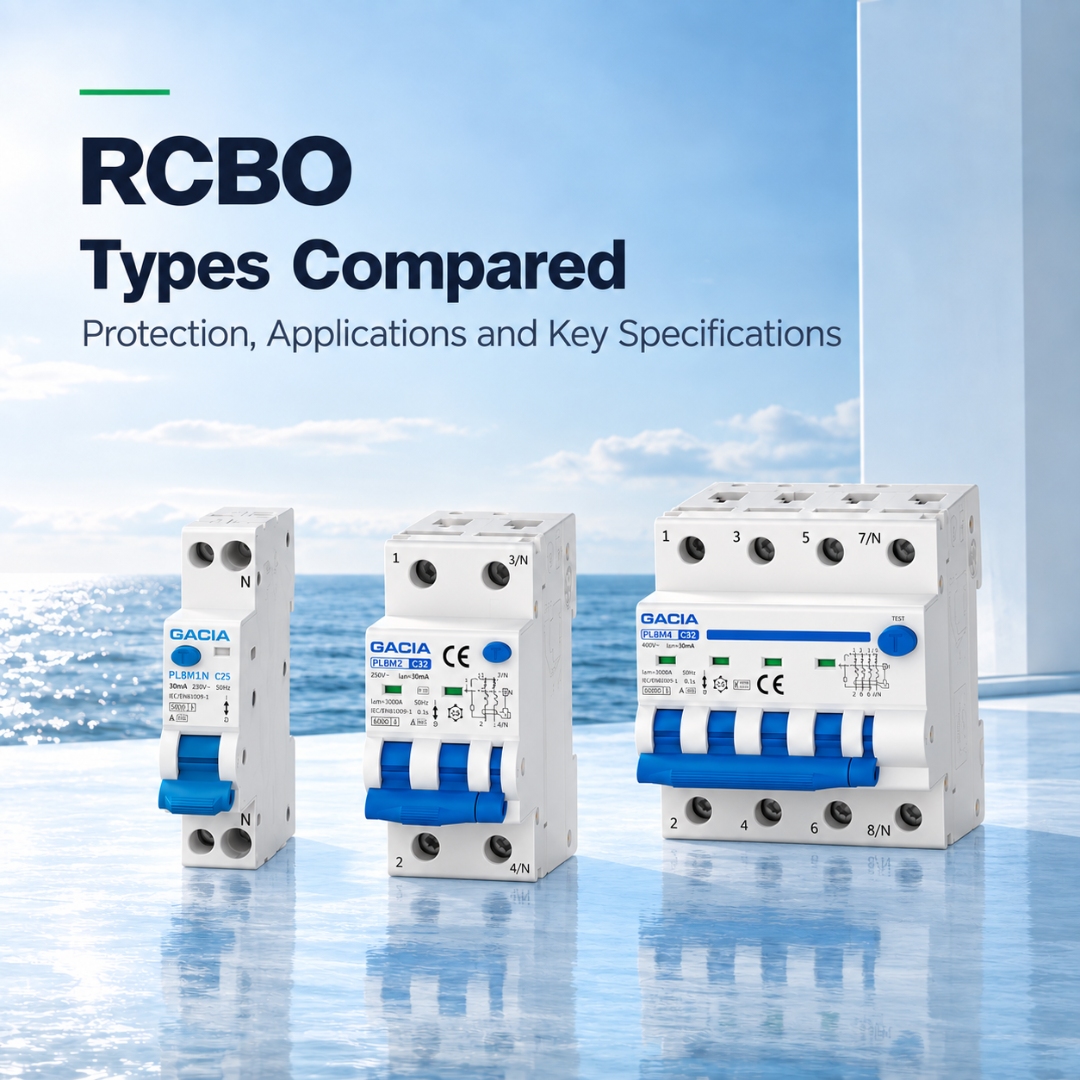
GACIA PL8M RCBO
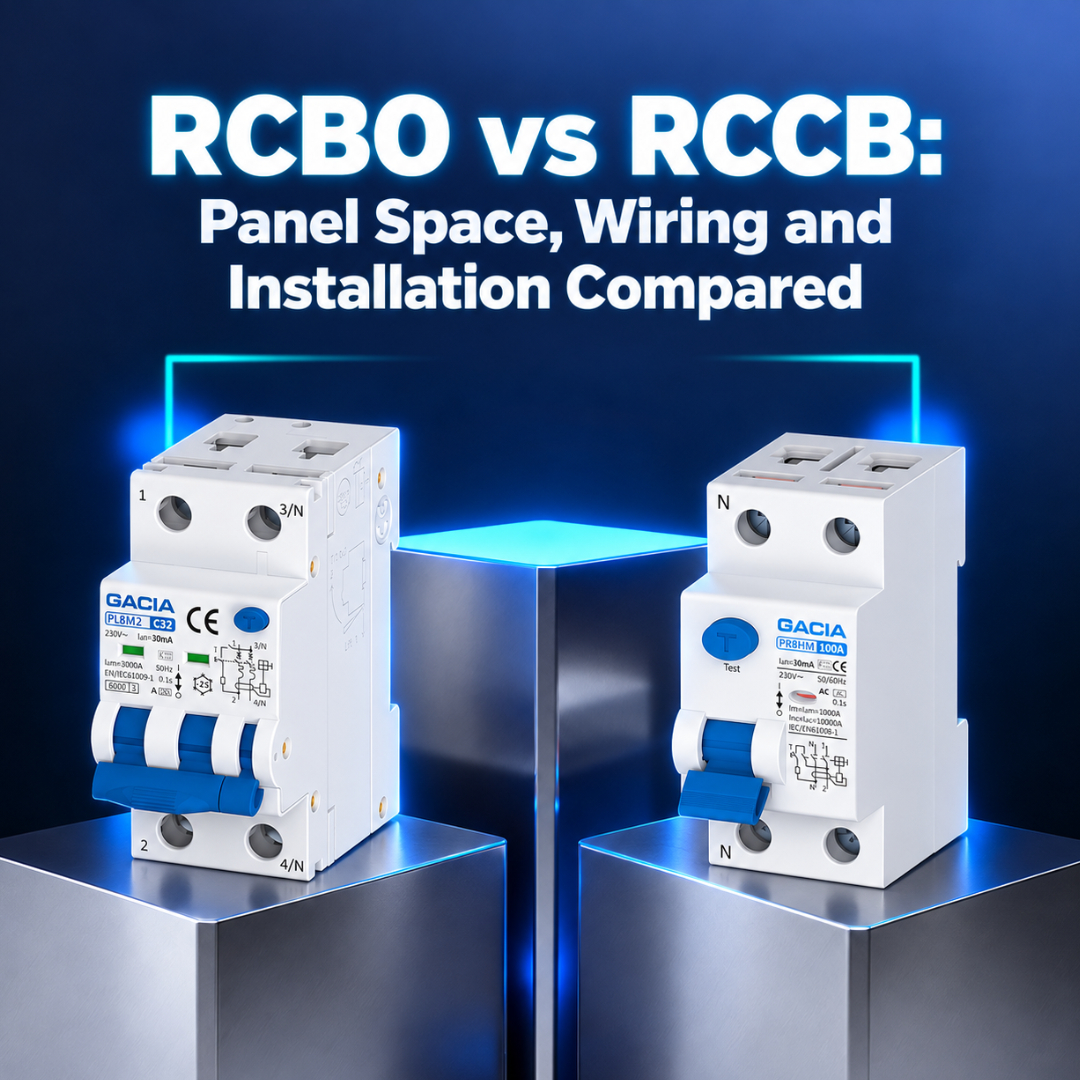
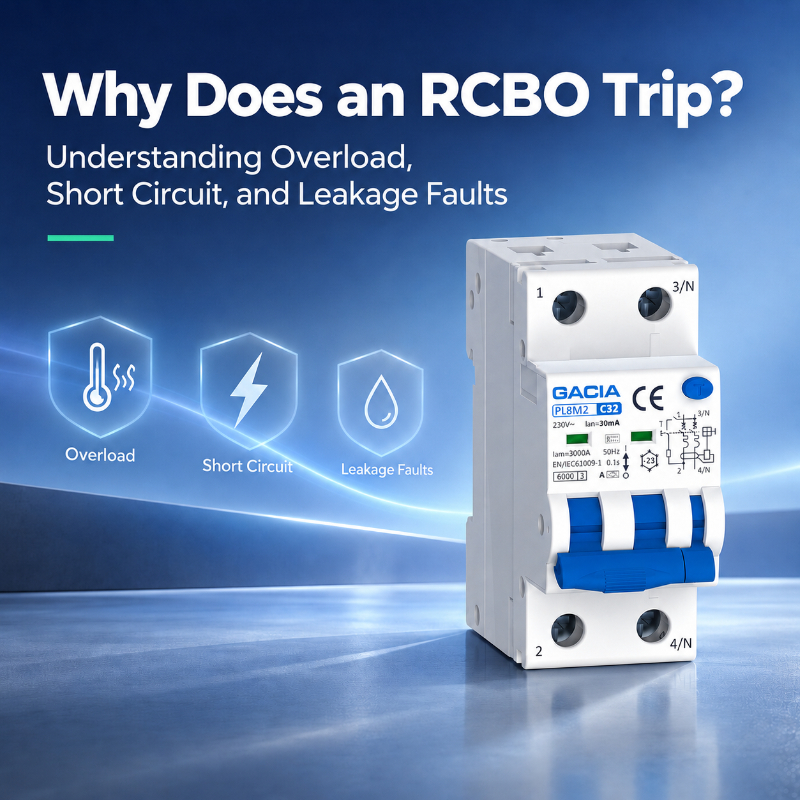
GACIA PL8M series is an electromagnetic RCBO that comes in two-pole and four-pole versions. This device combines residual current protection, thermal overload protection, and magnetic short-circuit protection. Voltage-independent residual current protection enables it to operate successfully regardless of the conditions of the power supply. This series has currents ranging from 6 A to 40 A and breaking capacities of up to 10 kA, making it good for household, commercial, and industrial needs.
GACIA PL8HE RCBO
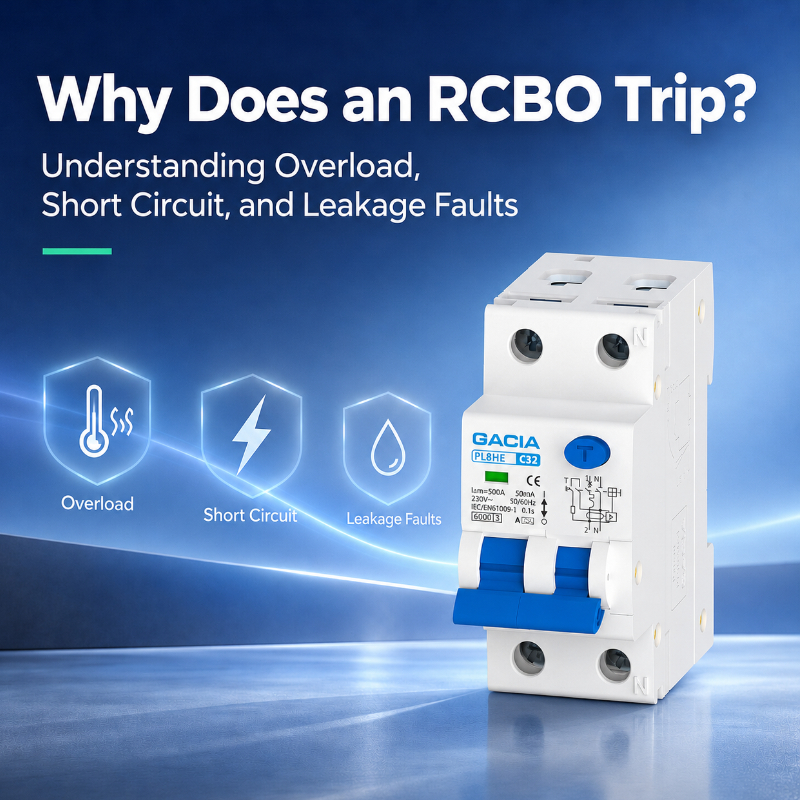
GACIA PL8HE is an electronic RCBO that fits both compact and various sizes of input. It also provides residual current protection with options from 6 Amperes to 63 Amperes, with a limitation of breaking capacity to 6kA and Type AC or Type A residual current protection. The gadget meets the IEC/EN 61009-1 standard, thereby making it suitable even for household and other circuits.
Frequently Asked Questions
What causes an RCBO to trip?
The reasons for their occurrence are usually overloads, short circuits, earth leakage, broken appliances, humidity, damaged wiring, incorrect connections, or using an improper RCBO.
Why does an RCBO trip immediately?
A sudden trip usually indicates either a possible short circuit, heavy earth leakage, equipment malfunction, or wiring fault. Detach the appliances from the circuit and reset the RCBO one time. If the circuit trips again, just leave it deactivated.
Why does an RCBO trip after several minutes?
A delay in tripping can signify that there is an overload occurring, that some malfunction is occurring with an appliance during the heating of the equipment, or that there is leakage between multiple devices.
Can a faulty appliance trip an RCBO?
The answer is affirmative. Electrical devices like motors, heating elements, power supplies, and damaged internal wires may cause overcurrent or leakage failures.
Can I replace an RCBO myself?
The term "replacement" refers to activities performed within electrical distribution equipment. It also includes the selection and testing of suitable devices, and therefore, replacement can only be done by a qualified electrician as specified by the regulations in the area where the devices are to be installed.
Is it safe to keep resetting an RCBO?
No, repeated resetting can aggravate the unresolved fault, making shock, overheating, or fire more likely.
An RCBO trips when it detects a potentially unsafe electrical condition. Identify the pattern without taking unnecessary risks, disconnect suspected equipment, and never bypass the protection. If tripping continues, leave the circuit off and have the installation inspected by a qualified electrician.